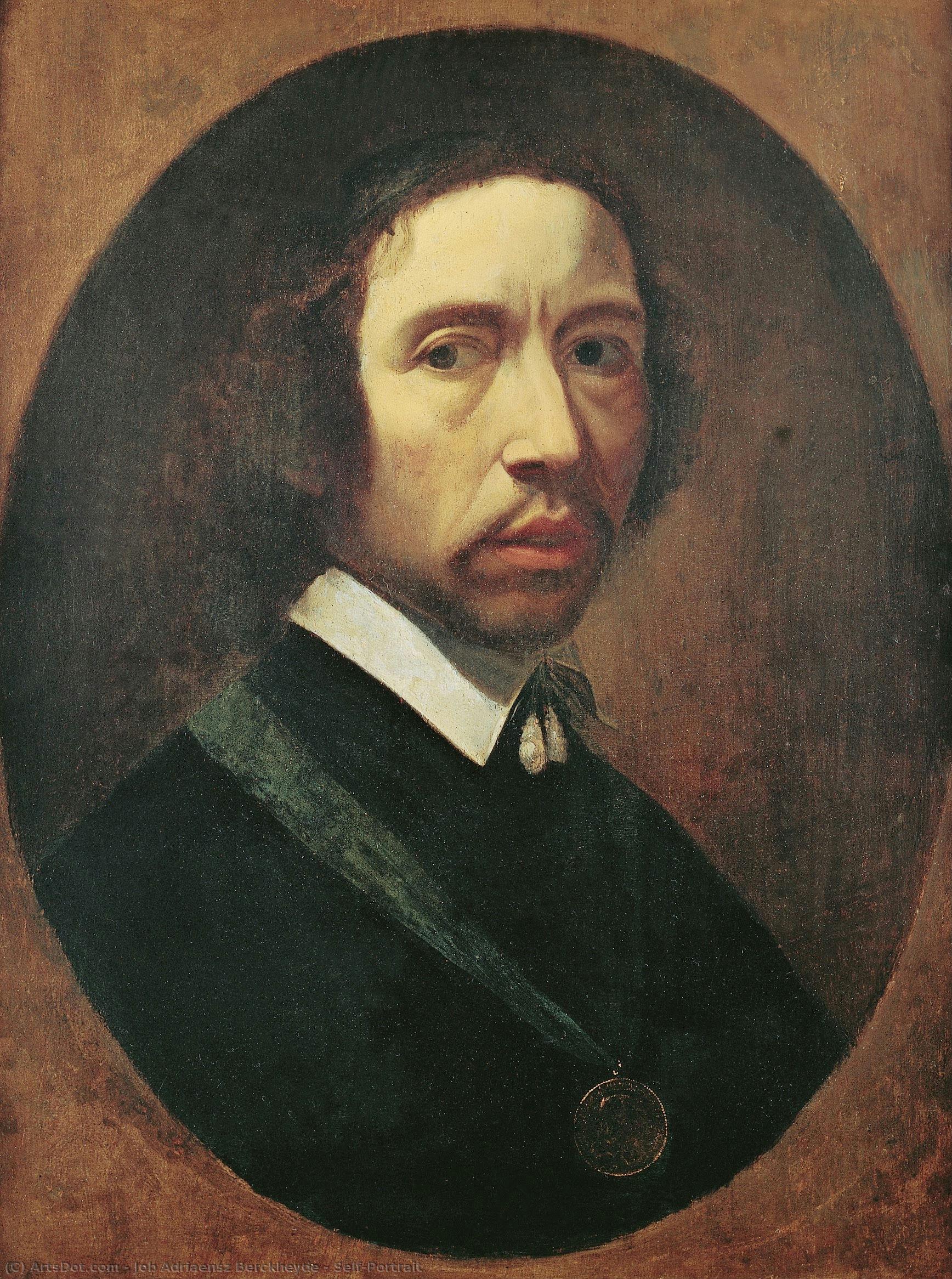
Explore Job Adriaenszoon Berckheyde’s serene self-portrait – a masterpiece capturing Haarlem's atmosphere and Rembrandt’s influence. Admire the meticulous detail and symbolic elements in this iconic Baroque painting.
Job Adriaenszoon Berckheyde (1630-1693) was a Dutch Baroque painter known for Haarlem interiors, genre scenes & portraits. Brother of Gerrit Berckheyde, he captured everyday life and the Sint-Bavokerk with detail. Explore his varied oeuvre!
Explore Haarlem's artistic heritage at the Frans Hals Museum, home to the world’s largest collection of paintings by Frans Hals and captivating exhibitions showcasing Dutch Golden Age art.
A Window Into Haarlem’s Baroque Soul: Examining Job Adriaenszoon Berckheyde's Self-Portrait
Job Adriaenszoon Berckheyde (1630-1693) remains a cornerstone of Dutch Baroque artistry, an artist whose meticulous observation and masterful brushwork captured the essence of Haarlem’s vibrant cultural milieu during his lifetime. While often overshadowed by his brother Gerrit – with whom he collaborated closely on numerous projects – Job carved out a distinctive artistic identity, producing interiors bathed in soft light and genre scenes brimming with nuanced detail that continue to resonate with viewers today. This self-portrait, completed around 1670, offers not merely a depiction of the artist himself but also a profound reflection of the artistic sensibilities prevalent at the time, inviting us into a contemplative dialogue about identity, ambition, and the pursuit of excellence.
The Painter’s Studio: A Symbol of Artistic Idealism
The canvas presents Berckheyde seated in his studio, bathed in diffused daylight – an intentional compositional choice that speaks volumes about Baroque artistic conventions. The room is sparsely furnished with a simple wooden table upon which rests a palette and brushes, establishing a visual shorthand for the creative process itself. Beyond the easel hangs a mirror image of the portrait, a technique employed by Berckheyde to heighten the sense of presence and immediacy—a daring stylistic gesture that underscores the artist’s preoccupation with capturing not just appearance but also psychological depth. The inclusion of objects symbolizing the senses – perhaps hinting at Berckheyde's desire to represent the totality of human experience – reinforces this overarching thematic concern.
Technique and Style: Rembrandt’s Legacy Embodied
Like Rembrandt, Berckheyde championed chiaroscuro—the dramatic interplay between light and shadow—as a primary tool for conveying emotion and creating visual impact. The artist skillfully utilizes subtle gradations of tone to sculpt the figure's form, emphasizing musculature and conveying a sense of dignified repose. The meticulous rendering of textures – from the smooth sheen of Berckheyde’s coat to the rough surface of his skullcap – demonstrates an unwavering commitment to realism, albeit tempered by stylistic considerations rooted in Rembrandt’s influence. This dedication to technique is palpable throughout the painting, reflecting Berckheyde's profound respect for artistic tradition and his ambition to emulate the masters of his era.
Historical Context: Heidelberg’s Influence and Artistic Patronage
Berckheyde’s artistic journey was significantly shaped by his travels to Germany, particularly Heidelberg, where he studied under Johann Georg Schäufele—a pivotal encounter that solidified his stylistic approach. The patronage system prevalent in Haarlem during Berckheyde's time fostered an environment of intellectual curiosity and artistic experimentation. Commissions from wealthy patrons like Elector Karl Ludwig of the Palatinate demanded works that were both aesthetically pleasing and intellectually stimulating, encouraging artists to engage with complex themes and explore innovative visual strategies. This self-portrait stands as a testament to Berckheyde’s ability to navigate these cultural currents and produce art that embodies the spirit of its time.
Emotional Resonance: A Portrait of Confidence and Reflection
Ultimately, Berckheyde's Self-Portrait transcends mere representation; it communicates an inner state of contemplation—a gaze directed outwards with a quiet assurance that speaks to the artist’s self-awareness and ambition. The dark clothing worn by Berckheyde serves as a visual counterpoint to the luminous studio interior, creating a dynamic tension that underscores the complexities of human experience. More than just a likeness, it is an invitation to consider the artist's place within the broader artistic landscape—a poignant reminder of Berckheyde’s enduring contribution to Baroque art and his legacy as one of Haarlem’s most accomplished masters.