 Preview
 Send
Send Share
Share
 Details

 Download
 Similars
 X-Ray
X-Ray Diaporama
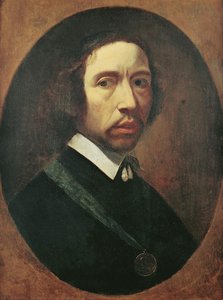
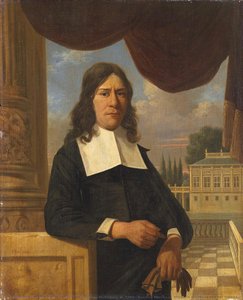
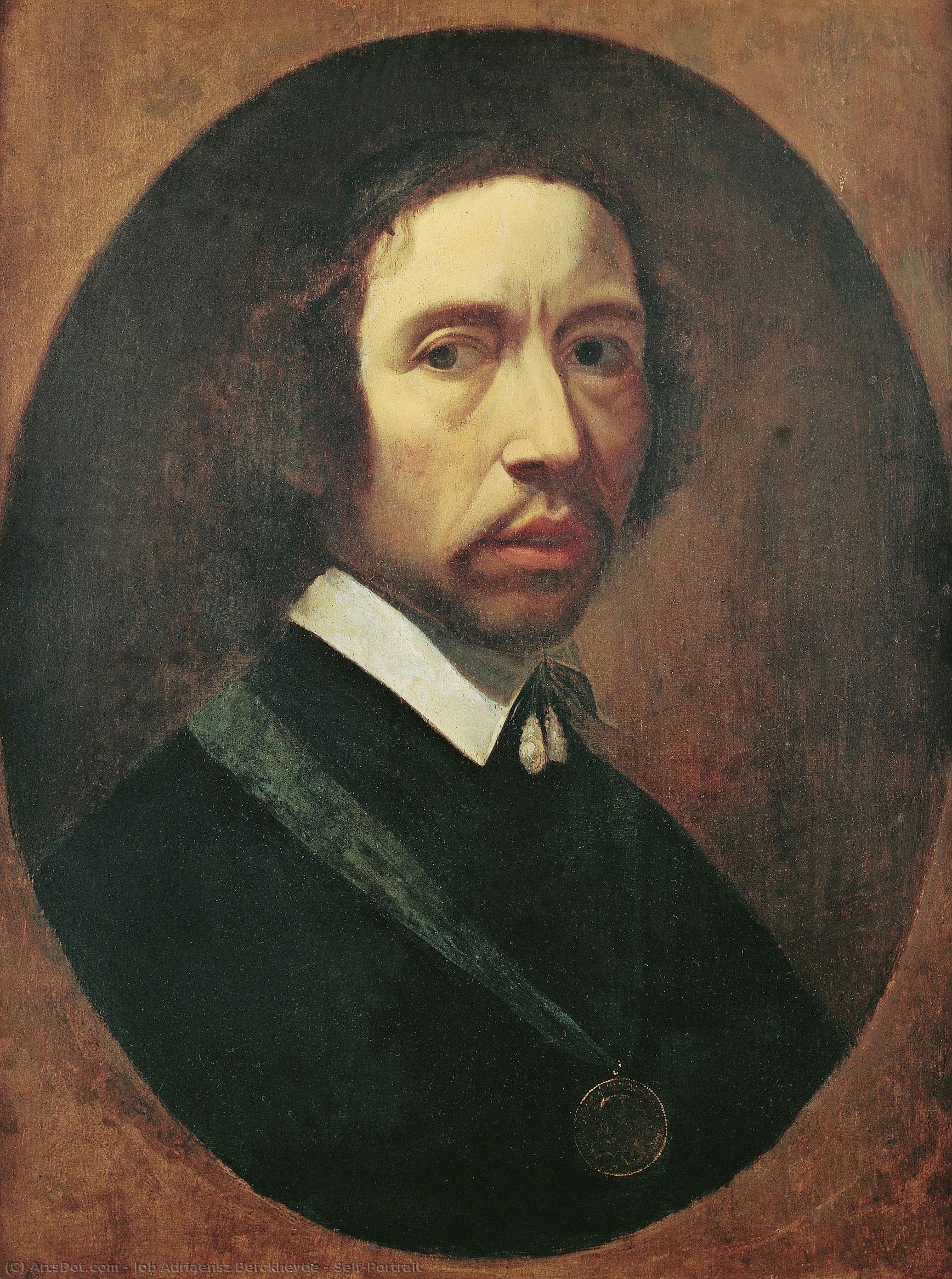
Self-Portrait
 Acrylic On Canvas
- WallArt
- Baroque
 1670
1670 52.0 x 40.0 cm
 Frans Hals Museum
 Read More
Hand Made Oil Reproduction
Hand-painted oil on canvas in your size and frame, made to order by our artists. ( Buy Print Buy Image)




P118B $10

P118H $10

P118W $10

P438Z $10

P508JH $12

P508YH $12

P805H $10

P805Z $10

P919BZ $10

P919G $10

P919XJ $10

P959ZH $10

P968JZ $12

W106C $8

W218G $10

W218JH $8

W218Y $10

W307PJ $10

W316G $10

W316PJ $8

W316Y $10

W398PJ $8

W4111J $10

W500HY $15

W500JH $15

W692G $12

W849H $8

W940BG $15

W953PJ $8




Pick from our preset sizes that match the artwork's original proportions.

You may enter your own dimensions to fit a specific frame or space. If your selected size does not match the original image's proportions, we will either crop the artwork or extend the painting with additional hand-painted elements. A digital mockup will be sent for your approval before production begins.
Please note that the on-screen preview does not reflect the actual cropping or extension. Only the mockup will accurately show the final composition.
While custom sizes are available, we recommend selecting a dimension from the predefined list to preserve the original proportions.
After order, ArtsDot.com team will email client for instructions and provide a mockup preview
Worldwide Delivery () in 3/4 weeks instead of standard 5 weeks. (17 August). No compromise on quality.

Free Worldwide Express Shipping

High-Quality Linen Canvas

Full Shipping Insurance

Customs Tax Refund Guarantee

True Color Matching Guarantee

60-Day Return Policy (Defects Only)

100% Money-Back Guarantee

Bulk Discount Offer
 Glass option is only available in size under 110 CM

Self-Portrait
Reproduction Medium
Reproduction Size
-


Total Price
$ 263
Artwork Description
A Window Into Haarlem’s Baroque Soul: Examining Job Adriaenszoon Berckheyde's Self-Portrait
Job Adriaenszoon Berckheyde (1630-1693) remains a cornerstone of Dutch Baroque artistry, an artist whose meticulous observation and masterful brushwork captured the essence of Haarlem’s vibrant cultural milieu during his lifetime. While often overshadowed by his brother Gerrit – with whom he collaborated closely on numerous projects – Job carved out a distinctive artistic identity, producing interiors bathed in soft light and genre scenes brimming with nuanced detail that continue to resonate with viewers today. This self-portrait, completed around 1670, offers not merely a depiction of the artist himself but also a profound reflection of the artistic sensibilities prevalent at the time, inviting us into a contemplative dialogue about identity, ambition, and the pursuit of excellence.The Painter’s Studio: A Symbol of Artistic Idealism
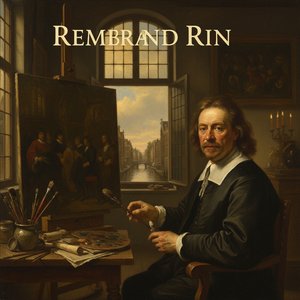
The canvas presents Berckheyde seated in his studio, bathed in diffused daylight – an intentional compositional choice that speaks volumes about Baroque artistic conventions. The room is sparsely furnished with a simple wooden table upon which rests a palette and brushes, establishing a visual shorthand for the creative process itself. Beyond the easel hangs a mirror image of the portrait, a technique employed by Berckheyde to heighten the sense of presence and immediacy—a daring stylistic gesture that underscores the artist’s preoccupation with capturing not just appearance but also psychological depth. The inclusion of objects symbolizing the senses – perhaps hinting at Berckheyde's desire to represent the totality of human experience – reinforces this overarching thematic concern.Technique and Style: Rembrandt’s Legacy Embodied
Like Rembrandt, Berckheyde championed chiaroscuro—the dramatic interplay between light and shadow—as a primary tool for conveying emotion and creating visual impact. The artist skillfully utilizes subtle gradations of tone to sculpt the figure's form, emphasizing musculature and conveying a sense of dignified repose. The meticulous rendering of textures – from the smooth sheen of Berckheyde’s coat to the rough surface of his skullcap – demonstrates an unwavering commitment to realism, albeit tempered by stylistic considerations rooted in Rembrandt’s influence. This dedication to technique is palpable throughout the painting, reflecting Berckheyde's profound respect for artistic tradition and his ambition to emulate the masters of his era.Historical Context: Heidelberg’s Influence and Artistic Patronage
Berckheyde’s artistic journey was significantly shaped by his travels to Germany, particularly Heidelberg, where he studied under Johann Georg Schäufele—a pivotal encounter that solidified his stylistic approach. The patronage system prevalent in Haarlem during Berckheyde's time fostered an environment of intellectual curiosity and artistic experimentation. Commissions from wealthy patrons like Elector Karl Ludwig of the Palatinate demanded works that were both aesthetically pleasing and intellectually stimulating, encouraging artists to engage with complex themes and explore innovative visual strategies. This self-portrait stands as a testament to Berckheyde’s ability to navigate these cultural currents and produce art that embodies the spirit of its time.Emotional Resonance: A Portrait of Confidence and Reflection
Ultimately, Berckheyde's Self-Portrait transcends mere representation; it communicates an inner state of contemplation—a gaze directed outwards with a quiet assurance that speaks to the artist’s self-awareness and ambition. The dark clothing worn by Berckheyde serves as a visual counterpoint to the luminous studio interior, creating a dynamic tension that underscores the complexities of human experience. More than just a likeness, it is an invitation to consider the artist's place within the broader artistic landscape—a poignant reminder of Berckheyde’s enduring contribution to Baroque art and his legacy as one of Haarlem’s most accomplished masters.Related Artworks
Artist Biography
The Master of Haarlem’s Quiet Moments
Job Adriaenszoon Berckheyde, born in the vibrant Dutch city of Haarlem around 1630, remains a profound voice of the Dutch Golden Age, a period where light and shadow danced across the canvases of a burgeoning nation. While history often casts a bright spotlight on his brother, Gerrit Berckheyde, Job carved out a legacy defined by an intimate, almost whispered, approach to reality. His life was deeply intertwined with the artistic pulse of Haarlem, a city that served as both his sanctuary and his primary subject. Through his brush, the mundane became monumental, and the quiet corners of seventeenth-century Dutch life were elevated to the status of high art.
The foundations of Berckheyde’s talent were laid under the guidance of Jacob Willemsz de Wet, a master whose command over chiaroscuro—the dramatic interplay of light and dark—left an indelible mark on the young artist's technique. In early works such as Christ Preaching to the Children (1661), one can sense the heavy, emotive influence of Rembrandt. This early period was characterized by a certain theatricality, where religious narratives were imbued with a palpable, human tension. As he matured, however, Berckheyde’s focus shifted from the dramatic shadows of the pulpit to the luminous clarity of the Dutch interior and the sprawling elegance of the cityscape.
A Journey Through Light and Landscape
Artistic growth for Berckheyde was not a solitary endeavor but a collaborative exploration. Between 1656 and 1660, he and his brother embarked on an ambitious journey through the German territories, traversing the Rhine from Cologne to the scenic landscapes of Mannheim and Heidelberg. This period of travel acted as a catalyst for stylistic evolution. Exposed to new vistas and the pioneering approaches of artists like Vincent van der Vinne, Berckheyde began to refine his ability to capture atmosphere. The influence of German patronage, particularly under Charles I Louis, allowed him to diversify his repertoire, moving into portraiture and hunting scenes that demanded a different kind of precision and grace.
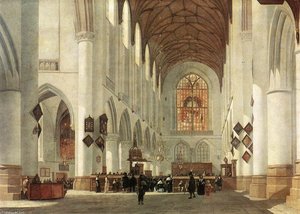
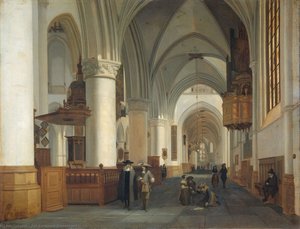
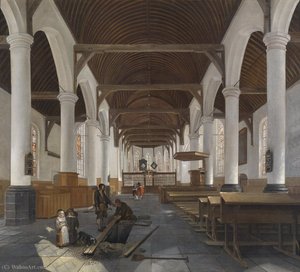
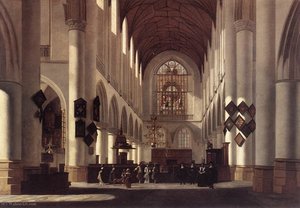
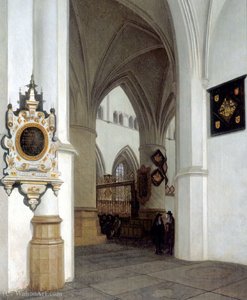
Upon returning to the Netherlands, his work became increasingly synonymous with the architectural soul of Haarlem. He possessed a singular ability to render the structural majesty of Dutch landmarks, most notably in his breathtaking depictions of the Sint-Bavokerk. In these paintings, he did not merely document stone and mortar; he captured the way light filtered through sacred spaces, creating an atmosphere of reverence and stillness. His mastery of perspective allowed viewers to step into the very heart of the choir screen, making the architectural triumphs of his era feel immediate and alive.
The Legacy of Observational Brilliance
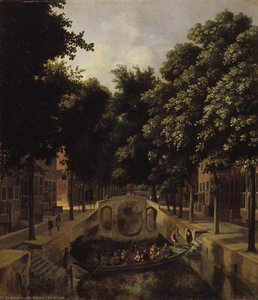
As his career progressed, Berckheyde’s oeuvre expanded to include genre scenes and cityscapes that served as windows into a vanished world. His View of a Dutch Canal stands as a testament to his skill in Baroque realism, where the reflections on the water and the intricate details of the canal-side buildings evoke a sense of profound peace. Whether he was capturing the dignified likeness of a merchant like Nicolaes Eichelberg or the bustling energy of a waterfront, his work remained anchored in meticulous observation.
The historical significance of Job Adriaenszoon Berckheyde lies in his role as a chronicler of the Dutch spirit. His paintings are more than mere aesthetic objects; they are cultural artifacts that preserve the light, the architecture, and the social fabric of the seventeenth century. Through his evolution from a student of dramatic shadows to a master of luminous clarity, he helped define the visual language of the Dutch Golden Age, ensuring that the quiet, dignified beauty of Haarlem would endure long after the era itself had passed into legend.
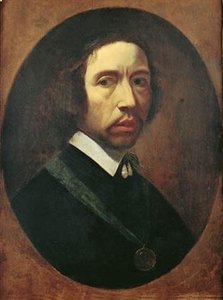
job adriaensz berckheyde
1630 - 1693 , Netherlands
Quick Facts
- Artistic Movement Or Style: Baroque
- Artists Or Movements Influenced By This Artist: Adriaen van Ostade
- Artists Who Influenced This Artist: Jacob Willemsz de Wet
- Date Of Birth: 1630
- Date Of Death: 1693
- Full Name: Job Adriaenszoon Berckheyde
- Nationality: Dutch
- Notable Artworks:
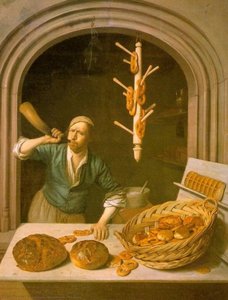
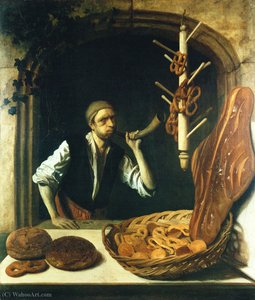
- The Baker
- Interior of St. Bavokerk
- Place Of Birth: Haarlem, Netherlands
Related Articles

Rembrandt's Masterpieces: Explore 25 Iconic Paintings & Prints | ArtsDot
Journey through Rembrandt van Rijn's 25 most iconic paintings & etchings. Explore Dutch Golden Age masterpieces, dramatic chiaroscuro, and timeless portraits. Find museum-quality art reproductions to elevate your home decor on ArtsDot.com.

Dutch Baroque Masters: 10 Paintings That Shaped an Era | ArtsDot
Journey through the Golden Age with our guide to the Top 10 Dutch Baroque masterpieces! Explore iconic paintings by Rembrandt, Vermeer & Frans Hals. Find museum-quality art reproductions and elevate your home decor at ArtsDot.com.

Dutch Masters: 10 Golden Age Paintings That Still Inspire |
Journey into the Dutch Golden Age! Explore 10 iconic paintings by Rembrandt, Vermeer & Hals. Discover the stories behind these Baroque masterpieces and find museum-quality art reproductions to elevate your home decor on .

Golden Age Reflections: Dutch Baroque Painting & Cultural Innovation
Explore the Dutch Golden Age of painting! Discover key artists like Vermeer & ter Borch, their innovative techniques, and the rich cultural context behind these Baroque masterpieces. Learn about collecting & appreciating this iconic art period.
Rembrandt van Rijn: A Life Illuminated – Innovation, Emotion, and the Dutch Golden Age
Explore the life & art of Rembrandt van Rijn, a Dutch Golden Age master. Discover his innovative techniques, iconic paintings like 'The Night Watch', and enduring legacy. Expert insights for collectors & enthusiasts.