Early Life and Apprenticeship: The Foundations of a Master
 Wikipedia: Rembrandt
Rembrandt Harmenszoon van Rijn (; Dutch: [ˈrɛmbrɑnt ˈɦɑrmə(n)ˌsoːɱ vɑn ˈrɛin] ; 15 July 1606 – 4 October 1669), mononymously known as Rembrandt, was a Dutch Golden Age painter, printmaker, and draughtsman. He is generally considered one of the greate...
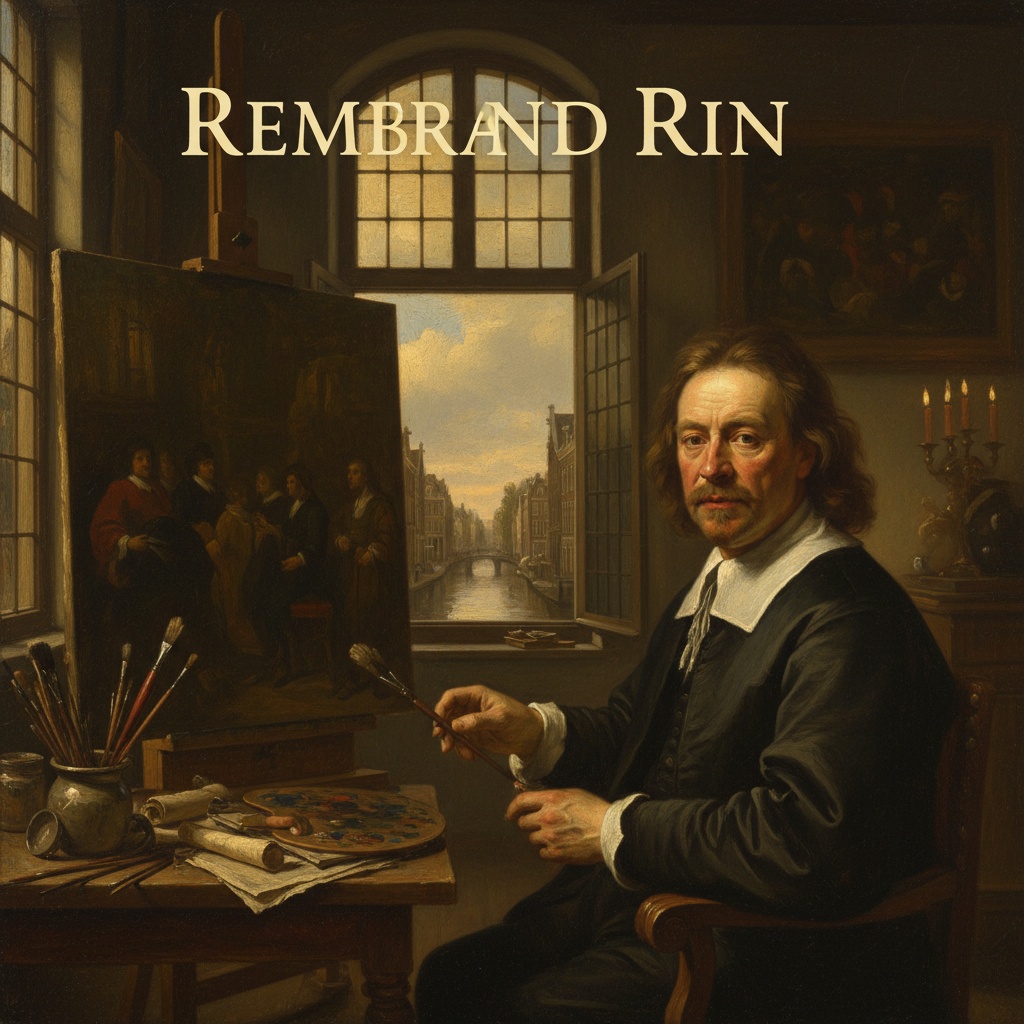
Rembrandt Harmenszoon van Rijn, born in Leiden in 1606, emerged from a Netherlands brimming with burgeoning trade, scientific inquiry, and an unprecedented artistic spirit – the Dutch Golden Age. Unlike many artists of his time who followed established family trades, Rembrandt’s inclination towards painting was evident early on. Though briefly enrolled at the University of Leiden, his true education began in the workshop of Jacob van Swanenburg, a local painter. This initial training provided him with foundational skills, but it was his subsequent six-month apprenticeship with Pieter Lastman in Amsterdam that proved pivotal. Lastman, a history painter, introduced Rembrandt to narrative complexity and dramatic composition – elements that would become hallmarks of his style. Even this relatively short period instilled within the young artist a fascination with biblical scenes and mythological subjects, setting him on a path distinct from the prevailing focus on portraiture common among Dutch artists.
Rembrandt’s early years were also marked by an insatiable curiosity for light and shadow, a preoccupation that would define his artistic vision. He wasn't merely replicating what he saw; he was dissecting it, analyzing how illumination sculpted form and revealed character. This dedication to observation, coupled with Lastman’s influence, laid the groundwork for a unique approach that quickly set him apart from his contemporaries.
The Rise to Prominence in Leiden and Amsterdam: Establishing a Reputation
Returning to Leiden after his apprenticeship, Rembrandt established his own studio in 1627, sharing space with fellow artist Jan Lievens. This period saw the beginnings of his burgeoning reputation as a portraitist, though even then, he infused his work with an unusual psychological depth. His early portraits weren’t simply representations of physical likeness; they were attempts to capture the inner lives of his subjects. The statesman Constantijn Huygens played a crucial role in elevating Rembrandt's status, securing commissions from the court of The Hague and introducing him to Prince Frederik Hendrik, who became a significant patron.
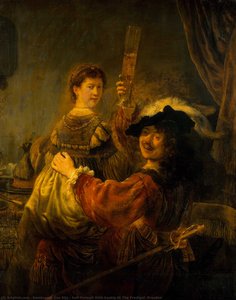
In 1631, Rembrandt made the decisive move to Amsterdam, a city pulsating with commercial energy and artistic opportunity. He quickly gained success as a professional portraitist, attracting wealthy clientele eager for his services. His marriage in 1634 to Saskia van Uylenburgh, from a respected family, further solidified his social standing and provided access to an even wider network of patrons. This period marked the height of Rembrandt’s early fame; he was a sought-after artist, commanding high prices and attracting numerous students, including Gerrit Dou and Ferdinand Bol.
Chiaroscuro and Psychological Depth: Rembrandt’s Revolutionary Technique
In art, chiaroscuro (English: kee-AR-ə-SKOOR-oh, -SKURE-, Italian: [ˌkjaroˈskuːro]; lit. 'light-dark') is the use of strong contrasts between light and dark, usually bold contrasts affecting a whole composition. It is also a technical term used by ...
Rembrandt's most enduring legacy lies in his masterful use of chiaroscuro, the dramatic interplay of light and shadow. However, he didn’t simply employ this technique as a stylistic flourish; it was integral to his exploration of human emotion and inner life. Unlike many artists who used light to illuminate form, Rembrandt wielded it as a psychological tool, focusing attention on key features and creating an atmosphere of intimacy and introspection.
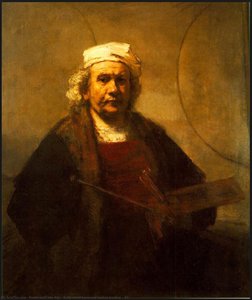
His paintings are not merely visually striking; they invite viewers into the emotional world of his subjects. Consider Self-Portrait with Two Circles, where the artist’s gaze is both penetrating and vulnerable, illuminated by a soft, diffused light that emphasizes the lines etched on his face – a testament to years of experience and contemplation. This technique wasn't limited to portraits; it permeated his biblical scenes and historical paintings, imbuing them with a profound sense of drama and spirituality. The use of impasto—thickly applied paint—further enhanced this effect, creating texture and depth that brought his subjects to life.
Navigating the Dutch Golden Age: Art, Society, and Patronage
The Dutch Golden Age (Dutch: Gouden Eeuw [ˈɣʌudən ˈeːu, ˈɣʌudə ˈʔeːu]) was a period in the history of the Netherlands which roughly lasted from 1588, when the Dutch Republic was established, to 1672, when the Rampjaar occurred. During this period, Du...
The Dutch Golden Age was a period of unprecedented prosperity and cultural flourishing, but it wasn’t without its complexities. The rise of Calvinism fostered a sense of social conservatism, yet also encouraged individual expression and entrepreneurial spirit. Rembrandt's art reflected this duality – his portraits often depicted the wealth and status of his patrons, while his biblical scenes explored themes of faith, morality, and human fallibility.
The Dutch Republic’s burgeoning trade networks brought new wealth to the merchant class, creating a demand for art that celebrated their achievements. However, Rembrandt's willingness to challenge conventions—his rejection of idealized forms and his focus on realism—sometimes clashed with the expectations of his patrons. He never shied away from depicting imperfections, wrinkles, or signs of age, believing that these details revealed character and authenticity. This commitment to truthfulness, while admired by some, also led to periods of financial hardship.
Beyond Portraits: Biblical Scenes, Landscapes, and Etchings – A Diverse Oeuvre
While renowned for his portraits, Rembrandt’s artistic output was remarkably diverse. He produced a vast body of work encompassing biblical scenes, landscapes, genre paintings, allegorical subjects, and hundreds of etchings. His interpretations of biblical stories were particularly innovative; he depicted them not as grand historical events but as intimate moments of human drama.
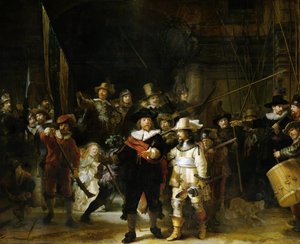
His etching technique was equally groundbreaking. Unlike many artists who used etching primarily for preparatory sketches, Rembrandt elevated it to a major art form, creating works of extraordinary detail and emotional depth. The Night Watch, completed in 1642, exemplifies his mastery of composition and dramatic lighting. Though initially met with mixed reception, it is now considered one of the greatest masterpieces of Baroque art. His landscapes, often small in scale, captured the subtle beauty of the Dutch countryside, revealing a deep connection to nature.
Legacy and Enduring Influence: Rembrandt's Impact on Western Art
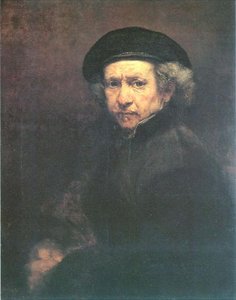
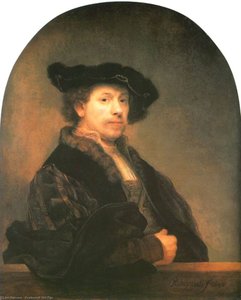
Despite facing personal tragedy and financial difficulties later in life, Rembrandt’s reputation as an artist remained high throughout his lifetime. He taught numerous students who went on to become successful painters in their own right, spreading his influence across the Netherlands. His approximately 40 self-portraits offer a unique glimpse into his artistic evolution and inner world—an intimate autobiography rendered in paint.
Rembrandt’s impact on Western art is immeasurable. His innovative use of chiaroscuro, his psychological depth, and his commitment to realism continue to inspire artists today. He challenged conventions, embraced imperfection, and sought to capture the essence of human experience—qualities that resonate with audiences centuries later. At ArtsDot.com, we are proud to offer high-quality reproductions of Rembrandt’s masterpieces, allowing you to bring his timeless vision into your own home and appreciate the enduring power of his art.