The Rise of Genre Painting in the Dutch Golden Age
Dutch Golden Age painting is the painting of the Dutch Golden Age, a period in Dutch history roughly spanning the 17th century, during and after the later part of the Eighty Years' War (1568–1648) for Dutch independence. The new Dutch Republic was th...
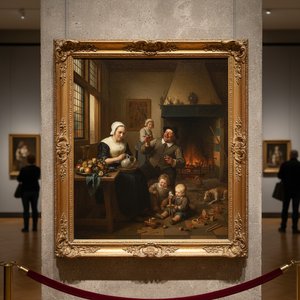
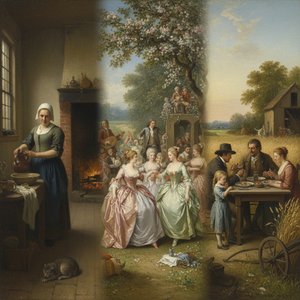
The 17th century Netherlands, freshly independent and blossoming with unprecedented mercantile prosperity, witnessed a remarkable shift in artistic focus. No longer primarily commissioned by the Church or aristocratic patrons as in previous eras, art began to reflect the lives and values of a burgeoning middle class. This period, known as the Dutch Golden Age, saw the spectacular rise of genre painting – depictions of everyday life, from bustling markets and intimate domestic scenes to lively taverns and tranquil landscapes. It was a democratization of subject matter, a move away from grand historical narratives and religious iconography towards an honest portrayal of contemporary existence. Artists like Adriaen van Ostade were at the forefront of this revolution, capturing not merely *what* people did, but *how* they lived, their struggles, joys, and quiet dignity.
Adriaen van Ostade’s Life and Artistic Development
 Wikipedia: Adriaen van Ostade
Adriaen van Ostade (baptized as Adriaen Jansz Hendricx 10 December 1610 – buried 2 May 1685) was a Dutch Golden Age painter of genre works, showing everyday life of ordinary men and women. == Life == According to Arnold Houbraken, he and his broth...
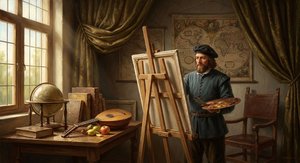
Born in Haarlem in 1610 as Adriaen Jansz Hendricx, the artist we know as Adriaen van Ostade came from humble beginnings. His father was a weaver, and young Adriaen initially followed in his footsteps. However, a natural talent for drawing soon led him to an apprenticeship under Frans Hals, one of the most celebrated portraitists of the time. While Hals’ influence is visible in Van Ostade's early works – particularly in his dynamic brushwork and keen observation of character – he quickly forged his own distinct path. He wasn’t solely focused on capturing likeness; instead, he gravitated towards scenes of peasant life, initially mimicking the style of Adriaen Brouwer with its rough-hewn realism and often humorous depictions of rural existence. However, Van Ostade soon refined this approach, moving beyond caricature to a more nuanced and empathetic portrayal of his subjects.
Depicting Daily Life: Themes and Motifs in Van Ostade's Work
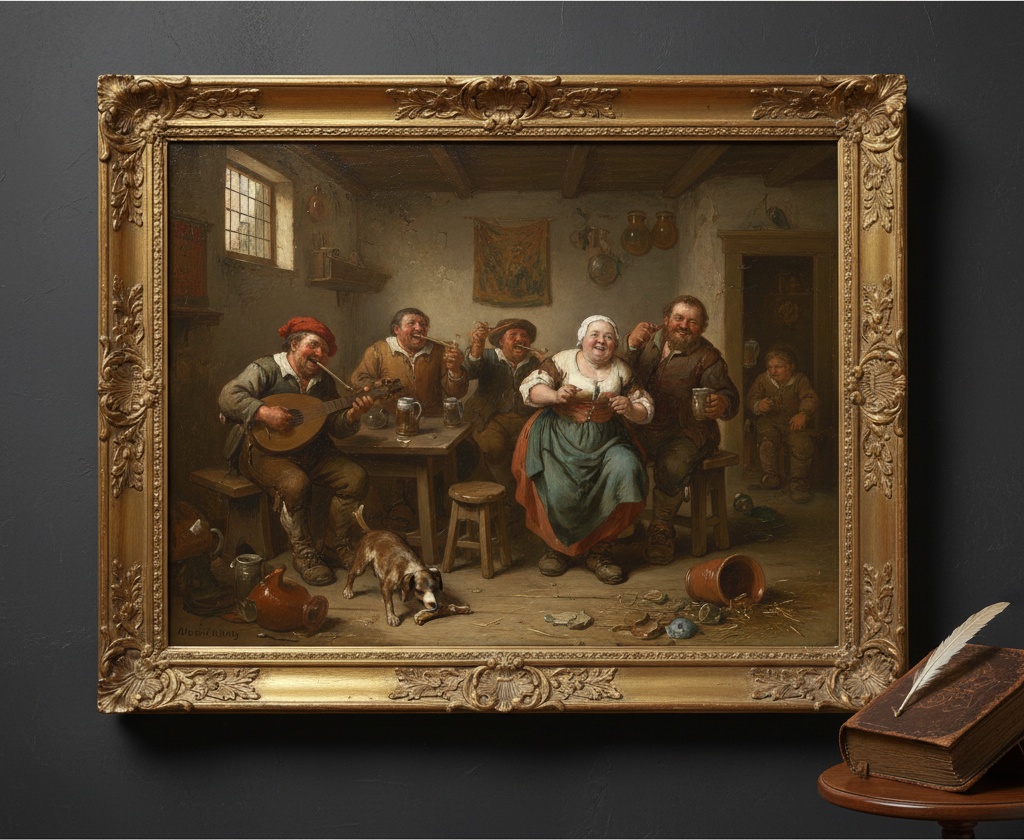
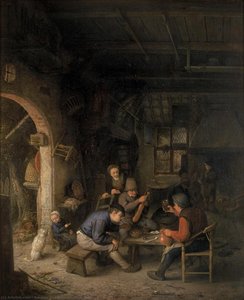
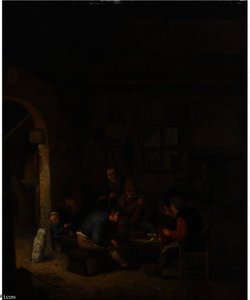 Peasants In An Inn Smoking And Drinking, A Little Girl Feeding A Dog To The Left
Step into a dimly lit Dutch Golden Age tavern with Adriaen van Ostade's 'Peasants In An Inn.' Observe daily life, realism & subtle storytelling.
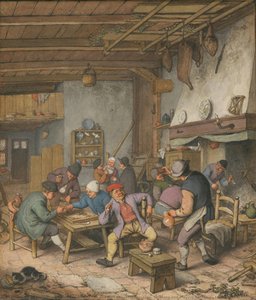
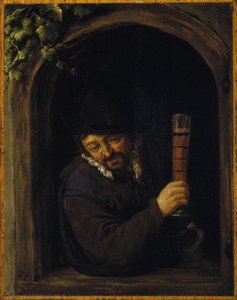
Van Ostade’s oeuvre is characterized by its intimate focus on the lives of ordinary Dutch people. Taverns feature prominently, offering glimpses into a world of camaraderie, simple pleasures, and occasional excess – as seen in works like “An Old Toper” (1665), where the elderly man embodies both vulnerability and resilience. He also frequently depicted scenes of domestic life: mothers tending to children, families sharing meals, and individuals engaged in their daily labors. Landscapes, often populated with figures, provide a sense of tranquility and connection to the Dutch countryside. A recurring motif is the depiction of village schools, highlighting the importance of education even within modest circumstances. His paintings aren’t simply records of these activities; they are imbued with a quiet dignity, revealing the inherent worth and humanity of his subjects.
Social Commentary and Realism: Beyond Simple Representation
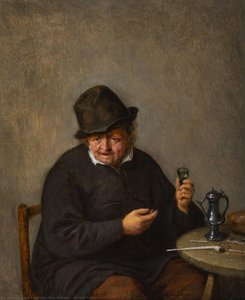 An Old Toper
Admire Adriaen van Ostade’s ‘An Old Toper,’ a poignant 1665 oil painting of an elderly man. Explore its realistic style, Dutch Golden Age details & evocative mood – a captivating portrait.
While Van Ostade's work appears to celebrate everyday life, it is not without its subtle social commentary. His depictions of poverty, though often presented with tenderness, are nonetheless unflinching in their realism. The worn clothing, humble dwellings, and weathered faces of his subjects speak volumes about the hardships faced by many during this period. He doesn’t shy away from portraying the less glamorous aspects of life – the dirt, the weariness, the simple struggles for survival. However, he avoids overt moralizing or judgment; instead, he presents these scenes with a sense of empathy and understanding. This nuanced approach sets him apart from some of his contemporaries who leaned towards more overtly satirical depictions of peasant life. His paintings invite viewers to contemplate the complexities of social class and the inherent dignity of all individuals, regardless of their station.
Van Ostade’s Legacy and Influence on Subsequent Artists
Adriaen van Ostade's influence extended far beyond his own lifetime. His meticulous technique, empathetic portrayal of everyday life, and subtle social commentary inspired generations of artists. He trained numerous pupils, including Cornelis Bega, Jan de Groot, and even the renowned Jan Steen, each of whom carried forward elements of his style. His work also resonated with later Realist painters who sought to depict the world as it was, without idealization or romanticism. The emphasis on light and shadow, combined with a keen attention to detail, became hallmarks of Dutch painting and continue to be admired today. Van Ostade’s ability to elevate the ordinary to the level of art remains his most enduring legacy – a testament to the power of observation, empathy, and skillful execution.
Collecting Adriaen van Ostade Today
Owning an original work by Adriaen van Ostade is a privilege reserved for discerning collectors. His paintings are highly sought after for their historical significance, artistic merit, and enduring beauty. While prices vary depending on size, subject matter, and condition, they represent a significant investment in a true masterpiece of the Dutch Golden Age. ArtsDot
offers high-quality handmade oil reproductions of Van Ostade’s most celebrated works, allowing art enthusiasts to experience the charm and artistry of this remarkable painter firsthand. From intimate tavern scenes to tranquil landscapes, these reproductions capture the essence of his style and provide a window into the world of 17th-century Holland. Explore our collection today and discover the timeless appeal of Adriaen van Ostade.