 Preview
 Send
Send Share
Share
 Details

 Download
 Similars
 X-Ray
X-Ray Diaporama
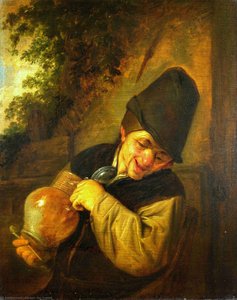
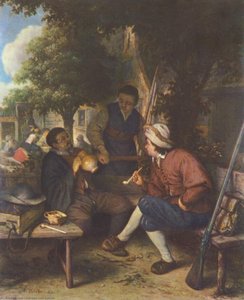
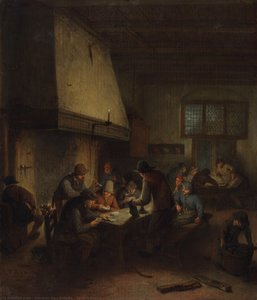
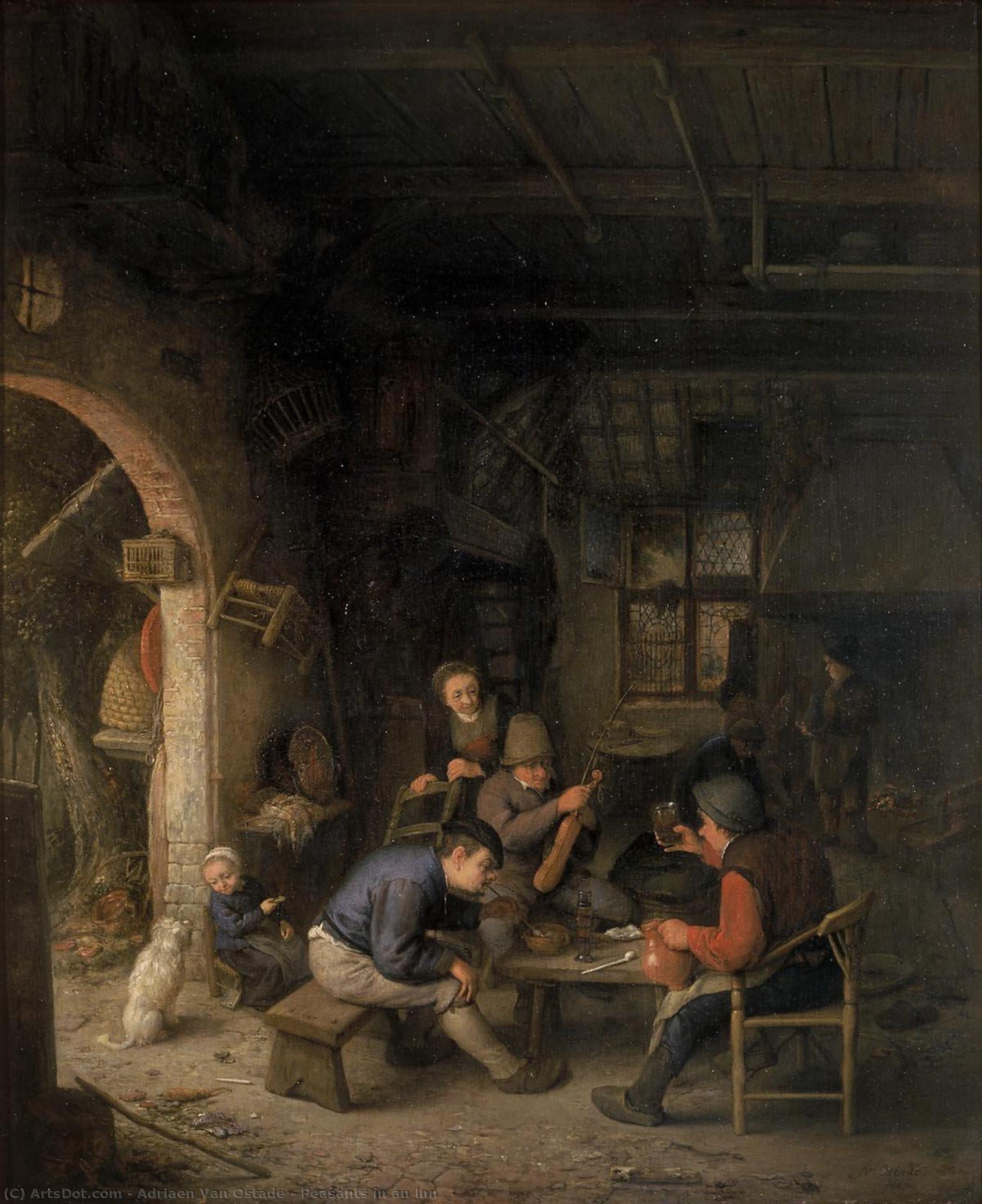
Peasants in an Inn
 Acrylic On Canvas
- WallArt
- Baroque Genre Painting
 1662
1662 48.0 x 39.0 cm
 Mauritshuis
 Read More
Hand Made Oil Reproduction
Hand-painted oil on canvas in your size and frame, made to order by our artists. ( Buy Print Buy Image)




P118B $10

P118H $10

P118W $10

P438Z $10

P508JH $12

P508YH $12

P805H $10

P805Z $10

P919BZ $10

P919G $10

P919XJ $10

P959ZH $10

P968JZ $12

W106C $8

W218G $10

W218JH $8

W218Y $10

W307PJ $10

W316G $10

W316PJ $8

W316Y $10

W398PJ $8

W4111J $10

W500HY $15

W500JH $15

W692G $12

W849H $8

W940BG $15

W953PJ $8




Pick from our preset sizes that match the artwork's original proportions.

You may enter your own dimensions to fit a specific frame or space. If your selected size does not match the original image's proportions, we will either crop the artwork or extend the painting with additional hand-painted elements. A digital mockup will be sent for your approval before production begins.
Please note that the on-screen preview does not reflect the actual cropping or extension. Only the mockup will accurately show the final composition.
While custom sizes are available, we recommend selecting a dimension from the predefined list to preserve the original proportions.
After order, ArtsDot.com team will email client for instructions and provide a mockup preview
Worldwide Delivery () in 3/4 weeks instead of standard 5 weeks. (17 August). No compromise on quality.

Free Worldwide Express Shipping

High-Quality Linen Canvas

Full Shipping Insurance

Customs Tax Refund Guarantee

True Color Matching Guarantee

60-Day Return Policy (Defects Only)

100% Money-Back Guarantee

Bulk Discount Offer
 Glass option is only available in size under 110 CM

Peasants in an Inn
Reproduction Medium
Reproduction Size
-


Total Price
$ 263
Artwork Description
A Snapshot of Dutch Rural Life: Adriaen van Ostade’s “Peasants in an Inn”
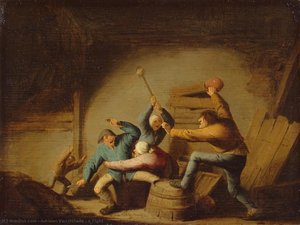
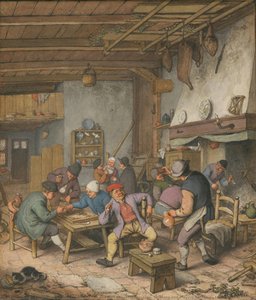
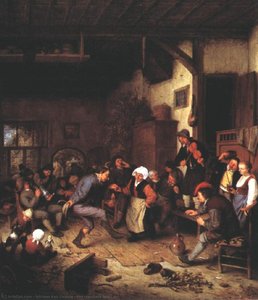
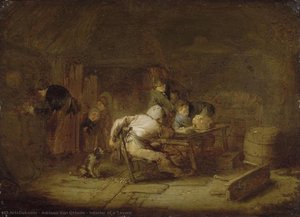
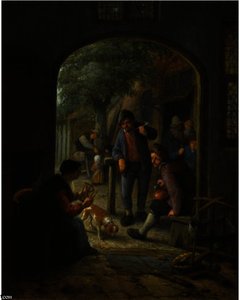
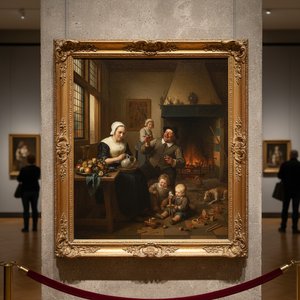
The painting "Peasants in an Inn," completed in 1662 by Adriaen van Ostade, stands as a quintessential example of Baroque genre painting—a movement that prioritized realism and psychological insight into everyday life over idealized grandeur. More than just a depiction of a tavern scene, it’s a carefully crafted tableau capturing the complexities of rural Dutch society during the Golden Age.The Scene: Detail and Observation
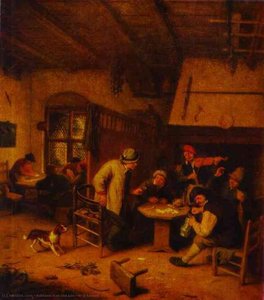
Ostade's masterful technique is immediately apparent upon viewing this artwork. He eschewed Hals’s looser brushstrokes for a meticulous approach, applying paint with precision to render textures—the worn wooden table, the rough fabric of clothing, even the subtle sheen on pewter mugs—with remarkable accuracy. The composition itself is deceptively simple: several figures occupy a dimly lit room, engaged in conversation and consuming food. A dog rests at their feet, adding an element of domestic tranquility amidst the bustle of activity. Ostade’s eye for detail isn't merely decorative; it serves to immerse the viewer in the palpable atmosphere of the inn—the smells of roasting meat, the murmur of voices, the warmth emanating from flickering candlelight.Baroque Style and Psychological Depth
The Baroque period (roughly 1600-1750) was characterized by dramatic contrasts – light and dark, opulent ornamentation alongside restrained restraint – mirroring the turbulent religious and political landscape of Europe at the time. Ostade’s work embodies these stylistic tendencies, utilizing chiaroscuro—the skillful manipulation of light to sculpt forms—to heighten emotional impact. Notice how the shadows envelop certain characters, conveying a sense of melancholy or introspection. This isn't simply portraying people; it’s delving into their inner lives, exploring themes of poverty, camaraderie, and the quiet dignity of ordinary existence.Historical Context: Pieter II Stuyvesant’s Amsterdam
“Peasants in an Inn” was created during the reign of Pieter II Stuyvesant, Governor-General of New Netherland (later New York), marking a period of significant economic prosperity for Amsterdam and its surrounding region. The Dutch Republic experienced a flourishing trade with Asia and Europe, fueling urbanization and creating a burgeoning middle class. Ostade’s depiction reflects this social reality—a scene from the lives of common folk who contributed to the nation's wealth and cultural dynamism. It speaks to a broader concern within Baroque art – capturing not just what people *looked* like but how they *felt*.Symbolism: Beyond Surface Appearance
The inclusion of objects like the dog, the cup, and the book adds layers of symbolic meaning. The dog represents loyalty and companionship—values central to rural life—while the cup symbolizes hospitality and shared sustenance. The book hints at intellectual pursuits amidst the physicality of daily routines, suggesting that even in humble surroundings, individuals strive for enlightenment and understanding. Ostade’s subtle gestures convey a profound appreciation for human experience, elevating a commonplace scene into something emotionally resonant.Emotional Impact: A Moment Frozen in Time
Ultimately, “Peasants in an Inn” succeeds in capturing the essence of human connection—the quiet comfort found in shared companionship and the dignity inherent in facing life’s challenges with resilience. Ostade's painting invites contemplation on themes of social responsibility and the beauty of simplicity. It remains a powerful reminder that art can illuminate aspects of human existence often overlooked by grand narratives, offering instead a glimpse into the heart of Dutch rural culture during its golden age.Related Artworks
Artist Biography
Adriaen van Ostade: A Life in Dutch Genre Painting
Early Life and Training
- Born: 1610 in Haarlem, Netherlands.
- Van Ostade came from a family of artists; his father, Jan van Ostade, was a tapestry weaver. This artistic environment likely fostered his early interest in visual arts.
- Initial Training: He and his brother, Isaack Jansz van Ostade, were initially pupils of Frans Hals, a celebrated Dutch Golden Age painter known for his lively portraits and genre scenes.
- However, their time with Hals was relatively brief. They soon diverged from Hals’s style, developing their own distinct approaches to painting.
Artistic Development and Style
- Early Works (1630s): Van Ostade's early paintings often imitated Hals’s loose brushwork, but he gradually refined his technique.
- He began to focus on genre scenes – depictions of everyday life, particularly those involving peasants and working-class individuals.
- Distinctive Style: His style is characterized by meticulous detail, a subtle use of light and shadow (chiaroscuro), and an emphasis on realistic portrayals of his subjects.
- He skillfully captured the textures of clothing, objects, and environments, creating a sense of authenticity in his work.
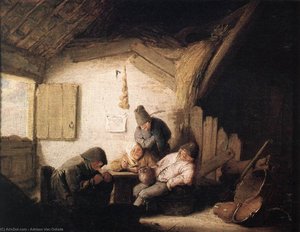
- Subject Matter: Common themes included tavern scenes, village fairs, peasant interiors, and depictions of rural life.
Major Works and Achievements
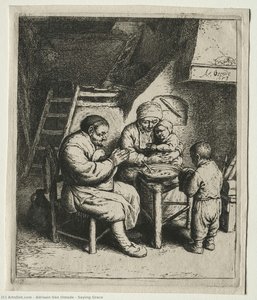
- Saying Grace (c. 1660): This painting, housed at the Cleveland Museum of Art, is considered one of his masterpieces. It exemplifies his ability to imbue even humble subjects with dignity and poetic beauty.
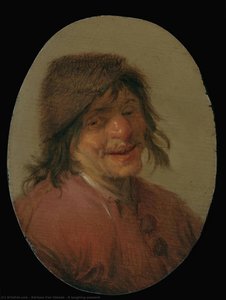
- A Laughing Peasant (1634): A small but captivating work in the Kremer Collection, Amsterdam, showcasing his skill in capturing expressive faces and gestures.
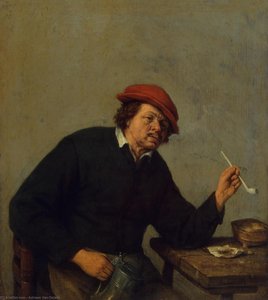
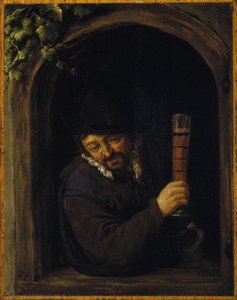
- Tavern Scenes: Van Ostade produced numerous tavern scenes, offering glimpses into the social lives of 17th-century Dutch people. These paintings often depict lively gatherings with drinking, smoking, and music.
- Landscape Paintings: While primarily known for his genre works, he also created landscapes, often featuring rustic settings and figures engaged in everyday activities.
Influences and Legacy
- Frans Hals’s Influence: His initial training under Frans Hals provided a foundation in Dutch painting techniques and genre subject matter.
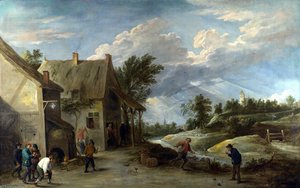
- Comparison with David Teniers the Younger: Art historians often compare Van Ostade's work to that of David Teniers the Younger, another prominent genre painter. However, their paintings reflect different regional characteristics – Van Ostade focused on Holland, while Teniers depicted Brabant.
- Impact on Later Artists: Van Ostade’s emphasis on naturalism and everyday life paved the way for later artistic movements like Impressionism and Realism. His attention to light and shadow also influenced Baroque painting.
- Historical Significance: He is considered a key figure in Dutch Golden Age painting, providing valuable insights into the lives and customs of 17th-century Dutch society.
Later Life and Death
- Guild Membership: Van Ostade became a member of the Haarlem Guild of St. Luke in 1634, signifying his recognition as a professional artist.
- Continued Success: He enjoyed continued success throughout his career, receiving commissions from wealthy patrons and establishing himself as a respected painter.
- Death: Adriaen van Ostade died in Haarlem in 1685. His works continue to be admired for their realism, charm, and historical significance.
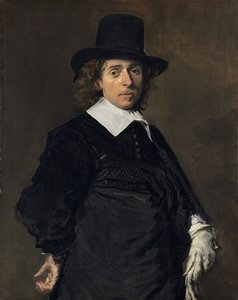
Adriaen van Ostade
1610 - 1685 , Netherlands
Quick Facts
- Birth_Date: 1610
- Birth_Place: Haarlem, Netherlands
- Death_Date: 1685
- Influenced_By: Frans Hals
- Movement: Dutch Golden Age painting
- Name: Adriaen van Ostade
- Nationality: Dutch
- Notable_Works:
- Saying Grace
- A Laughing Peasant
Related Articles
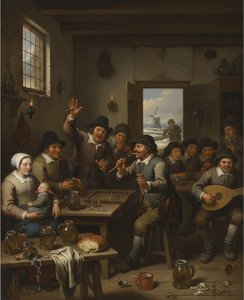
Adriaen Brouwer: Capturing Dutch Life & Social Commentary Through Genre Painting
Explore the captivating world of Adriaen Brouwer, a master of Dutch Golden Age genre painting. Discover his vivid depictions of peasant life, social commentary, and lasting influence on art history. Learn more at ArtsDot.
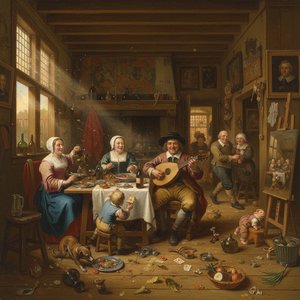
Jan Steen: A Master of Dutch Genre Painting & the Golden Age
Explore the life & art of Jan Steen, a leading Dutch Golden Age painter renowned for his humorous genre scenes & insightful social commentary. Discover his techniques, legacy, and collecting tips.
Harmonizing Hues & Histories: A Comprehensive Guide to Matching Art Reproductions with Interior Design Styles
Discover how to perfectly match art reproductions with your interior design style! Expert guidance, museum-quality prints & custom portraits at ArtsDot. Elevate your home today.
Beyond Aesthetic Preference: A Triadic Approach to Personalized Art Selection and its Impact on Emotional Resonance within Interior Spaces
Discover the power of personalized art to transform your space & evoke emotion. Expert guidance, custom paintings, & museum-quality reproductions. Elevate your home with ArtsDot.
Genre Painting: A Window into Daily Life & Societal Values of the Dutch Golden Age
Explore the captivating world of Dutch Golden Age genre painting! Discover realistic depictions of daily life, masterful artists like Ostade & Metsu, and hidden symbolism. Learn about this influential art movement with ArtsDot.