Early Life and Artistic Beginnings
Quiringh Gerritsz. van Brekelenkam, born in the small Dutch village of Zwammerdam around 1622, emerged during the vibrant heart of the Dutch Golden Age. While precise details surrounding his early life remain elusive, it is generally accepted that he entered the artistic world through an apprenticeship with Gerard Dou, a leading figure within the Leiden *fijnschilders*—a school renowned for its meticulous detail and refined technique. This formative training profoundly shaped Brekelenkam’s aesthetic sensibilities, instilling in him a dedication to capturing the subtleties of everyday life with remarkable precision.
Brekelenkam's initial foray into professional artistry is marked by his entry into the Leiden Guild of Saint Luke in 1648. This signifies not merely a technical proficiency but also an acceptance into the established artistic community, allowing him to exhibit and sell his work. His earliest dated painting from this period—1644—offers a glimpse into the nascent talent that would soon blossom into a distinctive style.
A Master of Genre Scenes: Domesticity and Daily Life
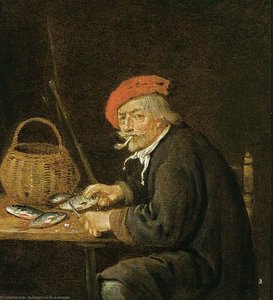
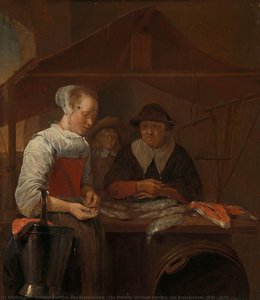
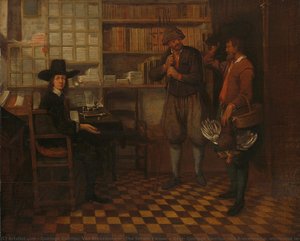
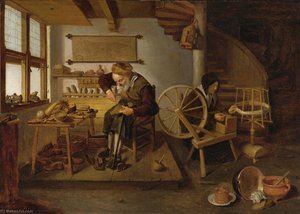
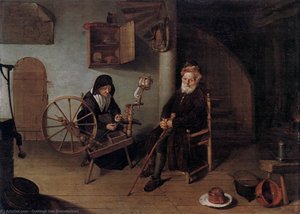
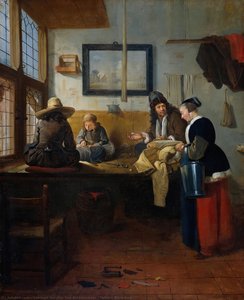
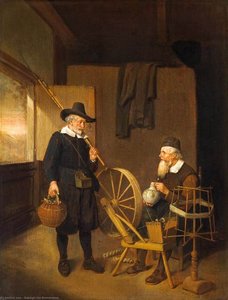
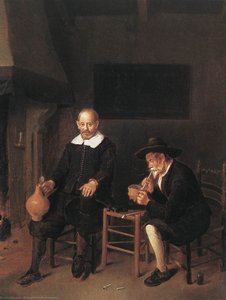
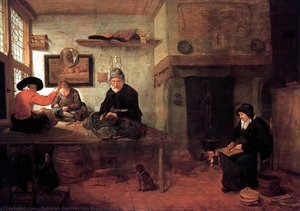
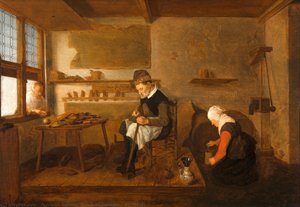
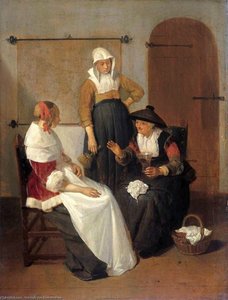
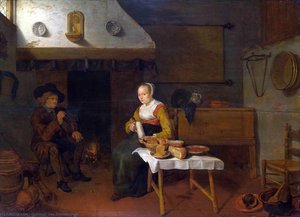
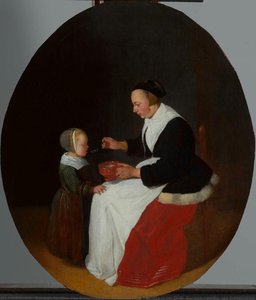
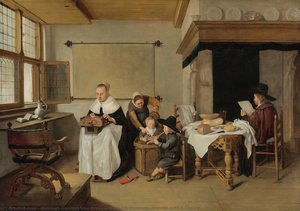
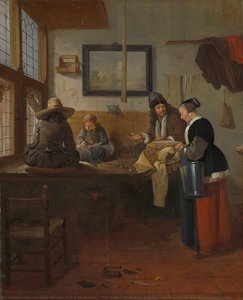
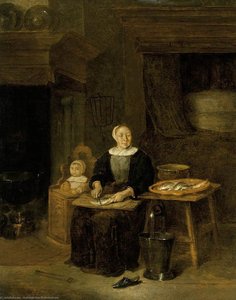
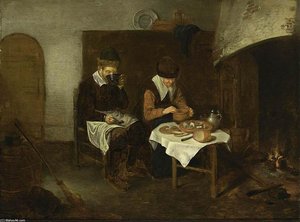
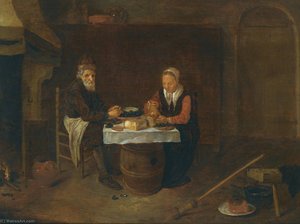
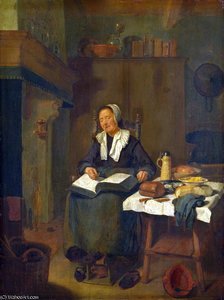
Van Brekelenkam carved a niche for himself as a genre painter, specializing in intimate scenes of Dutch domestic life. His canvases depict households bustling with activity, workshops filled with the tools of various trades, and peasant interiors radiating warmth and authenticity. Unlike some of his contemporaries who imbued their scenes with overt moralizing symbolism, Brekelenkam’s work often presents a more straightforward portrayal of daily routines—a quiet observation of human existence.
His paintings are characterized by an exquisite attention to detail; the textures of fabrics, the gleam of pewter, and the play of light across surfaces are rendered with astonishing realism. This dedication to verisimilitude is not merely a display of technical skill but also reflects a broader cultural fascination with capturing the material world during this period of burgeoning prosperity. Works like The Silver Ewer exemplify his ability to transform commonplace objects into subjects of compelling beauty, while Old Woman with a Candle showcases his sensitivity in portraying human emotion and character.
Influences and Artistic Development
Gerard Dou’s influence is undeniably present in Brekelenkam's early work. The meticulous brushwork, the carefully composed interiors, and the focus on individual figures all bear the hallmarks of Dou’s style. However, Brekelenkam gradually developed a unique voice, moving away from the strict adherence to his master’s techniques. His paintings became more ‘painterly’, less focused on an almost hyper-realistic finish, and embraced a greater sense of spontaneity.
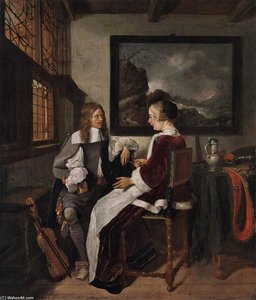
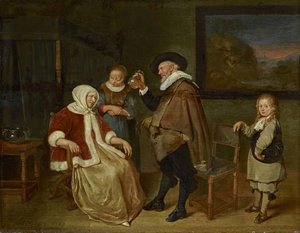
As his career progressed, Brekelenkam began to explore new subject matter, including portraits and scenes depicting members of the upper classes engaged in leisurely activities—such as receiving letters or tending to their toilette. This shift suggests an expanding clientele and a growing recognition within broader social circles. His later works reveal a subtle awareness of Gerard ter Borch II’s style, particularly in his depiction of light and atmosphere.
Legacy and Historical Significance
Quiringh van Brekelenkam's contributions to the Dutch Baroque tradition lie in his ability to capture the essence of everyday life with both technical mastery and a quiet sensitivity. His paintings offer valuable insights into the material culture, social customs, and domestic interiors of 17th-century Netherlands.
While perhaps not as widely celebrated as some of his more famous contemporaries, Brekelenkam’s work has garnered increasing attention in recent years. His paintings are now held in prestigious collections such as the Musée du Louvre in Paris and the Wallace Collection in London, testament to their enduring artistic merit. Today, platforms like ArtsDot.com make his captivating scenes accessible to a wider audience, allowing viewers to appreciate the subtle beauty and historical significance of this remarkable Dutch genre painter.
- Notable Works: The Silver Ewer, Old Woman with a Candle, A Hermit, The Tenant Farmer’s Rent, The Fishwife, Interior with Lace-Worker and a Visitor.
- Museums & Collections: Musée du Louvre, Wallace Collection.
- Artistic Style: Dutch Baroque, Genre Scenes, Leiden Fijnschilder.
- Key Influences: Gerard Dou, Leiden Fijnschilders.