The Rise of Genre Painting: A Shift in Artistic Focus
The Dutch Golden Age was a period of remarkable prosperity and artistic output in the 17th century, with a focus on Landscape, Genre, Still-Life, Portraiture, ...
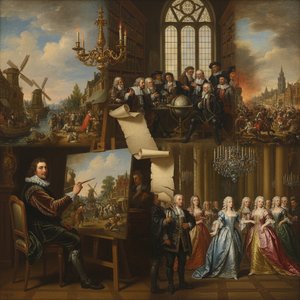
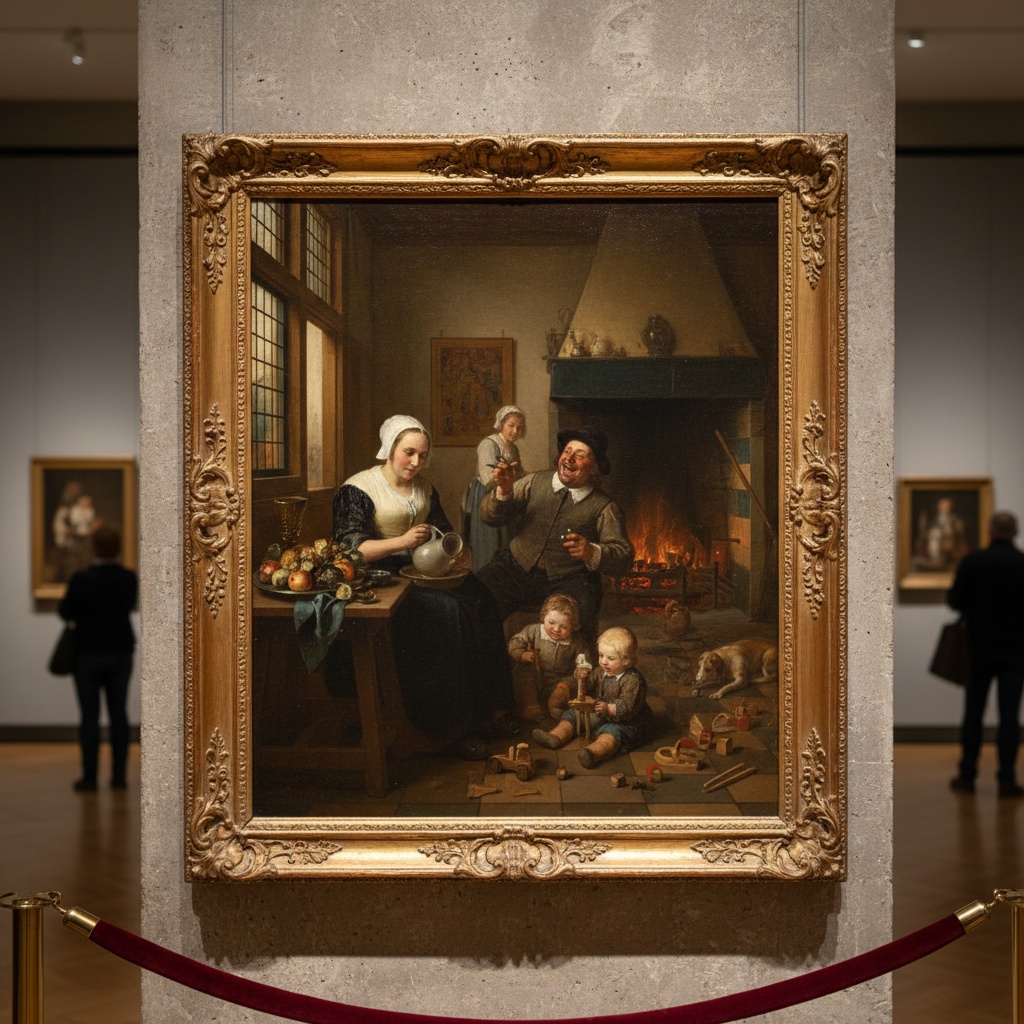
The 17th century Netherlands witnessed a remarkable flourishing of artistic talent, a period now celebrated as the Dutch Golden Age. Unlike many previous eras where religious and mythological narratives dominated the canvas, this time saw a profound shift towards depicting everyday life – a revolution spearheaded by genre painting. This wasn’t merely a change in subject matter; it reflected a burgeoning sense of national identity, economic prosperity, and a growing middle class eager to see their own world represented in art. The newly independent Dutch Republic fostered an environment where artists were less beholden to aristocratic patronage and more responsive to the demands of a broader market. This led to an unprecedented focus on scenes of domesticity, labor, leisure, and social interaction – moments previously considered unworthy of artistic attention now elevated to prominence.
Daily Life Depicted: Common Themes & Subjects in Dutch Genre Scenes
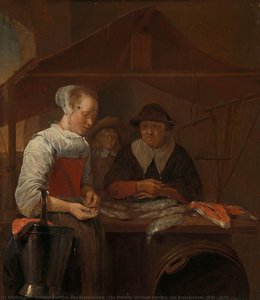 The fishwife, Quiringh Gerritsz. van Brekelenkam, 1650 - 1670
Discover 'The Fishwife' by Quiringh Gerritsz. van Brekelenkam – a stunning 1670 Dutch Golden Age oil painting. Explore realism, masterful detail & daily life scenes.
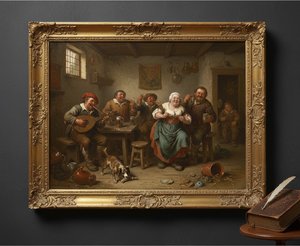
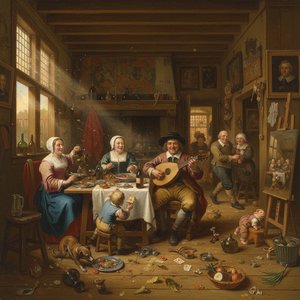
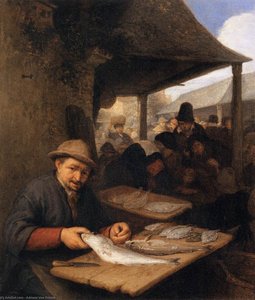
The scope of daily life captured within Dutch genre painting is astonishingly diverse. Taverns bustled with lively gatherings, as exemplified by Jacob Duck’s Interior with Soldiers and Women, offering a glimpse into the social fabric of the time – a blend of camaraderie, flirtation, and perhaps a touch of mischief. Rural scenes were equally popular; Barend Gael's A Farrier’s Shop meticulously portrays the honest labor and practical skills essential to agrarian life. Women occupied a significant place in these depictions, whether engaged in household tasks like Quiringh Gerritsz. van Brekelenkam’s poignant portrayal of The Fishwife, or managing their businesses with quiet dignity. Beyond these occupations, artists explored the simple pleasures of life – children at play, families sharing meals, and individuals lost in moments of contemplation. These weren't idealized representations; they were often imbued with a sense of realism that resonated deeply with contemporary viewers.
Realism and Detail: The Hallmarks of the Dutch Golden Age Style
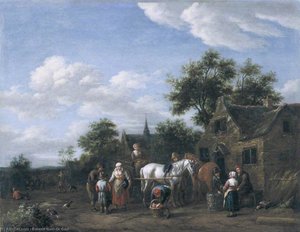 A farrier's shop
Experience Dutch Golden Age realism! Barend Gael’s ‘A Farrier’s Shop’ captures rural life with meticulous detail & atmospheric perspective. Oil on canvas, 17th century.
What truly sets Dutch genre painting apart is its unwavering commitment to realism. Artists possessed an extraordinary ability to capture minute details – the texture of fabrics, the play of light on surfaces, the subtle expressions on faces. This wasn’t simply about technical skill; it was a deliberate aesthetic choice rooted in observation and a desire to accurately reflect the world around them. The use of chiaroscuro—the dramatic contrast between light and shadow—became a defining characteristic, adding depth and volume to their compositions. Atmospheric perspective, creating a sense of distance and realism within the scene, was also masterfully employed. The result is paintings that feel remarkably lifelike, inviting viewers to step into these intimate moments as if they were present themselves.
Beyond Representation: Symbolism and Moral Undercurrents in Genre Art
While seemingly straightforward depictions of everyday life, Dutch genre scenes often concealed layers of symbolism and moral commentary. A seemingly innocent gathering could subtly critique social vices like gluttony or drunkenness. Objects within the paintings frequently carried hidden meanings – a half-peeled lemon representing transience, a broken wine glass symbolizing fragility, or specific flowers alluding to virtues or flaws. Artists such as Jan Steen were particularly adept at embedding these subtle messages into their work, inviting viewers to decipher the underlying narrative and reflect on their own lives. This interplay between realism and symbolism elevated genre painting beyond mere documentation; it became a vehicle for social observation and moral instruction.
Key Artists of the Movement: Duck, Ostade, Metsu, and Van der Burch
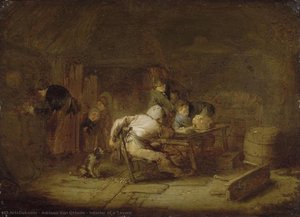
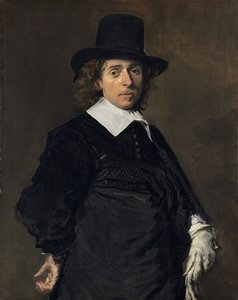 Adriaen van Ostade
Explore Adriaen van Ostade's 17th-century Dutch genre paintings! Discover realistic scenes of daily life, taverns & peasant culture – a Golden Age master.
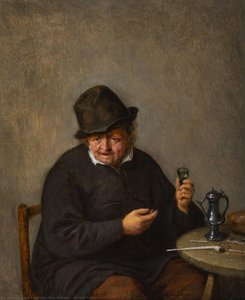
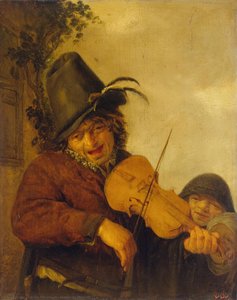
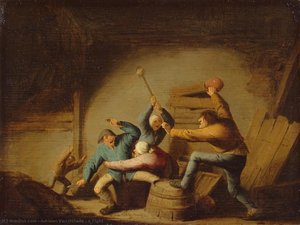
Several artists stand out as exemplars of this remarkable movement. Jacob Duck’s tavern scenes are renowned for their lively energy and detailed character studies. Adriaen van Ostade focused on peasant life, portraying both its hardships and simple joys with a keen eye for detail. Gabriel Metsu, influenced by Rembrandt and Vermeer, captured the elegance and refinement of middle-class interiors, often imbuing his works with a sense of narrative intrigue. Hendrick van der Burch, known for his intimate depictions of domestic scenes – often signed with his distinctive ‘hvb’ monogram – offered a glimpse into the quiet moments of everyday life in Delft. These artists, along with many others, collectively defined the aesthetic and thematic landscape of Dutch genre painting.
The Enduring Legacy of Dutch Genre Painting & its Influence on Later Art
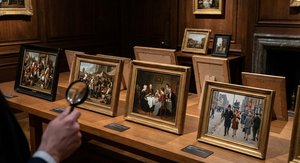
The impact of Dutch genre painting extends far beyond the 17th century. Its emphasis on realism, detail, and everyday life profoundly influenced subsequent generations of artists. The movement’s focus on capturing light and atmosphere paved the way for Impressionism, while its commitment to social observation resonated with Realist painters in the 19th century. Today, Dutch genre paintings continue to captivate audiences worldwide, offering a unique window into a bygone era – a testament to the power of art to reflect not only what was seen but also how it was felt and understood. At ArtsDot, we are proud to offer high-quality reproductions of these masterpieces, allowing you to bring the beauty and insight of the Dutch Golden Age into your own home. Explore our collection today and discover the enduring appeal of this remarkable artistic tradition.