![The Anatomy Lecture Of Dr. Nicolaes Tulp [1632] — Rembrandt Van Rijn](/media/artworks/images/thumbnails/12/01/1201b3f0503f4444b89f31dad3941765.jpg)
The Dawn of a New Era: Political & Economic Foundations of the Dutch Golden Age
The Dutch Golden Age (Dutch: Gouden Eeuw [ˈɣʌudən ˈeːu, ˈɣʌudə ˈʔeːu]) was a period in the history of the Netherlands which roughly lasted from 1588, when the Dutch Republic was established, to 1672, when the Rampjaar occurred. During this period, Du...
The 17th century witnessed a remarkable flourishing of art and culture in the Netherlands, an epoch now celebrated as the Dutch Golden Age. However, to truly appreciate the artistic achievements of this period, one must first understand the unique political and economic circumstances that fostered its emergence. Emerging from a protracted Eighty Years’ War against Spanish rule – a struggle for independence fueled by religious dissent and burgeoning national identity – the newly formed Dutch Republic found itself uniquely positioned on the world stage. Unlike many European powers defined by centralized monarchies, the Dutch Republic was a federation of provinces, each with considerable autonomy, promoting an environment of relative freedom and innovation.
This political structure directly influenced economic activity. The burgeoning maritime trade network, spearheaded by the Dutch East India Company (VOC) and West India Company (WIC), propelled the Netherlands to unprecedented wealth. Amsterdam quickly became a global hub for commerce, attracting merchants, artisans, and intellectuals from across Europe. This influx of capital wasn’t concentrated in the hands of a few aristocratic patrons; instead, it circulated within a broad middle class – a demographic eager to invest in art as both a symbol of status and a shrewd financial undertaking. The demand for paintings exploded, creating an unprecedented market that would fundamentally reshape artistic production.
The spirit of exploration wasn’t limited to trade routes. A newfound sense of national pride, coupled with religious tolerance (relatively speaking for the time), attracted skilled workers – Protestants fleeing persecution in other parts of Europe – who brought with them valuable expertise and innovative techniques. This confluence of factors laid the groundwork for a cultural renaissance unlike any seen before.
Realism Takes Center Stage: Genre Painting and Daily Life in 17th-Century Holland
This book introduces teachers of middle school stu- dents and up to seventeenth-century Dutch culture and its early influence in North America. Three.
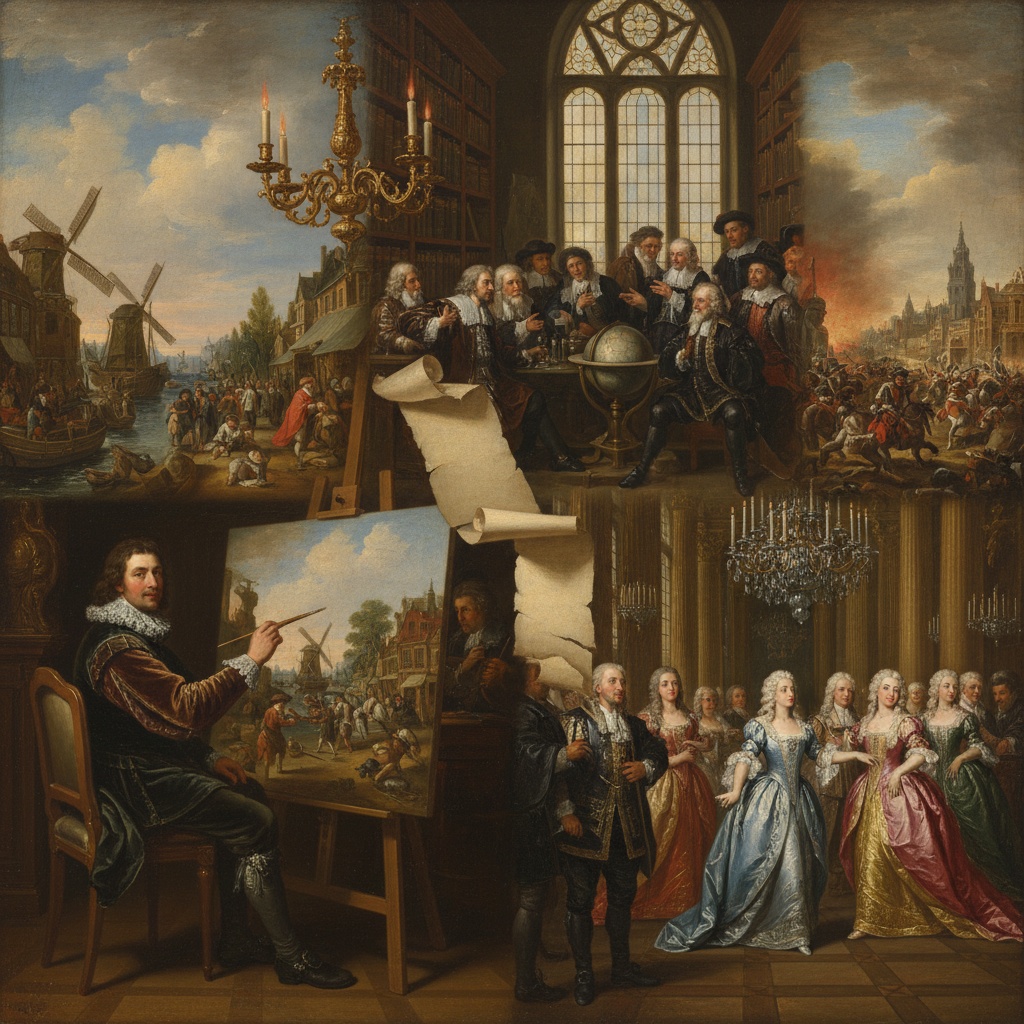
Perhaps the most defining characteristic of Dutch Golden Age painting is its embrace of realism, particularly evident in the rise of genre painting. Eschewing the grand historical narratives and religious allegories favored elsewhere in Europe, Dutch artists turned their attention to the everyday lives of ordinary people. Scenes of bustling markets, intimate domestic interiors, lively taverns, and tranquil landscapes became immensely popular. This wasn’t merely a stylistic choice; it reflected a broader societal shift – a growing interest in individual experience and the celebration of Dutch identity.
Artists like Frans Hals captured the energy and immediacy of life with his loose brushwork and dynamic compositions. His portraits, though often depicting individuals from modest backgrounds, possess a remarkable sense of vitality and psychological depth. The *Lute Player* exemplifies this approach – a seemingly simple scene imbued with personality and charm. This focus on capturing fleeting moments and authentic emotions resonated deeply with the burgeoning middle class who saw themselves reflected in these works.
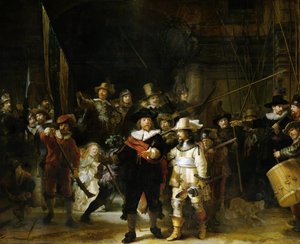
Beyond portraiture, artists meticulously documented contemporary lifestyles. Lavish breakfast tables laden with delicacies, group portraits showcasing civic pride, and scenes of merriment all contributed to a rich artistic record of the period. This dedication to realism wasn’t simply about accurate representation; it was about celebrating the values and aspirations of Dutch society.
Mastering Light and Shadow: Chiaroscuro and the Baroque Style's Influence
In art, chiaroscuro (English: kee-AR-ə-SKOOR-oh, -SKURE-, Italian: [ˌkjaroˈskuːro]; lit. 'light-dark') is the use of strong contrasts between light and dark, usually bold contrasts affecting a whole composition. It is also a technical term used by ...
While distinctly Dutch in its subject matter, painting during this era was also profoundly influenced by the broader European Baroque style. Originating in Rome, Baroque art emphasized drama, movement, and emotional intensity – qualities that found expression in the masterful use of light and shadow, known as *chiaroscuro*. This technique wasn’t merely a visual effect; it served to heighten realism, create a sense of depth, and draw the viewer's eye to key elements within the composition.
Though the Catholic Church initially encouraged Baroque art as a counter-reformation tool, its principles were adopted across Europe, including in Protestant Netherlands. Dutch artists adapted the technique to their own purposes, using it not to evoke religious fervor but to enhance the psychological impact of genre scenes and portraits. The contrast between light and dark became a powerful means of conveying mood, character, and narrative tension.
Rembrandt van Rijn stands as the undisputed master of chiaroscuro. His etchings, such as *St. Peter*, demonstrate an extraordinary ability to manipulate light and shadow, creating a sense of volume and depth that is both captivating and profoundly moving. The aged apostle emerges from the darkness, his authority underscored by the dramatic interplay of light and shade.
Beyond Portraits: Landscapes, Still Lifes, and Expanding Artistic Horizons
The Dutch Golden Age wasn’t limited to genre painting and portraiture. Landscape painting experienced a remarkable evolution during this period, with artists focusing on the unique characteristics of the Dutch countryside – its canals, windmills, cloud-filled skies, and rural life. These weren't simply picturesque depictions; they often carried symbolic weight, reflecting a growing esteem for Dutch values and national identity.
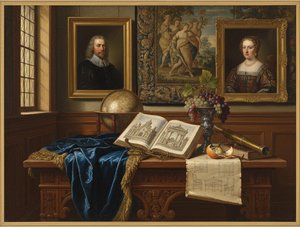
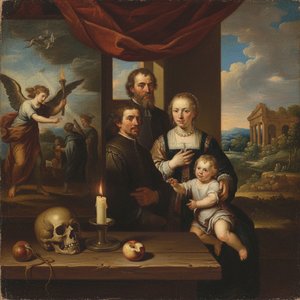
*Stilleven*, or still life painting, also surged in popularity. Artists meticulously rendered objects of beauty – flowers, fruit, game, and luxurious possessions – with astonishing detail. However, these weren’t merely exercises in technical skill; they often served as *vanitas* paintings, reminding viewers of the transience of life and the inevitability of death. Floral still lifes, presented with scientific accuracy, were particularly popular, showcasing both artistic prowess and a fascination with the natural world.
The Dutch also excelled at marine painting, capturing the power and majesty of the sea – a vital element of their economic prosperity. These works often depicted naval battles, shipwrecks, and bustling harbors, reflecting the Netherlands’ maritime dominance.
Rembrandt van Rijn: A Case Study in Introspection & Technical Brilliance
No discussion of the Dutch Golden Age would be complete without acknowledging the towering figure of Rembrandt van Rijn. More than just a painter, Rembrandt was a master storyteller, a profound psychologist, and an unparalleled innovator. His work transcends stylistic categorization; it is characterized by a deep understanding of human emotion, a masterful use of light and shadow, and an unwavering commitment to realism.
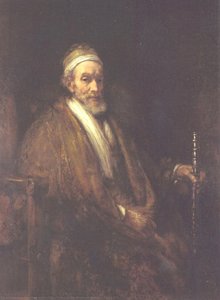
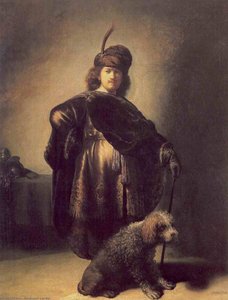
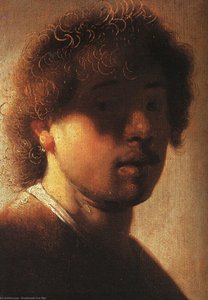
His self-portraits offer a poignant glimpse into the artist’s life and legacy. *Portrait of the Artist*, for example, reveals an aged master reflecting on his own mortality, his face etched with wisdom and experience. The technical brilliance is undeniable – the subtle gradations of light, the visible brushstrokes, and the psychological depth of the portrayal all contribute to a work of enduring power.
Rembrandt’s etching *Abraham Franz* exemplifies his mastery of chiaroscuro and introspection. The rich texture, linear depth, and symbolic themes invite contemplation and reward close examination. He wasn't simply depicting a subject; he was exploring the complexities of human character and the passage of time.
A Legacy of Innovation: The Enduring Impact of 17th-Century Dutch Art
The Dutch Golden Age may have ended by the late 17th century – marked by conflicts with neighboring powers and declining economic influence – but its artistic legacy continues to resonate today. The emphasis on realism, the celebration of everyday life, and the innovative use of light and shadow profoundly influenced subsequent generations of artists.
Artists like Frans Hals transformed genre painting into a form of clear-eyed portraiture, while Rembrandt’s mastery of chiaroscuro set a new standard for psychological depth and emotional intensity. The Dutch Golden Age demonstrated that artistic greatness could flourish outside the confines of traditional patronage systems, paving the way for a more democratic and diverse art world.
Today, paintings from this period are highly sought after by collectors and museums worldwide. At ArtsDot.com, we are proud to offer high-quality reproductions of masterpieces from the Dutch Golden Age, allowing you to experience the beauty and brilliance of this remarkable era in your own home. Explore our collection and discover the enduring power of 17th-century Dutch art – a testament to human creativity and the transformative potential of artistic expression.