 Preview
 Send
Send Share
Share
 Details

 Download
 Similars
 X-Ray
X-Ray Diaporama
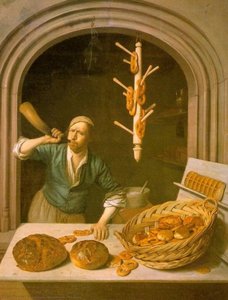
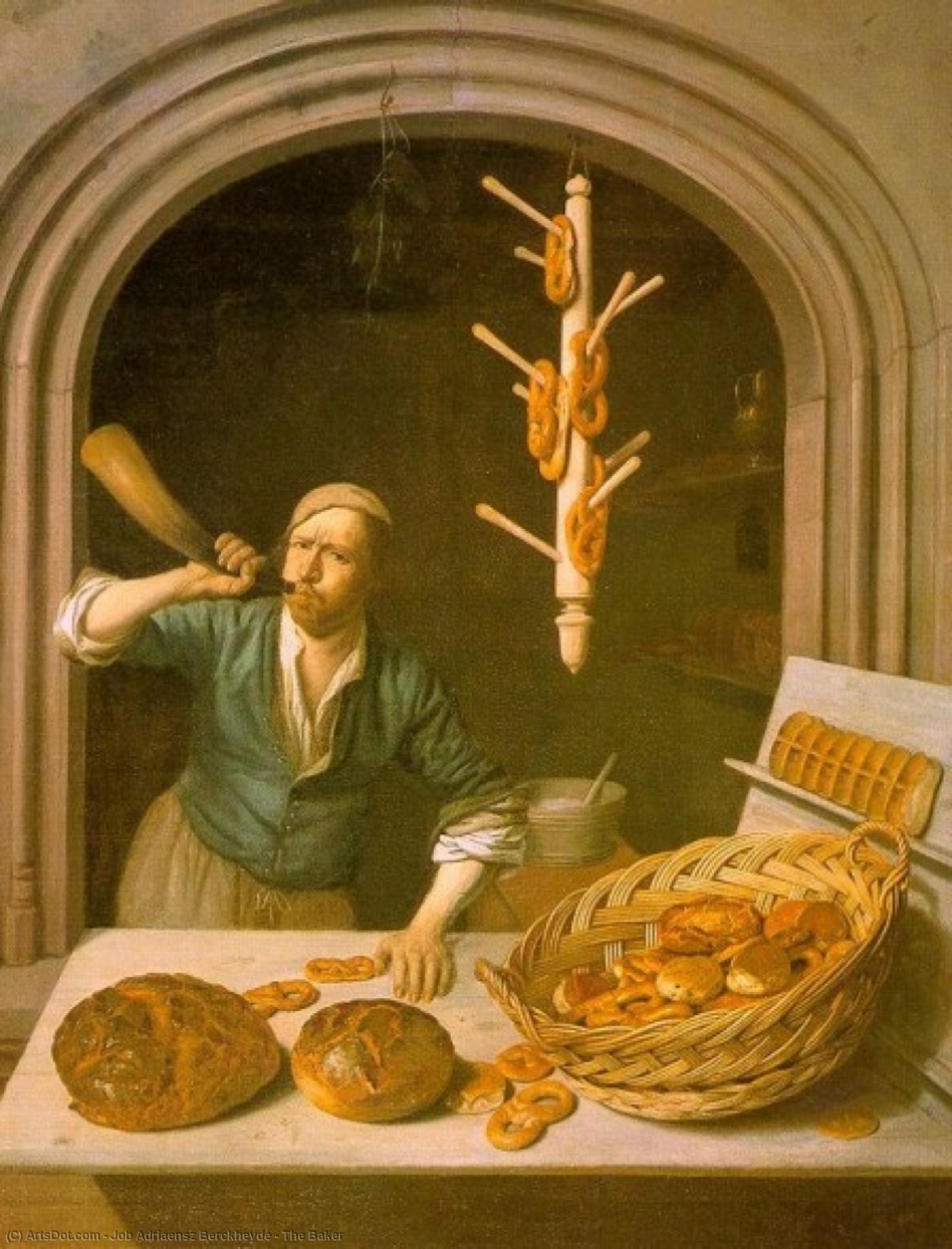
The Baker


 Read More
Hand Made Oil Reproduction
Hand-painted oil on canvas in your size and frame, made to order by our artists. ( Buy Print Buy Image)




P118B $10

P118H $10

P118W $10

P438Z $10

P508JH $12

P508YH $12

P805H $10

P805Z $10

P919BZ $10

P919G $10

P919XJ $10

P959ZH $10

P968JZ $12

W106C $8

W218G $10

W218JH $8

W218Y $10

W307PJ $10

W316G $10

W316PJ $8

W316Y $10

W398PJ $8

W4111J $10

W500HY $15

W500JH $15

W692G $12

W849H $8

W940BG $15

W953PJ $8




Pick from our preset sizes that match the artwork's original proportions.

You may enter your own dimensions to fit a specific frame or space. If your selected size does not match the original image's proportions, we will either crop the artwork or extend the painting with additional hand-painted elements. A digital mockup will be sent for your approval before production begins.
Please note that the on-screen preview does not reflect the actual cropping or extension. Only the mockup will accurately show the final composition.
While custom sizes are available, we recommend selecting a dimension from the predefined list to preserve the original proportions.
After order, ArtsDot.com team will email client for instructions and provide a mockup preview
Worldwide Delivery () in 3/4 weeks instead of standard 5 weeks. (17 August). No compromise on quality.

Free Worldwide Express Shipping

High-Quality Linen Canvas

Full Shipping Insurance

Customs Tax Refund Guarantee

True Color Matching Guarantee

60-Day Return Policy (Defects Only)

100% Money-Back Guarantee

Bulk Discount Offer
 Glass option is only available in size under 110 CM

The Baker
Reproduction Medium
Reproduction Size
-


Total Price
$ 263
Artwork Description
A Glimpse into the Heart of Daily Sustenance
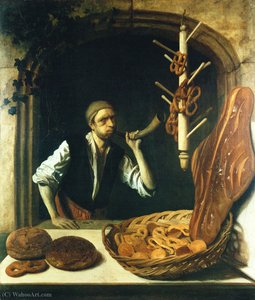
To stand before this depiction of The Baker is to step unceremoniously across the threshold of time, into the warm, flour-dusted embrace of a 17th-century Dutch workshop. It is more than just a painting; it is a meticulously preserved moment of human industry and quiet domestic ritual. The scene unfolds with an almost palpable sense of atmosphere, drawing the viewer deep into the cool shadows framed by the arched doorway. Here, amidst the tools and bounty of creation, we find not merely commerce, but the very essence of sustenance—the daily miracle of bread rising from simple ingredients.
Mastery in Light and Shadow: The Baroque Touch
The technical brilliance on display is breathtaking, characteristic of the finest works emerging from the Dutch Golden Age. Job Adriaenszoon Berckheyde employs a dramatic chiaroscuro that elevates the mundane to the sublime. Notice how the light does not simply illuminate; it sculpts. It catches the fine dusting of flour, highlights the yielding curve of fresh loaves, and falls across the baker’s focused expression. This masterful contrast between deep shadow and brilliant highlight is what gives the piece its profound depth and emotional weight. The artist achieves this luminous effect through painstaking layering of thin oil glazes, allowing the paint itself to seem translucent, as if capturing actual shafts of sunlight.
The Language of Form and Texture
Observe the sheer dedication to detail in the rendering of texture. One can almost feel the rough, crackled crust of a cooling loaf against the smooth, pliable surface of kneaded dough. The composition guides the eye with an impeccable one-point perspective, leading us directly toward the central action. While the overall structure relies on strong geometric forms—the shelves, the doorway's perfect arch—these rigid lines are softened by the organic curves of life and labor. This interplay between precise linearity and natural form speaks to a sophisticated understanding of visual balance.
Symbolism of Labor and Prosperity
In the context of 1681, this painting resonates with profound symbolism. The baker, in his steady rhythm, represents more than just a craftsman; he embodies reliable prosperity and the foundational importance of skilled labor to the community. Bread itself has always been a potent symbol—life given form. For the collector or admirer, owning a reproduction of this work is acquiring not just art, but an echo of enduring human resilience and the quiet dignity found in honest work.
An Invitation for Modern Living
For those seeking to infuse a space with history, warmth, and narrative depth, this piece offers unparalleled ambiance. The rich palette—dominated by warm browns, creamy yellows, and deep earthen greens—creates an immediate sense of inviting comfort. Whether placed above a dining table or within a study, it acts as a visual anchor, grounding the room in the timeless beauty of human endeavor. It is art that whispers stories of hearth and home across the centuries.
Related Artworks
Artist Biography
The Master of Haarlem’s Quiet Moments
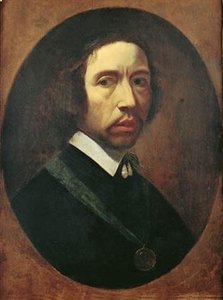
Job Adriaenszoon Berckheyde, born in the vibrant Dutch city of Haarlem around 1630, remains a profound voice of the Dutch Golden Age, a period where light and shadow danced across the canvases of a burgeoning nation. While history often casts a bright spotlight on his brother, Gerrit Berckheyde, Job carved out a legacy defined by an intimate, almost whispered, approach to reality. His life was deeply intertwined with the artistic pulse of Haarlem, a city that served as both his sanctuary and his primary subject. Through his brush, the mundane became monumental, and the quiet corners of seventeenth-century Dutch life were elevated to the status of high art.
The foundations of Berckheyde’s talent were laid under the guidance of Jacob Willemsz de Wet, a master whose command over chiaroscuro—the dramatic interplay of light and dark—left an indelible mark on the young artist's technique. In early works such as Christ Preaching to the Children (1661), one can sense the heavy, emotive influence of Rembrandt. This early period was characterized by a certain theatricality, where religious narratives were imbued with a palpable, human tension. As he matured, however, Berckheyde’s focus shifted from the dramatic shadows of the pulpit to the luminous clarity of the Dutch interior and the sprawling elegance of the cityscape.
A Journey Through Light and Landscape
Artistic growth for Berckheyde was not a solitary endeavor but a collaborative exploration. Between 1656 and 1660, he and his brother embarked on an ambitious journey through the German territories, traversing the Rhine from Cologne to the scenic landscapes of Mannheim and Heidelberg. This period of travel acted as a catalyst for stylistic evolution. Exposed to new vistas and the pioneering approaches of artists like Vincent van der Vinne, Berckheyde began to refine his ability to capture atmosphere. The influence of German patronage, particularly under Charles I Louis, allowed him to diversify his repertoire, moving into portraiture and hunting scenes that demanded a different kind of precision and grace.
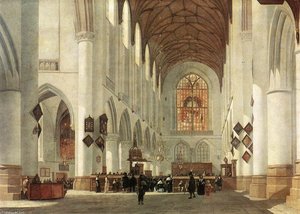
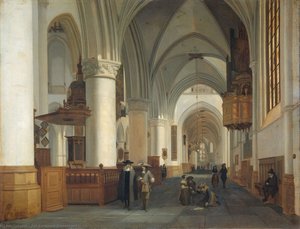
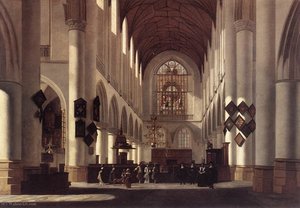
Upon returning to the Netherlands, his work became increasingly synonymous with the architectural soul of Haarlem. He possessed a singular ability to render the structural majesty of Dutch landmarks, most notably in his breathtaking depictions of the Sint-Bavokerk. In these paintings, he did not merely document stone and mortar; he captured the way light filtered through sacred spaces, creating an atmosphere of reverence and stillness. His mastery of perspective allowed viewers to step into the very heart of the choir screen, making the architectural triumphs of his era feel immediate and alive.
The Legacy of Observational Brilliance
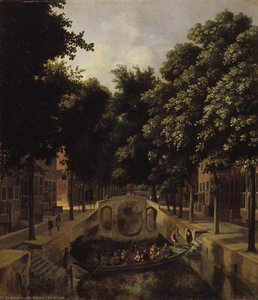
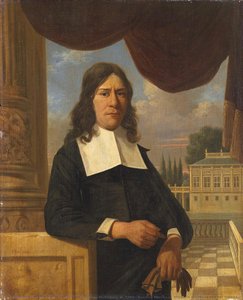
As his career progressed, Berckheyde’s oeuvre expanded to include genre scenes and cityscapes that served as windows into a vanished world. His View of a Dutch Canal stands as a testament to his skill in Baroque realism, where the reflections on the water and the intricate details of the canal-side buildings evoke a sense of profound peace. Whether he was capturing the dignified likeness of a merchant like Nicolaes Eichelberg or the bustling energy of a waterfront, his work remained anchored in meticulous observation.
The historical significance of Job Adriaenszoon Berckheyde lies in his role as a chronicler of the Dutch spirit. His paintings are more than mere aesthetic objects; they are cultural artifacts that preserve the light, the architecture, and the social fabric of the seventeenth century. Through his evolution from a student of dramatic shadows to a master of luminous clarity, he helped define the visual language of the Dutch Golden Age, ensuring that the quiet, dignified beauty of Haarlem would endure long after the era itself had passed into legend.
job adriaensz berckheyde
1630 - 1693 , Netherlands
Quick Facts
- Artistic Movement Or Style: Baroque
- Artists Or Movements Influenced By This Artist: Adriaen van Ostade
- Artists Who Influenced This Artist: Jacob Willemsz de Wet
- Date Of Birth: 1630
- Date Of Death: 1693
- Full Name: Job Adriaenszoon Berckheyde
- Nationality: Dutch
- Notable Artworks:
- The Baker
- Interior of St. Bavokerk
- Place Of Birth: Haarlem, Netherlands
Related Articles

Dutch Masters: 10 Golden Age Paintings That Still Inspire |
Journey into the Dutch Golden Age! Explore 10 iconic paintings by Rembrandt, Vermeer & Hals. Discover the stories behind these Baroque masterpieces and find museum-quality art reproductions to elevate your home decor on .

Golden Age Reflections: Dutch Baroque Painting & Cultural Innovation
Explore the Dutch Golden Age of painting! Discover key artists like Vermeer & ter Borch, their innovative techniques, and the rich cultural context behind these Baroque masterpieces. Learn about collecting & appreciating this iconic art period.

Illuminating Innovation: Exploring the Dutch Golden Age of Painting
Explore the Dutch Golden Age of painting with ArtsDot. Discover Rembrandt, Vermeer & other Masters. Learn about key characteristics, iconic artworks, and lasting influence. Expert insights for collectors & enthusiasts.
Golden Light & Dutch Skies: Bringing the Magic of Dutch Golden Age Landscapes into Your Home
Transform your home with the breathtaking light of Dutch Golden Age landscapes. Discover how hand-painted oil reproductions of masterworks like Ruisdael and Vermeer bring timeless elegance, atmosphere, and soulful texture to modern interiors. Elevate your space with museum-quality art.

Illuminating Realism: Exploring the Dutch Golden Age of Painting (1600-1700)
Explore the Dutch Golden Age of painting (1600-1700) with ArtsDot. Discover Rembrandt, Vermeer & other masters. Learn about techniques, history & find museum-quality reproductions.