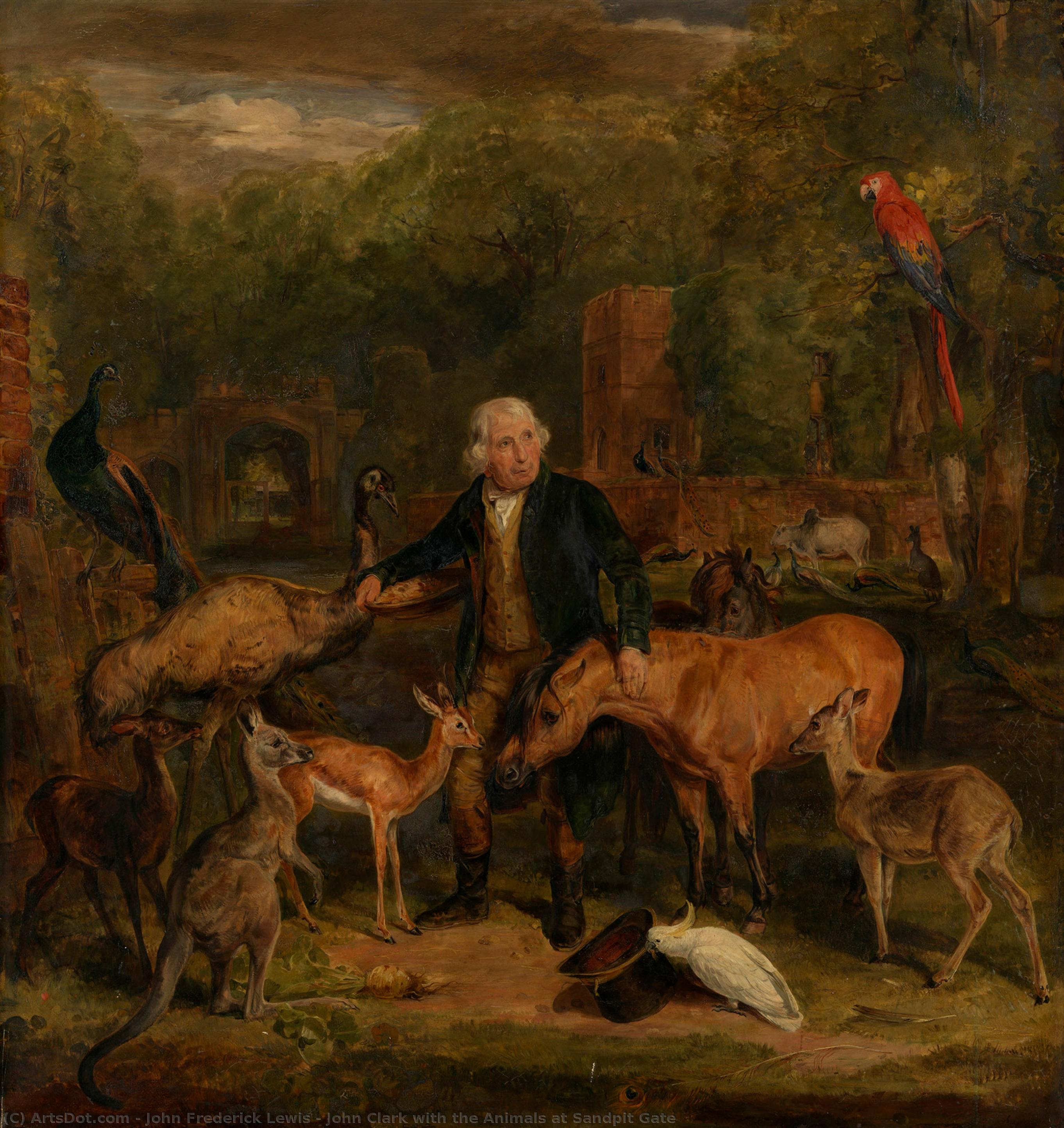
Discover John Frederick Lewis’s ‘John Clark with the Animals at Sandpit Gate’ – a stunning 1825 oil painting of aristocratic leisure. Admire realism & rich detail in this classical English landscape.
Discover John Frederick Lewis's captivating Orientalist paintings! Explore detailed scenes of Egypt, Spain & Morocco in watercolor & oil. A 19th-century master.
Experience the unparalleled Royal Collection at Buckingham Palace in London, featuring masterpieces by Rembrandt and Canaletto within a breathtaking neoclassical setting that invites you to explore British history.
John Clark with the Animals at Sandpit Gate – A Portrait of Aristocratic Leisure
This stunning oil painting by John Frederick Lewis, completed around 1825, captures a quintessential moment in British aristocratic life—a lavish gathering of animals at Sandpit Gate, Windsor Great Park. More than just a depiction of scenery, it’s a carefully crafted tableau brimming with symbolism and reflecting the artistic sensibilities of its time.
The Scene: Detail and Atmosphere
Lewis meticulously rendered Sandpit Gate, one of the park's exits, showcasing an overcast day bathed in soft, diffused light. The composition is densely populated with figures – humans and animals—creating a palpable sense of abundance and harmony. Observe the artist’s masterful use of perspective; it draws the viewer into the heart of this aristocratic spectacle. Numerous animals surround John Clark(e), including peacocks, parrots, emus, wallabies, deer, gazelles, and others, highlighting Clark's patronage of exotic creatures—a common practice among the upper echelons of Victorian society. The artist’s attention to detail is remarkable; brushstrokes capture the textures of fur, feathers, clothing, and foliage with astonishing accuracy.
Style and Technique: Romanticism Influenced
Lewis’s style leans heavily into Romanticism, a movement characterized by an emphasis on emotion, imagination, and individualism. He employs a classical technique—primarily oil paints on canvas—resulting in rich colors and luminous surfaces. The artist's brushwork is deliberately expressive, conveying both the grandeur of the setting and the quiet dignity of Clark(e). Notice how curved lines dominate the composition, mirroring the movement of animals and contributing to the overall feeling of organic fluidity. The color palette utilizes earthy tones – browns, greens, ochres – punctuated by vibrant reds (parrot) and blues (peacock), creating a harmonious visual experience.
Symbolism: Humanity's Connection with Nature
Beyond its aesthetic beauty, “John Clark with the Animals at Sandpit Gate” carries significant symbolic weight. It represents a deliberate juxtaposition between human nobility and the natural world—a theme prevalent in Romantic art. The gathering of animals symbolizes generosity, care for creatures great and small, and perhaps even a celebration of rural life’s tranquility. Furthermore, Lewis subtly references influences from artists like Thomas Cole and George Frederic Handel, demonstrating his awareness of artistic precedents and aiming to elevate the genre of portraiture.
Provenance & Legacy
The painting resides in the Royal Collection at Buckingham Palace, having been commissioned for King George IV and subsequently recorded in the Park’s inventory. Its enduring appeal lies not only in its exquisite craftsmanship but also in its ability to transport viewers back to a bygone era—a time of aristocratic grandeur and fascination with the wonders of the natural world. This artwork continues to inspire admiration for Lewis's skill as an artist and his contribution to British art history.