


A Legacy of Royal Vision: The Heart of British Artistry
To step into the orbit of The Royal Collection at Buckingham Palace is to wander through a living tapestry of human ambition and aesthetic refinement. This is not merely a museum in the traditional sense, but a profound repository of stories woven through centuries of royal patronage, diplomacy, and an unwavering eye for beauty. What began as a modest townhouse, known as The Queen’s House and erected in 1703 for Queen Charlotte, has blossomed under the stewardship of successive monarchs into one of the most significant private art holdings on the planet. From the transformative era of George IV to the profound cultural influence of Queen Victoria and Prince Albert, every acquisition within these walls serves as a testament to a lineage that viewed art not just as decoration, but as a vital expression of national identity and global connection.
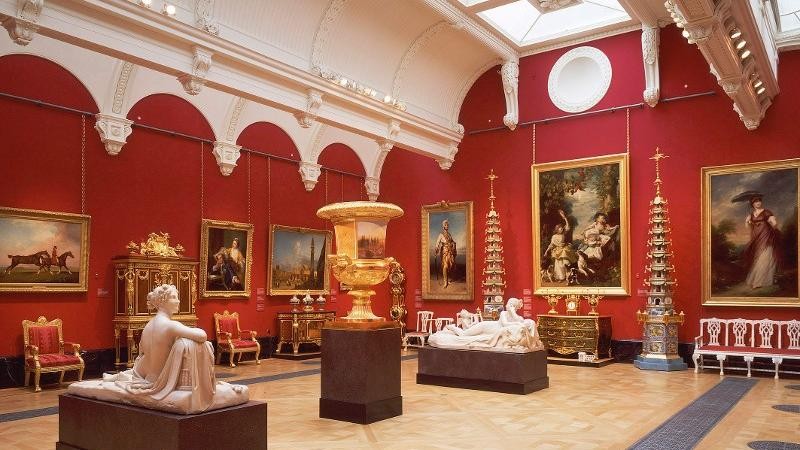
The collection’s narrative is punctuated by moments of extraordinary historical significance, most notably the pivotal year of 1649. Following years of religious and political upheaval, the acceptance of a lavish gift from the Netherlands—comprising both paintings and sculptures—marked a crucial period of reconciliation for the Stuart court. This infusion of Dutch mastery solidified a commitment to European traditions that remains palpable today. As one moves through the collection, the eye is met with the dramatic chiaroscuro of Rembrandt’s The Return of Susanna and Andromeda , the luminous, sweeping vistas of Canaletto’s Venice, and the commanding presence of Van Dyck’s royal portraiture. These works do more than occupy space; they breathe life into the halls, offering a window into the shifting sensibilities of the Baroque, Neoclassical, and Victorian eras.
Architectural Grandeur and Decorative Splendor
The setting for this artistic treasure is itself a masterpiece of architectural evolution. The palace we recognize today is a triumph of neoclassical design, shaped by the ambitious hands of architects John Nash and Edward Blore. They masterfully transformed a private retreat into a sprawling, monumental residence, utilizing innovative structural techniques such as iron framing to achieve a sense of both immense scale and delicate grace. The central courtyard, with its meticulously landscaped fountains and sculpted ornaments, provides a tranquil, verdant sanctuary that contrasts beautifully with the bustling energy of London just beyond the gates.
Beyond the canvas, the collection celebrates the pinnacle of craftsmanship through its exquisite decorative arts. For the discerning collector or interior designer, the palace offers unparalleled inspiration in the realm of fine objects. One finds oneself captivated by the delicate translucency of Sèvres porcelain vases and the intricate, heavy grandeur of furniture pieces from Carlton House. The very walls are adorned with textiles that reflect the opulent tastes of the Victorian age, creating an immersive environment where every surface tells a story of luxury. This seamless integration of fine art and decorative excellence ensures that the Royal Collection remains a holistic experience of beauty, where the distinction between a gallery and a lived-in home dissolves into pure aesthetic delight.
A Living Heritage for the Modern Era
What truly distinguishes The Royal Collection is its refusal to remain static. While it honors the weight of history through rare illuminated manuscripts and master prints by Albrecht Dürer, it simultaneously embraces the pulse of contemporary creativity. The inauguration of The King’s Gallery in 1962 exemplifies this enduring commitment to engagement, providing a stage for rotating exhibitions that bridge the gap between historical masterpieces and modern perspectives. This dynamic approach ensures that the collection remains a relevant, breathing entity, constantly reinterpreting its treasures for new generations of scholars and art enthusiasts.
For those seeking to understand the soul of British culture, Buckingham Palace offers more than just a viewing; it offers an encounter with a living heritage. It is a place where the grandeur of the past meets the curiosity of the present, inviting visitors to contemplate the profound cultural values that have shaped a nation. Whether one is drawn by the technical brilliance of a Renaissance print or the sheer scale of a neoclassical facade, the collection stands as an enduring emblem of patronage and scholarship—a sanctuary of art that continues to inspire awe, much like the very monarchs who gathered it.