Early Life & Apprenticeship: The Foundations of a Venetian Vision
 Wikipedia: Canaletto
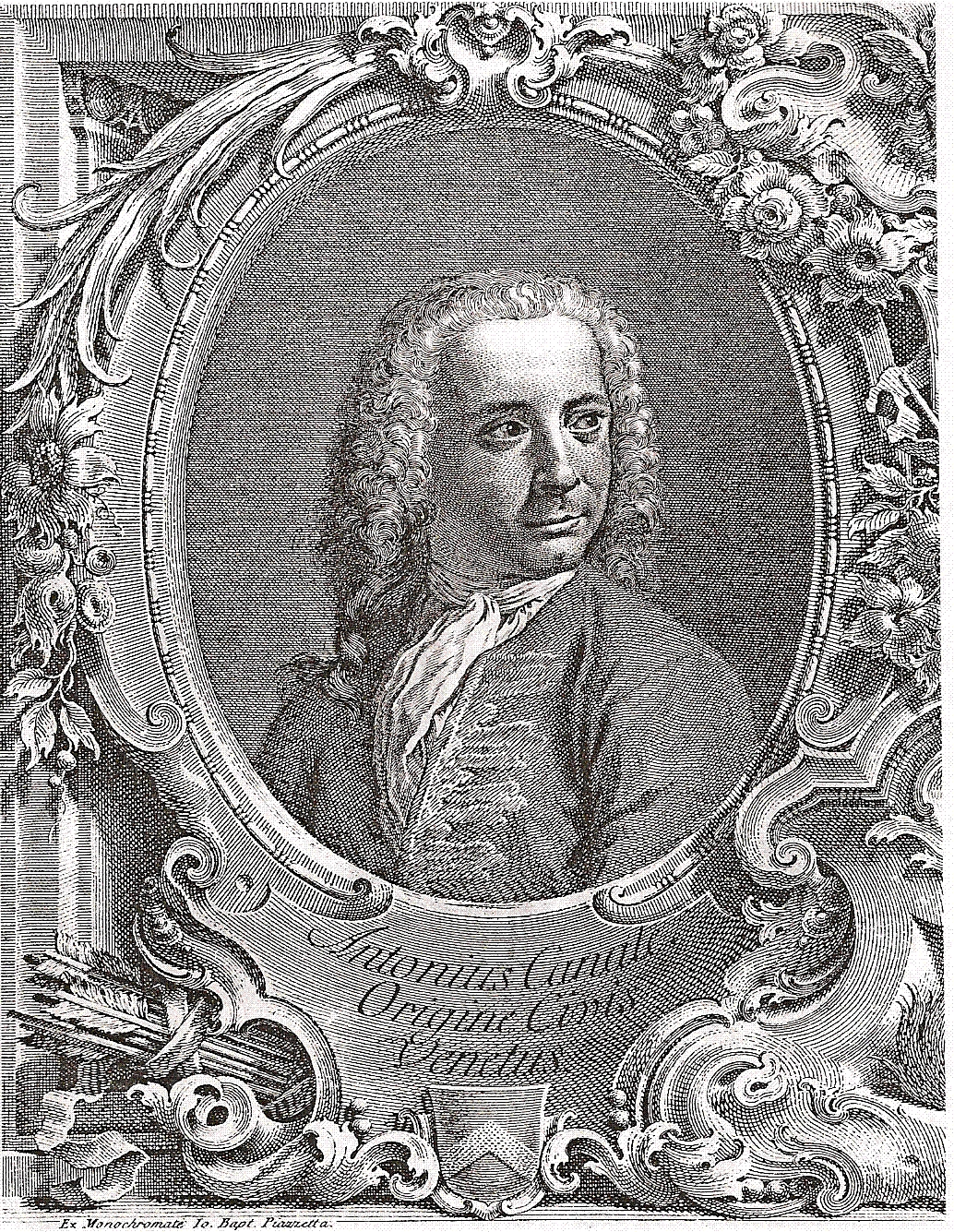
Giovanni Antonio Canal (18 October 1697 – 19 April 1768), commonly known as Canaletto (Italian: [kanaˈletto]), was an Italian painter from the Republic of Venice, considered an important member of the 18th-century Venetian school. Painter of cityscap...
Giovanni Antonio Canal, known universally as Canaletto, was born into the vibrant artistic heart of Venice in 1697 – a city already steeped in centuries of pictorial tradition. His father, Bernardo Canal, wasn’t merely a painter but a celebrated theatrical scene designer, and it was within this world of illusion and spectacle that young Giovanni first honed his skills. Initially following in his father's footsteps, the early Canaletto immersed himself in creating elaborate backdrops for Venetian operas, a demanding craft requiring precision, perspective, and an acute understanding of light and shadow. This formative period proved crucial; it instilled in him not only technical proficiency but also a keen eye for architectural detail and a dramatic flair that would later characterize his celebrated vedute – views of cities.
However, Venice at the turn of the 18th century was undergoing a subtle shift. While theatrical painting flourished, a growing fascination with capturing reality—with documenting the tangible world—began to take hold. A journey to Rome in 1719 proved pivotal. There, Canaletto encountered the work of Giovanni Paolo Pannini, whose architectural paintings sparked a new direction within the young artist. He returned to Venice not abandoning his past entirely, but with an ambition to translate the principles of stagecraft into the realm of topographical painting, seeking to depict the city not as a constructed fantasy, but as it truly existed.
The Rise of the Veduta: Canaletto's Pioneering Cityscapes
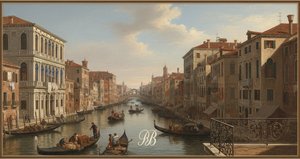
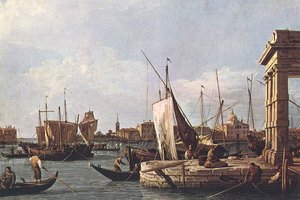 The Punta della Dogana
Admire Canaletto’s ‘The Punta della Dogana,’ a stunning 1730 Venetian harbor scene. Explore this masterpiece of 'veduta' painting – perfect for art lovers & collectors.
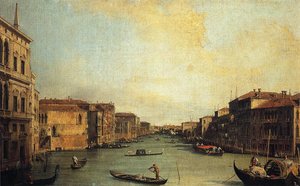
Canaletto’s early attempts at vedute were initially met with modest success. The established tradition favored more stylized depictions, and his commitment to accuracy—to rendering buildings precisely as they stood—was somewhat unconventional. Yet, he persevered, driven by a desire to capture the unique atmosphere of Venice. By the 1720s, however, his work began to attract attention. He rapidly distinguished himself from contemporaries like Luca Carlevarijs, whose paintings, while skilled, lacked Canaletto’s luminosity and sense of immediacy. The artist's ability to convey not just *what* Venice looked like, but *how it felt* – the play of light on the water, the bustling energy of the canals, the grandeur of its palazzi—was revolutionary.
This period saw a burgeoning market for Venetian souvenirs among the wealthy travelers undertaking the Grand Tour. Canaletto astutely recognized this opportunity, and began producing smaller-scale views specifically tailored to the tastes of these foreign visitors. These weren’t simply topographical records; they were carefully composed scenes designed to evoke the romance and allure of Venice. The demand soared, establishing Canaletto as the preeminent view painter in the Republic and beyond.
A Master of Detail: Technique, Perspective, and the Illusion of Reality
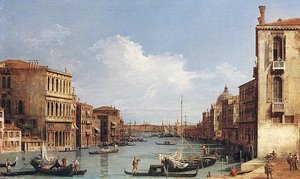
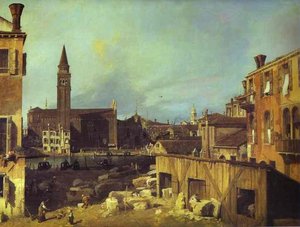 Grand Canal - The Stonemason's Yard - Santa Maria della CaritÓ from the Campo San Vidal
Discover Canaletto’s stunning ‘Grand Canal’ masterpiece! A vibrant Venice scene showcasing architectural detail & lively atmosphere. Explore this 18th-century veduta painting.
What sets Canaletto’s work apart is not merely his subject matter but the extraordinary skill with which he rendered it. He famously worked “from nature,” sketching directly from life—a practice unusual for the time, when paintings were often completed in the studio based on preliminary drawings. These sketches weren't simply outlines; they captured the nuances of light and shadow, the textures of stone and brick, and the movement of figures within the cityscape.
His mastery of perspective is equally remarkable. Canaletto employed a meticulous approach, using rulers and precise measurements to ensure architectural accuracy. The debate surrounding his use of a camera obscura—a device that projects an image onto a surface—continues among scholars. While he undoubtedly owned one, it’s likely he used it as an aid rather than relying on it exclusively. The subtle imperfections in his work, the delicate brushstrokes and atmospheric effects, suggest a far more nuanced process than simple mechanical reproduction.
The artist's palette was equally refined. He favored warm, golden tones that captured the unique quality of Venetian light, skillfully contrasting them with cooler blues and grays to create depth and atmosphere. He didn’t simply paint buildings; he painted *light itself*, transforming ordinary scenes into captivating visions.
Canaletto in England: Capturing London’s Grandeur
In 1746, Canaletto embarked on a decade-long sojourn to England, invited by the merchant and art connoisseur Joseph Smith. This period proved remarkably successful. London, with its imposing architecture and bustling river traffic, provided a new canvas for his talents. Commissioned by wealthy patrons, he produced a series of views depicting iconic landmarks such as Westminster Abbey, St. Paul’s Cathedral, and the Houses of Parliament.
While initially met with some skepticism—English tastes differed from those in Venice—Canaletto quickly adapted his style to suit his new audience. He incorporated more figures into his compositions, emphasizing the social life of London, and paid particular attention to the grandeur of its public buildings. His English period demonstrates not only his technical skill but also his adaptability and willingness to embrace new challenges.
The patronage of King George III proved particularly significant. Smith sold a substantial collection of Canaletto’s works to the monarch in 1762, cementing the artist's reputation as a leading painter of cityscapes on an international scale. However, by the mid-1750s, demand for his English views began to wane, prompting his return to Venice.
Beyond Topography: Society, Atmosphere & the Venetian Spirit
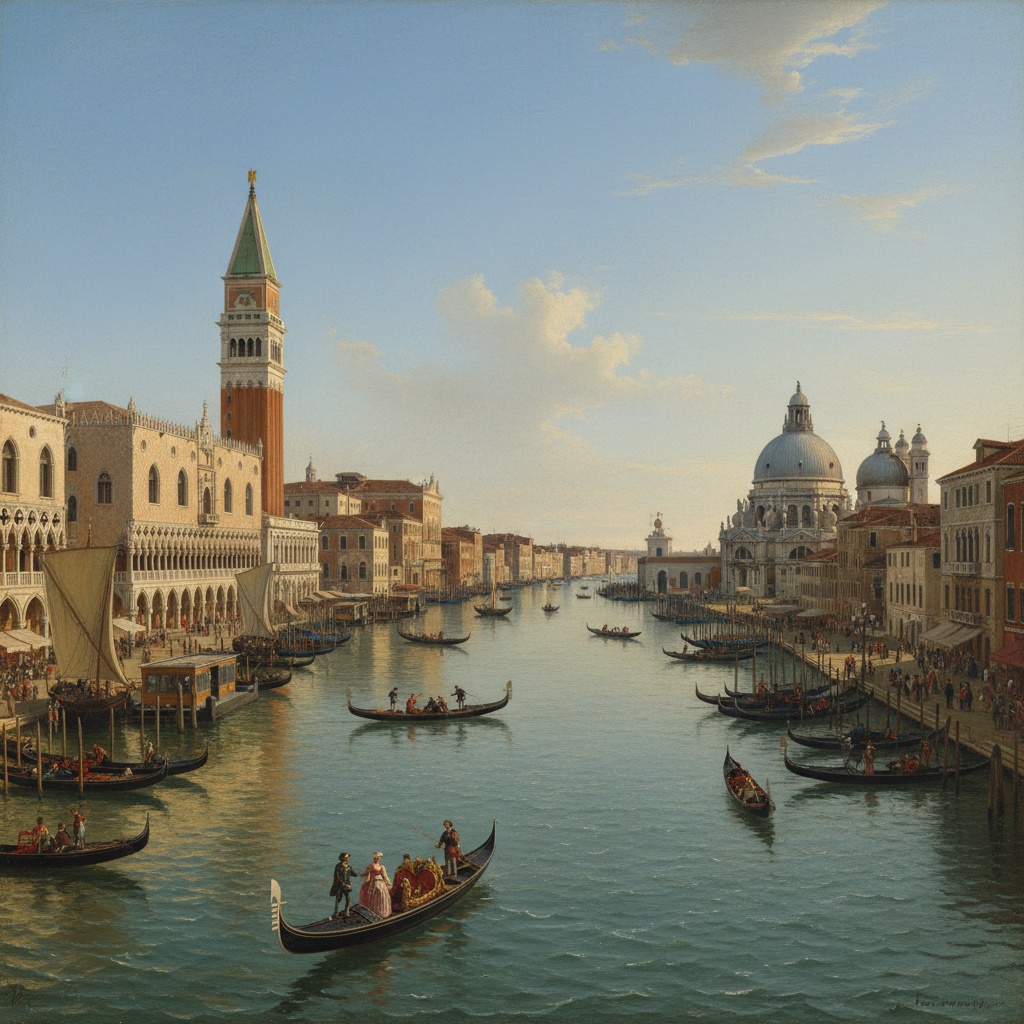
To view Canaletto solely as a topographical painter is to overlook the depth and complexity of his work. His paintings are not simply records of buildings; they are vibrant depictions of 18th-century life—snapshots of society in motion. He meticulously captured the bustling activity of the canals, from gondolas gliding through the water to merchants hawking their wares on the quaysides.
The artist’s attention to detail extends beyond architecture and figures; he also documented the seasonal rhythms of Venice—the flooding of the streets, the ice that formed in the canals during winter. These subtle observations add a layer of authenticity and immediacy to his work, conveying a sense of place that few other artists have matched. His paintings are imbued with a palpable atmosphere – the warmth of the sun, the coolness of the water, the sounds of the city—creating an immersive experience for the viewer.
Canaletto’s legacy extends far beyond his technical achievements. He captured the essence of Venice at a pivotal moment in its history—a time of both grandeur and decline—preserving it for posterity. His paintings continue to captivate audiences today, offering a glimpse into a world that has long since vanished.
Legacy and Influence: Canaletto's Enduring Impact on Art History
Canaletto’s influence on subsequent generations of artists is undeniable. His pioneering approach to veduta painting paved the way for later masters such as Bernardo Bellotto (his nephew), who further refined the genre. His emphasis on accuracy, perspective, and atmospheric effects continues to inspire painters today.
Beyond his direct influence on other artists, Canaletto’s work has had a profound impact on our understanding of 18th-century Venice. His paintings provide invaluable insights into the city's architecture, social life, and cultural traditions. They are not merely beautiful images; they are historical documents—windows into a bygone era.
Today, Canaletto’s works are held in major museums around the world, including the National Gallery in London, the Art Institute of Chicago, and the Louvre in Paris. His paintings continue to be celebrated for their technical brilliance, artistic beauty, and enduring appeal. At ArtsDot.com, we are proud to offer high-quality reproductions of Canaletto’s masterpieces, allowing art lovers around the world to experience the magic of Venice in their own homes.