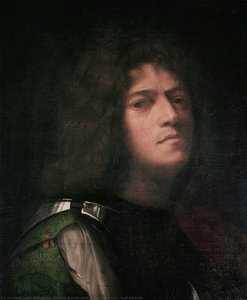
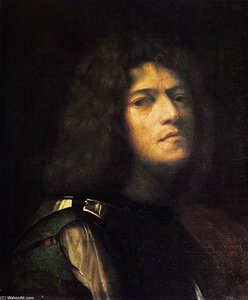
The Venetian Atmosphere: Mastering Light and Color through Colorito
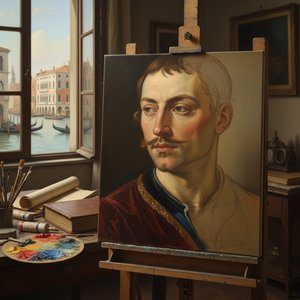
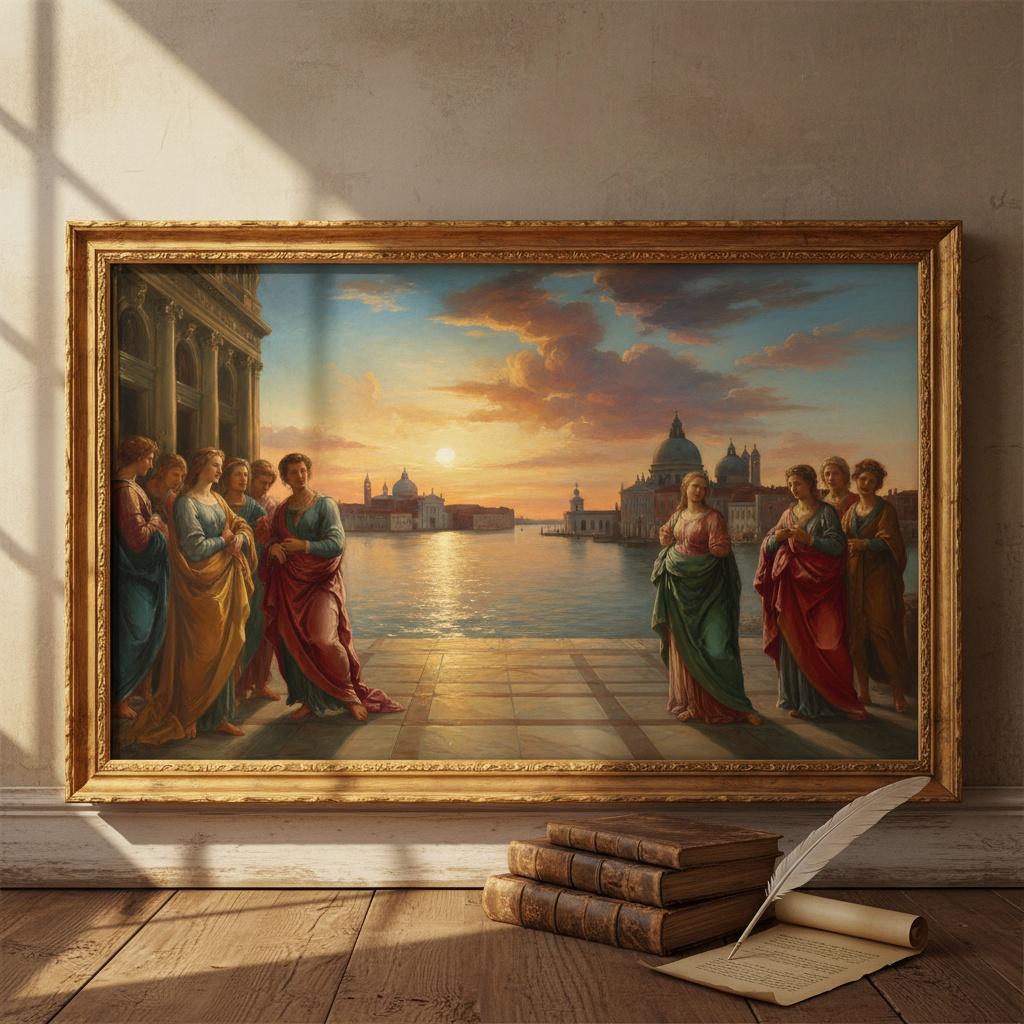
To understand the soul of the Venetian Renaissance, one must first surrender to the sensory experience of the city itself. Unlike the intellectual rigor of the Florentine school, which prioritized disegno—the precise, linear mastery of drawing and structural form—the artists of Venice sought to capture the ephemeral. They were captivated by the way the Adriatic sun dissolved hard edges into a soft, atmospheric haze, and how the reflections of marble palaces shimmered upon the undulating canals. This profound connection to their environment birthed the technique known as colorito.
In Venice, color was not merely an additive element used to fill in pre-drawn outlines; it was the very substance of form itself. Through the sophisticated layering of translucent glazes, Venetian masters built depth and volume using shifts in hue and saturation rather than stark contours. This approach allowed for a breathtakingly tactile quality, where light seems to emanate from within the canvas rather than merely striking its surface. The result was an art that breathed with the humidity and warmth of the lagoon, inviting the viewer into a world defined by luminosity and tonal harmony.
This mastery of pigment and light transformed the canvas into a window of sensory delight. By prioritizing the emotional resonance of color over the mathematical precision of line, the Venetian school established a new vocabulary for Western art—one that prioritized the visceral experience of beauty and the poetic interplay between shadow and brilliance.
Giorgione and the Poetics of Mystery: The Birth of the Venetian Landscape
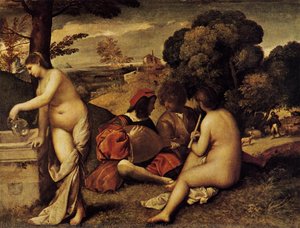
At the dawn of the sixteenth century, a singular figure emerged to redefine the boundaries of narrative painting: Giorgione. His work represents a pivotal moment in art history, where the landscape ceased to be a mere backdrop for religious or mythological drama and became a protagonist in its own right. In masterpieces such as Pastoral Concert, we encounter an enigmatic atmosphere that defies easy interpretation, blending classical ideals with a profound, lyrical melancholy.
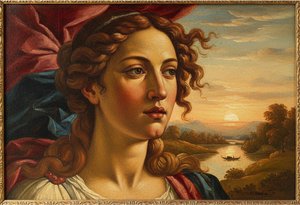
Giorgione’s genius lay in his ability to evoke mood through subtle transitions of light and shadow. His landscapes are often shrouded in a soft, dreamlike quality, where figures seem integrated into the very fabric of the earth and sky. This sense of unity is achieved through a seamless blending of tones, creating what scholars call sfumato, but with a uniquely Venetian warmth. In works like Portrait of a Young Woman (Laura), the use of soft contours and symbolic elements, such as delicate laurel branches, invites the viewer to contemplate deeper, often unstated, poetic meanings.
The mystery inherent in Giorgione’s compositions serves as an invitation to the imagination. He does not provide a clear, didactic story; instead, he offers a sensory poem. Through his pioneering use of landscape as a medium for emotional expression, he laid the groundwork for the great Venetian tradition, proving that the natural world could be just as expressive and profound as any human subject.
Titian and the Grandeur of Form: The Evolution of High Renaissance Portraiture
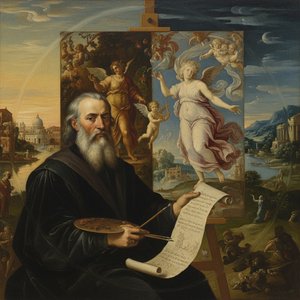
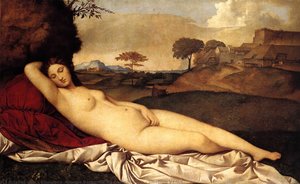
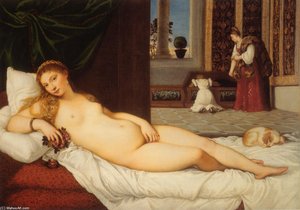
If Giorgione provided the poetic soul of Venice, Titian provided its monumental grandeur. As the preeminent figure of the High Renaissance in Venice, Titian elevated portraiture to a level of psychological depth and physical presence never before achieved. His ability to manipulate oil paint allowed him to capture not just the likeness of his subjects, and their social status, but the very essence of their character.
Titian’s technique evolved from the smooth, controlled surfaces of his early years toward a more expressive, bravura style characterized by visible, energetic brushstrokes. This late period, often referred to as his "pittorico" style, utilized thick applications of paint—impasto—to create texture and light. He understood that the way light catches a raised ridge of pigment can simulate the sheen of silk, the weight of velvet, or the weathered skin of an aging statesman. This tactile realism brought an unprecedented vitality to his portraits.
Beyond technical prowess, Titian mastered the art of the "grand manner." His subjects possess a commanding presence, often set against dramatic, atmospheric backgrounds that echo the scale of their importance. Through his command of color and light, he transformed the portrait from a mere record of appearance into a profound exploration of human dignity and the fleeting nature of time.
The Architectural Canvas: Venice, its Canals, and the Influence of Maritime Splendor
The art of the Venetian Renaissance cannot be decoupled from the unique architectural and maritime context of the Republic itself. Venice was a city of water, a labyrinthine marvel where the boundaries between land and sea were perpetually blurred. This constant state of flux—the reflection of Gothic arches in moving water, the way salt air softens the edges of stone—is deeply embedded in the visual DNA of the period's greatest works.
The wealth generated by Venice’s maritime empire provided the patronage necessary for such immense artistic flourishing. The influx of exotic pigments from the East, such as ultramarine derived from lapis lazoteric, allowed Venetian artists to work with a palette of unparalleled richness. Furthermore, the city's unique light, filtered through moisture and reflected off countless surfaces, demanded a different approach to composition than the dry, sun-drenched landscapes of Tuscany.
Even in religious works, one can sense the influence of the Venetian cityscape. The use of deep, oceanic blues and shimmering golds mirrors the splendor of the Doge’s Palace and the mosaics of San Marco. The very structure of the paintings often reflects an architectural sensibility, with compositions that lead the eye through layers of light and shadow much like a traveler navigating the winding calli and canals of the city itself.
Legacy of the Masters: How Venetian Luminosity Shaped the Future of Western Art
The impact of the Venetian Renaissance extends far beyond the borders of the lagoon. The innovations developed by Giorgione, Titian, and their contemporaries provided the foundational elements for much of the art that followed. The emphasis on colorito directly influenced the Baroque masters, such as Rubens and Velázquez, who adopted the expressive use of color and texture to create drama and movement.
Furthermore, the Venetian focus on atmosphere and the sensory qualities of light paved the way for the Impressionist revolution centuries later. The idea that a painting could capture a fleeting moment of light and air, rather than a static, permanent form, finds its roots in the experimental spirit of the Venetian school. The legacy of these masters lives on in every artwork that seeks to move the viewer through the emotive power of color.
Today, we continue to find inspiration in this Golden Age. Whether through the study of museum masterpieces or the appreciation of high-quality reproductions that capture the tactile soul of the original, the luminous spirit of Venice remains a vital force in the world of fine art, reminding us that true beauty lies in the delicate dance between light and shadow.
Discover the timeless elegance of the Old Masters with ArtsDot.com. From meticulously handcrafted oil reproductions that capture every brushstroke to museum-quality Giclée prints, we bring the splendor of the Venetian Renaissance into your home. Our artists, trained in the finest academic traditions, specialize in recreating the texture and depth of historical masterpieces, ensuring that the light and color of the masters endure for generations.