The Bellotto Family Legacy: Tracing Roots & Early Influences
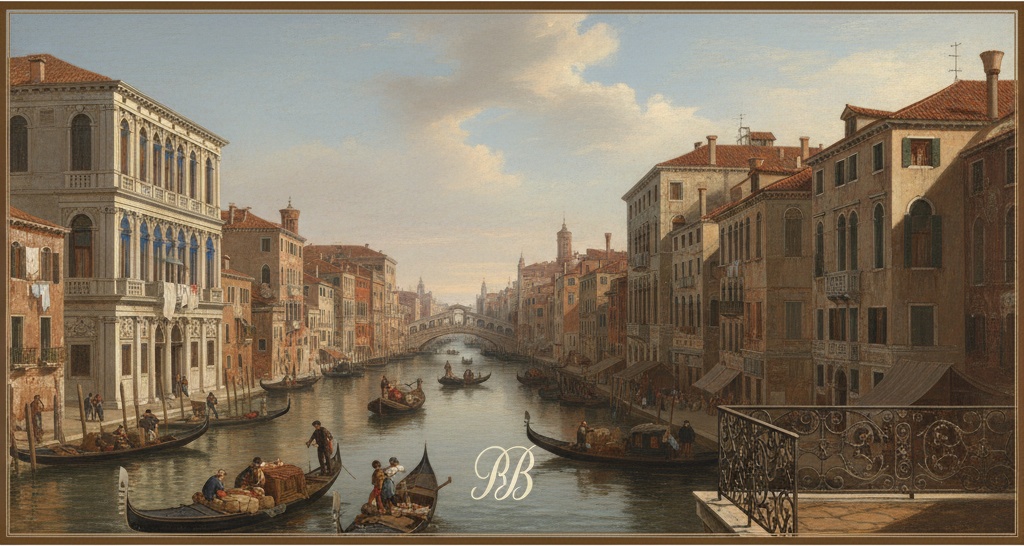
Bernardo Bellotto, a name often whispered alongside that of his celebrated uncle, Giovanni Antonio Canal – better known as Canaletto – represents far more than mere familial connection. He was not simply “Canaletto’s nephew,” but a distinct artistic voice who carved his own indelible mark on the 18th-century European landscape. Born in Venice around 1721 or 1722, Bellotto inherited a rich artistic lineage. His mother, Fiorenza Canal, was Canaletto's sister, and from an early age, Bernardo was immersed in the vibrant world of Venetian art. This formative period within his uncle’s workshop provided him with a foundational understanding of perspective, composition, and the meticulous detail that would come to define his work. However, while deeply influenced by Canaletto’s style, Bellotto quickly demonstrated a unique sensibility, a more somber palette, and an increasing fascination with architectural precision that set him apart.
Early works reveal a clear apprenticeship under Canaletto, mimicking the bustling scenes of Venice with their lively figures and shimmering waterways. Yet even in these initial paintings, hints of Bellotto’s individual character emerge – a greater emphasis on the solidity of buildings, a more nuanced rendering of light and shadow, and a growing preference for capturing grand, sweeping vistas rather than intimate street scenes. This early period wasn't merely imitation; it was an essential stage of development, honing his skills before embarking on a journey that would take him far beyond the canals of Venice.
Mastering the Veduta: Technique, Precision & Artistic Innovation
The veduta – Italian for “view” – became Bellotto’s defining genre. But he didn't simply *paint* views; he meticulously constructed them. Unlike Canaletto’s often spontaneous approach, Bellotto was renowned for his painstaking accuracy and dedication to topographical detail. While the precise methods remain a subject of scholarly debate, it is widely believed that he employed techniques such as the camera obscura to achieve an unparalleled level of realism. This device projected an image onto paper, allowing him to accurately map out architectural elements and spatial relationships.
However, Bellotto’s skill extended far beyond mere mechanical reproduction. He possessed a remarkable ability to synthesize observations from multiple viewpoints, correcting distortions and enhancing the overall composition. His paintings are not simply records of what existed; they are carefully curated representations, often idealized versions that emphasized the grandeur and beauty of the cities he depicted. The layering of oil paints, applied with delicate brushstrokes, created a sense of depth and atmosphere rarely seen in contemporary vedute. He wasn’t just capturing light; he was sculpting it, using shadow to accentuate form and create dramatic effects.
Dresden’s Architect: Commissioned Works and Preservation of a City
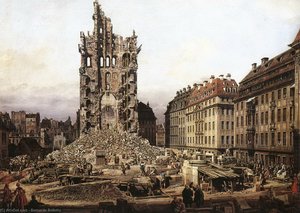
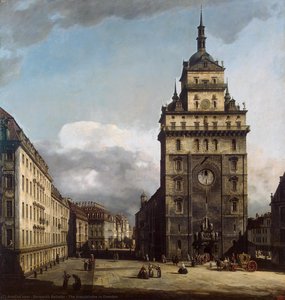
In 1747, Bellotto received an invitation that would profoundly shape his career – from King Augustus III of Poland, who resided in Dresden. This marked a turning point, moving him beyond the familiar landscapes of Italy to the burgeoning artistic center of Saxony. For over a decade, he served as court painter, documenting the architectural splendor of Dresden and its surroundings. These weren’t simply decorative commissions; they were acts of preservation.
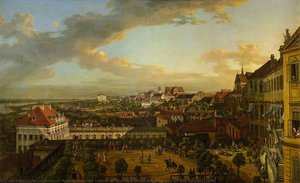
Augustus III recognized the importance of visually recording his capital city, and Bellotto's paintings became invaluable records of a landscape that would tragically be altered by future events. The meticulous detail with which he rendered Dresden’s palaces, churches, and public squares proved crucial after the devastating bombing raids of World War II, providing essential source material for reconstruction efforts. View of Warsaw from Praga, though painted later in his career, exemplifies this dedication to preserving architectural memory – a testament to the power of art as historical documentation.
Warsaw’s Chronicler: Royal Patronage and the Panorama Room
Bellotto's reputation continued to grow, leading to another prestigious appointment in 1768 – as court painter to King Stanisław August Poniatowski of Poland. He spent the remaining sixteen years of his life in Warsaw, creating a series of panoramic views of the Polish capital for the Royal Castle. These paintings, commissioned to adorn what became known as the Panorama Room (later Canaletto Room), were intended to showcase the beauty and prosperity of Poland under Poniatowski’s rule.
The Warsaw series represents Bellotto at the height of his powers. The compositions are grand in scale, the detail is exquisite, and the atmosphere is imbued with a sense of regal splendor. He captured not only the architectural landmarks but also the daily life of the city – bustling markets, elegant carriages, and figures engaged in various activities. These paintings weren’t merely portraits of buildings; they were celebrations of Polish culture and identity.
Bellotto's Style in Context: Rococo Influences & Distinctions from Canaletto
While firmly rooted in the veduta tradition, Bellotto’s style also reflects the broader artistic currents of the Rococo period. The emphasis on elegance, ornamentation, and a sense of theatricality is evident in his compositions, though he avoided the excessive frivolity often associated with Rococo interiors. His palette, while still vibrant, tended towards more subdued tones than Canaletto’s brighter hues. This shift reflects a growing interest in Dutch landscape painting, particularly its mastery of light and shadow.
The key distinction between Bellotto and Canaletto lies not in technique – both were exceptionally skilled painters – but in their artistic temperament. Canaletto was a chronicler of Venetian life, capturing the energy and vibrancy of the city’s canals. Bellotto, however, was more interested in architectural precision and the preservation of urban landscapes. His paintings are less about atmosphere and more about structure, less about fleeting moments and more about enduring monuments.
The Enduring Legacy: Rediscovery, Restoration & Bellotto’s Place in Art History
Following his death in 1780, Bellotto's reputation gradually faded. However, the rediscovery of his Warsaw paintings in the early 20th century sparked a renewed interest in his work. The fact that these paintings survived World War II – albeit with significant damage – further cemented their importance as historical documents. Today, Bellotto is recognized as one of the most important vedutisti of the 18th century.
His meticulous technique, dedication to architectural accuracy, and unique artistic sensibility continue to captivate art lovers and scholars alike. ArtsDot.com offers a curated selection of Bellotto’s masterpieces, allowing you to experience the beauty and grandeur of his paintings firsthand. Whether you are an experienced collector or simply appreciate fine art, exploring the world of Bernardo Bellotto is a journey into a bygone era – a testament to the power of art to preserve history, capture beauty, and inspire generations.