Early Influences & The Divisionist Roots of Carlo Carrà
Carlo Carrà’s artistic evolution was not a sudden burst of innovation, but rather a gradual unfolding shaped by early experiences and the prevailing aesthetic currents of his time. Born in 1881 in Quargnento, Italy, his initial training as a mural decorator instilled a practical understanding of form and composition, yet it was his exposure to the Parisian art scene at the turn of the century that truly ignited his creative spark. While working on decorative projects for the Exposition Universelle in 1900, Carrà encountered the burgeoning world of modern painting, absorbing influences that would later be synthesized into something uniquely his own. However, a period spent in London, amidst the circles of exiled Italian anarchists, proved equally formative, instilling a sense of social consciousness and a questioning spirit that underpinned much of his early work. It was upon his return to Milan, though, that Carrà found his initial artistic direction within the Divisionist movement.
Divisionism, with its emphasis on separating colors into distinct brushstrokes intended to blend optically in the viewer’s eye, offered a compelling alternative to traditional painting techniques. This approach wasn't merely about visual effect; it represented a scientific attempt to capture light and atmosphere, resonating with Carrà’s burgeoning interest in perception and sensation. While he initially embraced Divisionism wholeheartedly, his exploration soon led him beyond its purely optical concerns, pushing the boundaries of color and form towards more expressive ends. This early experimentation laid the groundwork for his eventual embrace of Futurism, providing a crucial technical foundation upon which to build his revolutionary aesthetic.
Embracing Dynamism: Carrà and the Italian Futurist Movement
Futurism (Italian: Futurismo [futuˈrizmo]) was an artistic and social movement that originated in Italy, and to a lesser extent in other countries, in the early 20th century. It emphasized dynamism, speed, technology, youth, violence, and objects suc...
The year 1910 marked a pivotal moment in Carlo Carrà’s career – his formal alignment with the Italian Futurist movement. Alongside Umberto Boccioni, Luigi Russolo, and Giacomo Balla, he signed the *Manifesto of Futurist Painters*, a declaration that irrevocably altered the course of Italian art. Futurism wasn't simply an artistic style; it was a philosophy—a passionate embrace of modernity, speed, technology, and the energy of urban life. Rejecting the past as a weight holding Italy back, the Futurists sought to capture the dynamism of the machine age, celebrating the chaos and exhilaration of the modern world.
Carrà’s early Futurist works reflect this fervent enthusiasm. Paintings like *The Station in Milan* (1910-11) attempted to convey the bustling energy of a railway station, reducing figures to fragmented forms and emphasizing light and movement. He wasn't interested in depicting static scenes but rather in capturing the sensation of being swept up in the relentless flow of modern life. This pursuit led him towards increasingly abstract compositions, exploring the very essence of dynamism through shape, color, and line. The Futurist desire to represent multiple perspectives simultaneously, mirroring the fragmented experience of modernity, is clearly visible in these works.
From Urban Chaos to Synesthetic Painting: Exploring 'Interventionist Demonstration'
As Carrà delved deeper into Futurist principles, his work took an increasingly radical turn. Inspired by Filippo Marinetti’s concept of *parole in libertà* – “words in freedom” – he began experimenting with collage and typography, culminating in the creation of *Interventionist Demonstration (Patriotic Holiday – Free Word Painting)*. This powerful piece, created during the politically charged years leading up to World War I, exemplifies both the avant-garde techniques and the militant nationalism that characterized much of Futurist art.
Unlike traditional paintings relying on visual representation, *Interventionist Demonstration* utilizes words as its primary element. The composition rotates like an airplane propeller, with “aviator” at its heart, surrounded by a vortex of pasted and painted words—advertisements, poems, newspaper clippings, and patriotic slogans. This wasn’t merely about conveying information; it was about creating a multi-sensory experience, attempting to translate sounds, smells, and emotions directly onto the canvas. Carrà's 1913 manifesto, “The Painting of Sounds, Noises and Smells,” articulated his belief in synesthesia—the perceptual phenomenon where stimulation of one sense triggers experiences in another—and *Interventionist Demonstration* stands as a bold attempt to realize this concept in paint.
The Metaphysical Turn: Collaboration with Giorgio de Chirico and a New Reality
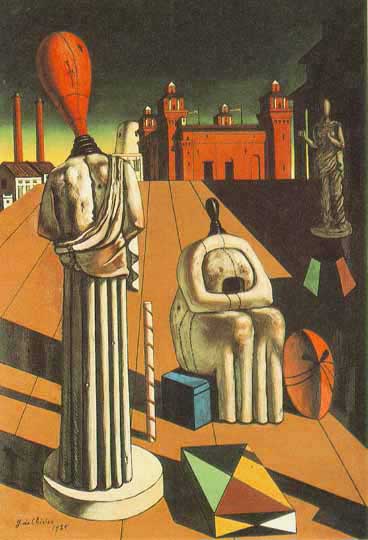 Wikipedia: Metaphysical painting
Metaphysical painting (Italian: pittura metafisica) or metaphysical art was a style of painting developed by the Italian artists Giorgio de Chirico and Carlo Carrà. The movement began in 1910 with de Chirico, whose dreamlike works with sharp contrast...
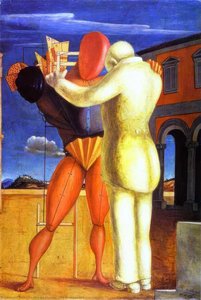
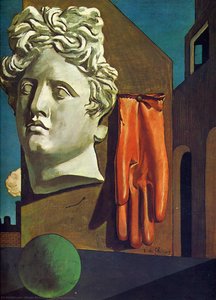
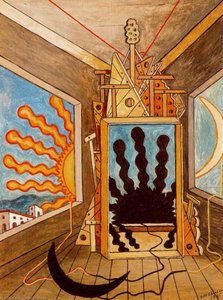
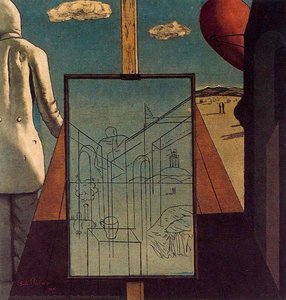
Around the outbreak of World War I, Carrà’s artistic trajectory underwent another significant shift. Disillusioned with the increasingly dogmatic nature of Futurism, he embarked on a new path that would lead him to co-found Metaphysical painting alongside Giorgio de Chirico in 1917. This movement represented a dramatic departure from the dynamism and energy of his earlier work, embracing instead a sense of stillness, mystery, and psychological unease.
Their collaboration in Ferrara proved profoundly influential. De Chirico’s dreamlike cityscapes, populated by enigmatic mannequins and unsettling architectural forms, resonated deeply with Carrà, prompting him to explore the hidden realities beneath the surface of everyday life. Paintings from this period feature stark contrasts of light and shadow, ambiguous spaces, and a haunting sense of isolation. The objects depicted—often mundane items like biscuits or statues—are imbued with symbolic weight, inviting viewers to question their own perceptions and interpretations. Carrà’s Metaphysical paintings weren't about representing the visible world but rather about painting “that which cannot be seen,” delving into the realm of subconscious thought and emotional resonance.
Carrà's Later Years: A Return to Realism and Regional Identity
The period of Metaphysical painting, though intensely productive, was relatively short-lived for Carrà. After 1920, he gradually moved away from its dreamlike qualities, embracing a more realist idiom characterized by monumental figures and naturalistic landscapes. This shift wasn’t simply a rejection of his earlier work but rather a continuation of his lifelong exploration of form and representation.
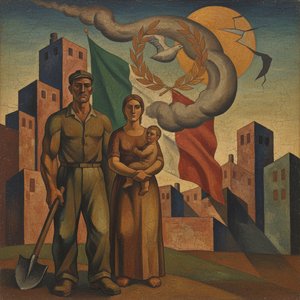
Throughout the 1930s and 40s, Carrà devoted himself to works that celebrated Italian identity and rural life. His involvement with the Strapaese group (“super country”) reflected a growing nationalism and a desire to simplify artistic expression. He sought to capture the essence of the Italian landscape—its light, its textures, and its enduring spirit—in paintings that were both powerful and contemplative. This later phase of his career saw him develop a looser, more Impressionistic brushwork, transforming traditional landscape painting into what he described as “poems full of space and dreams.”
Legacy & Influence: Carrà’s Enduring Impact on Modern Art
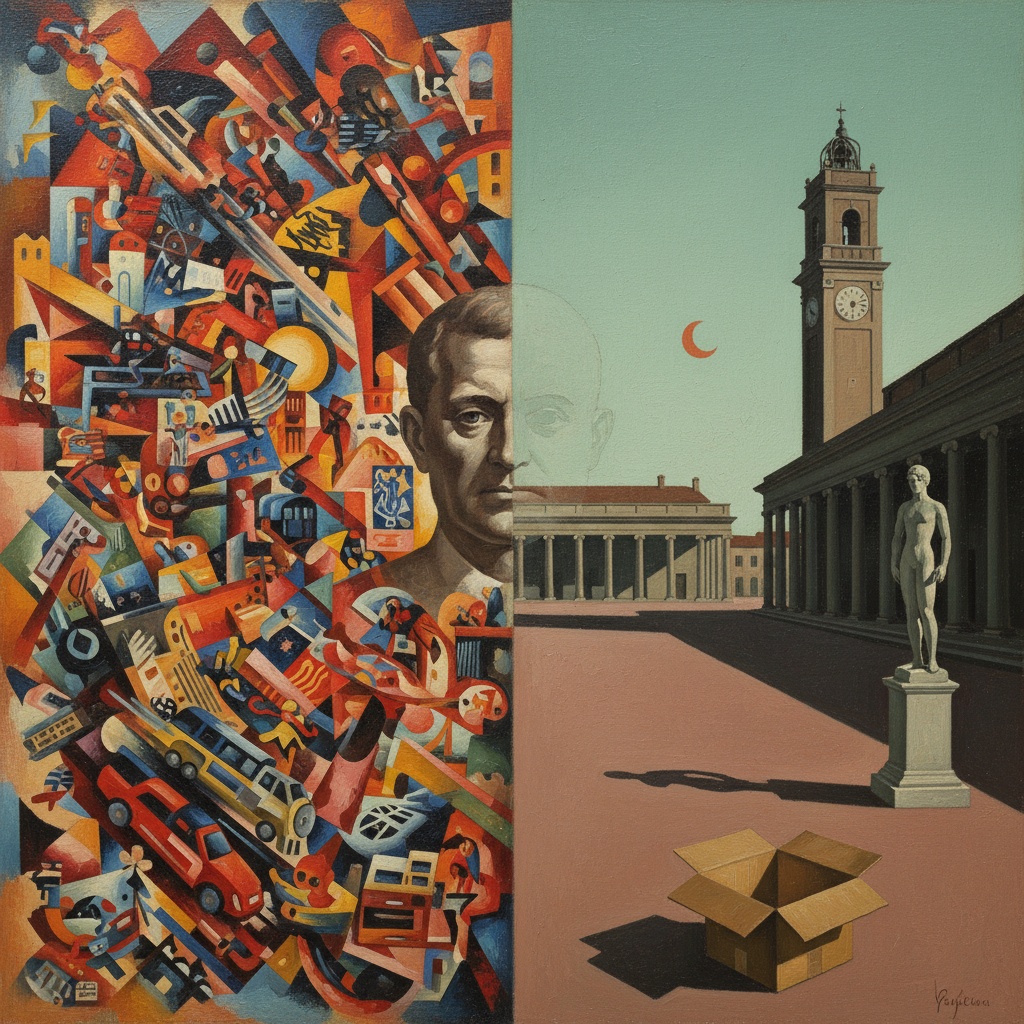
Carlo Carrà’s artistic journey was one of constant evolution—a restless pursuit of new forms of expression that spanned Futurism, Metaphysical painting, and a return to realism. His influence on modern art is undeniable. He not only helped define the core principles of Italian Futurism but also pioneered abstract symbolism and dreamlike imagery that would inspire movements like Surrealism. His exploration of synesthesia challenged traditional notions of perception, while his later works celebrated the beauty of the Italian landscape with a unique poetic sensibility.
Today, Carrà’s paintings are held in major museums around the world, captivating audiences with their dynamic compositions, psychological depth, and enduring power. At ArtsDot.com, we offer meticulously crafted reproductions of his masterpieces, allowing you to experience the brilliance of this pivotal artist firsthand. Whether you're drawn to the energy of his Futurist works or the haunting stillness of his Metaphysical paintings, Carrà’s art continues to resonate with viewers seeking a deeper understanding of the modern world and the human condition. Explore our collection today and discover the captivating legacy of Carlo Carrà.