Early Influences & The Futurist Spark: Sironi's Artistic Genesis
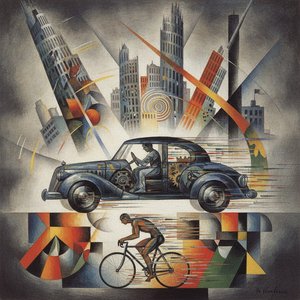
Futurism (Italian: Futurismo [futuˈrizmo]) was an artistic and social movement that originated in Italy, and to a lesser extent in other countries, in the early 20th century. It emphasized dynamism, speed, technology, youth, violence, and objects suc...
Mario Sironi’s artistic journey was one of profound transformation, deeply interwoven with the turbulent currents of early 20th-century Italy. Born in Sassari, Sardinia, in 1885, his initial path led him towards engineering at the University of Rome, a pursuit quickly abandoned following a nervous breakdown in 1903 – an event foreshadowing a life marked by recurring bouts of depression and a relentless search for expressive outlets. This early vulnerability proved pivotal, steering him away from technical precision and toward the subjective realm of painting. His formative years in Rome brought him into contact with Giacomo Balla, who became his first significant mentor, initiating Sironi into the vibrant world of Divisionism. However, it was not merely a stylistic influence; Balla introduced Sironi to a burgeoning intellectual climate questioning traditional artistic norms and embracing the dynamism of modernity.
The allure of Paris beckoned in 1906, exposing Sironi to the latest avant-garde trends. Yet, his true awakening came with exposure to German Expressionism during visits between 1908 and 1911. While absorbing elements from these movements, Sironi remained restless, seeking a uniquely Italian voice. This search culminated in his embrace of Futurism around 1914. He found resonance in the movement’s rejection of the past and its celebration of speed, technology, and national fervor. Works like his abstract tempera paintings, titled “Composizione futurista” (1915), demonstrate this initial foray into Futurist aesthetics – though a crucial distinction must be made: Sironi was drawn more to Futurism’s socio-political ideals than its purely aesthetic principles. He enthusiastically supported the call for Italian intervention in World War I, believing art could serve as a catalyst for national renewal.
The Metaphysical Turn: Isolation, Mannequins, and the Search for Meaning
 Wikipedia: Metaphysical painting
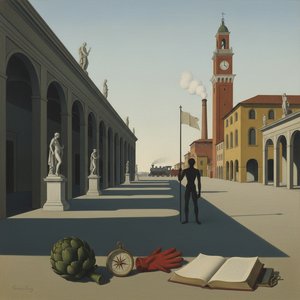
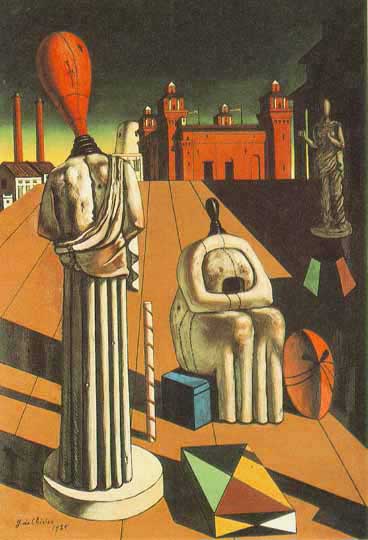
Metaphysical painting (Italian: pittura metafisica) or metaphysical art was a style of painting developed by the Italian artists Giorgio de Chirico and Carlo Carrà. The movement began in 1910 with de Chirico, whose dreamlike works with sharp contrast...
The experience of war profoundly altered Sironi’s artistic trajectory. The initial fervor of Futurism gave way to a deep sense of disillusionment and introspection. His service in World War I as a volunteer cyclist left an indelible mark, prompting a rejection of the movement's celebratory dynamism in favor of a more somber, contemplative approach. This shift is powerfully evident in his post-war works, where he abandoned the fragmentation of form characteristic of Futurism for massive, immobile figures and unsettling spatial arrangements. The influence of Giorgio de Chirico’s Metaphysical painting became paramount.
Paintings like “La Lampada” (1919) exemplify this new direction. The presence of mannequins—featureless, silent stand-ins for human figures—became a recurring motif, embodying a sense of alienation and existential isolation. These weren’t merely stylistic choices; they were potent symbols reflecting the psychological trauma of war and the breakdown of traditional values. Sironi, like de Chirico and Carlo Carrà, sought to depict “that which cannot be seen,” exploring the hidden anxieties and uncertainties lurking beneath the surface of reality. The sharp contrasts of light and shadow, the disquieting perspectives, and the unsettling stillness all contribute to a uniquely haunting atmosphere.
Novecento Italiano & Fascist Affiliations: Art as National Identity
 Mario Sironi
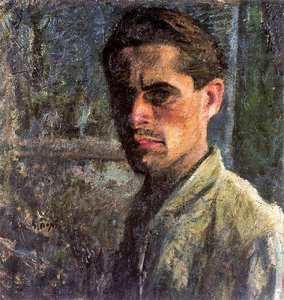
Discover Mario Sironi (1885-1961): Italian Modernist painter of massive forms & geometric shapes. Explore his Futurist, Novecento Italiano styles & themes of solitude, industry & Italian identity.
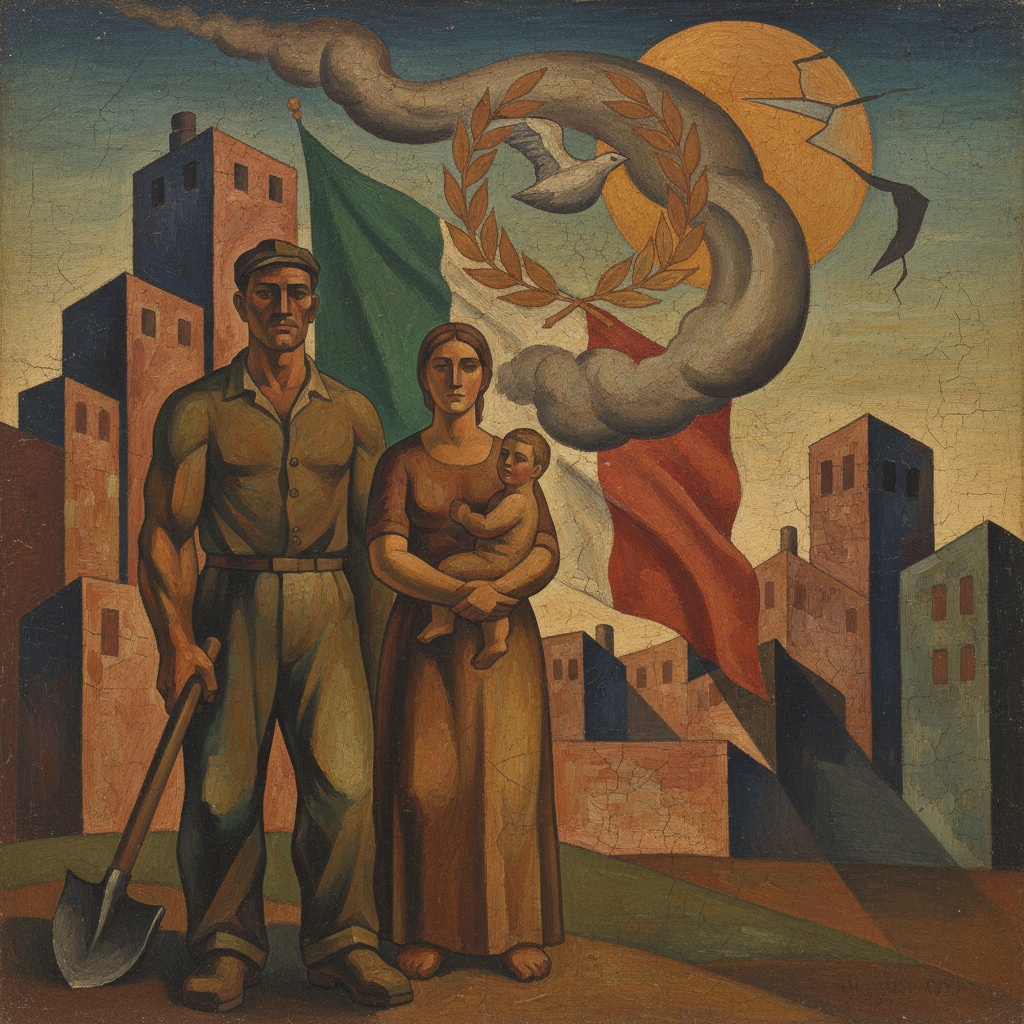
In 1922, Sironi co-founded the Novecento Italiano movement, a pivotal moment in his career. This group represented a “return to order” after the chaos of the war and the perceived excesses of Futurism. However, it wasn’t simply a nostalgic embrace of tradition; Novecento sought to synthesize modern aesthetics with elements of Italian pictorial heritage, creating an art that was both forward-looking and deeply rooted in national identity. Sironi quickly emerged as its leading figure, developing a monumental figurative style characterized by contained geometric forms and a lugubrious emotional tone.
This period coincided with the rise of Fascism in Italy, and Sironi’s work found favor with the regime. While an “official Fascist art” was never formally defined, his ability to combine modern sensibilities with classical references resonated with Mussolini's vision of a revitalized Italy invoking the glories of ancient Rome. He became a prolific contributor to Il Popolo d'Italia, the official Fascist newspaper, producing over 1700 satirical drawings and vignettes. His commitment extended beyond illustration; he designed striking spaces for the 1932 Exhibition of the Fascist Revolution, believing in art’s capacity to shape public consciousness. This close association with the regime remains a complex and controversial aspect of his legacy.
Themes of Solitude & Industry: A Somber Reflection of Modern Life
Throughout the 1920s, Sironi increasingly focused on the sprawling industrial quarters of Milan as his primary subject matter. These weren’t celebratory depictions of progress; rather, they were somber reflections on the alienation and dehumanization inherent in modern life. The factories, power stations, and working-class neighborhoods became symbols of a society grappling with rapid change and social upheaval. His paintings often feature lone figures dwarfed by massive structures, conveying a sense of isolation and anonymity.
Solitudine (“Solitude,” 1925) is perhaps the quintessential example of this theme. The painting’s stark composition, muted palette, and monumental forms evoke a profound sense of melancholy and existential angst. The figures are not engaged in any meaningful activity; they simply exist within the oppressive landscape, embodying a feeling of disconnection and despair. This exploration of solitude wasn't merely a personal expression; it reflected a broader cultural anxiety prevalent in post-war Italy.
Sironi's Mural Projects: Bridging Art and Public Space
Driven by his belief in art’s social role, Sironi increasingly turned towards mural painting in the 1930s. He rejected the concept of the easel painting as an elitist pursuit, advocating for a fusion of decoration and architecture that would make art accessible to a wider audience. Inspired by Gothic cathedrals, he envisioned murals as integral components of public spaces, capable of conveying national narratives and fostering a sense of collective identity.
The state commissioned several large-scale decorative works during this period, including “L'Italia fra le arti e le scienze” (“Italy Between the Arts and Sciences,” 1935). These murals were characterized by their monumental scale, simplified forms, and allegorical imagery. While aesthetically powerful, they also served as vehicles for promoting Fascist ideology. His commitment to mural painting represented a deliberate attempt to transcend the confines of the art world and engage directly with the public sphere.
Legacy and Influence: Sironi’s Enduring Impact on Italian Art
Mario Sironi's career was marked by constant evolution, reflecting the tumultuous political and artistic landscape of Italy throughout his lifetime. While his close association with Fascism cast a long shadow over his reputation in the post-World War II period, his artistic contributions remain significant. His exploration of solitude, industry, and national identity resonated deeply with his contemporaries and continues to captivate audiences today.
His influence can be seen in the work of subsequent generations of Italian artists, particularly those grappling with themes of alienation and social commentary. Sironi’s ability to synthesize modern aesthetics with elements of classical tradition established a unique visual language that continues to inspire. At ArtsDot.com, we offer high-quality reproductions of Sironi's most iconic works, allowing you to experience the power and complexity of his art firsthand. Explore our collection and discover the enduring legacy of this pivotal Italian Modernist.