 Preview
 Send
Send Share
Share
 Details

 Download
 Similars
 X-Ray
X-Ray Diaporama
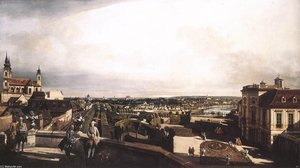
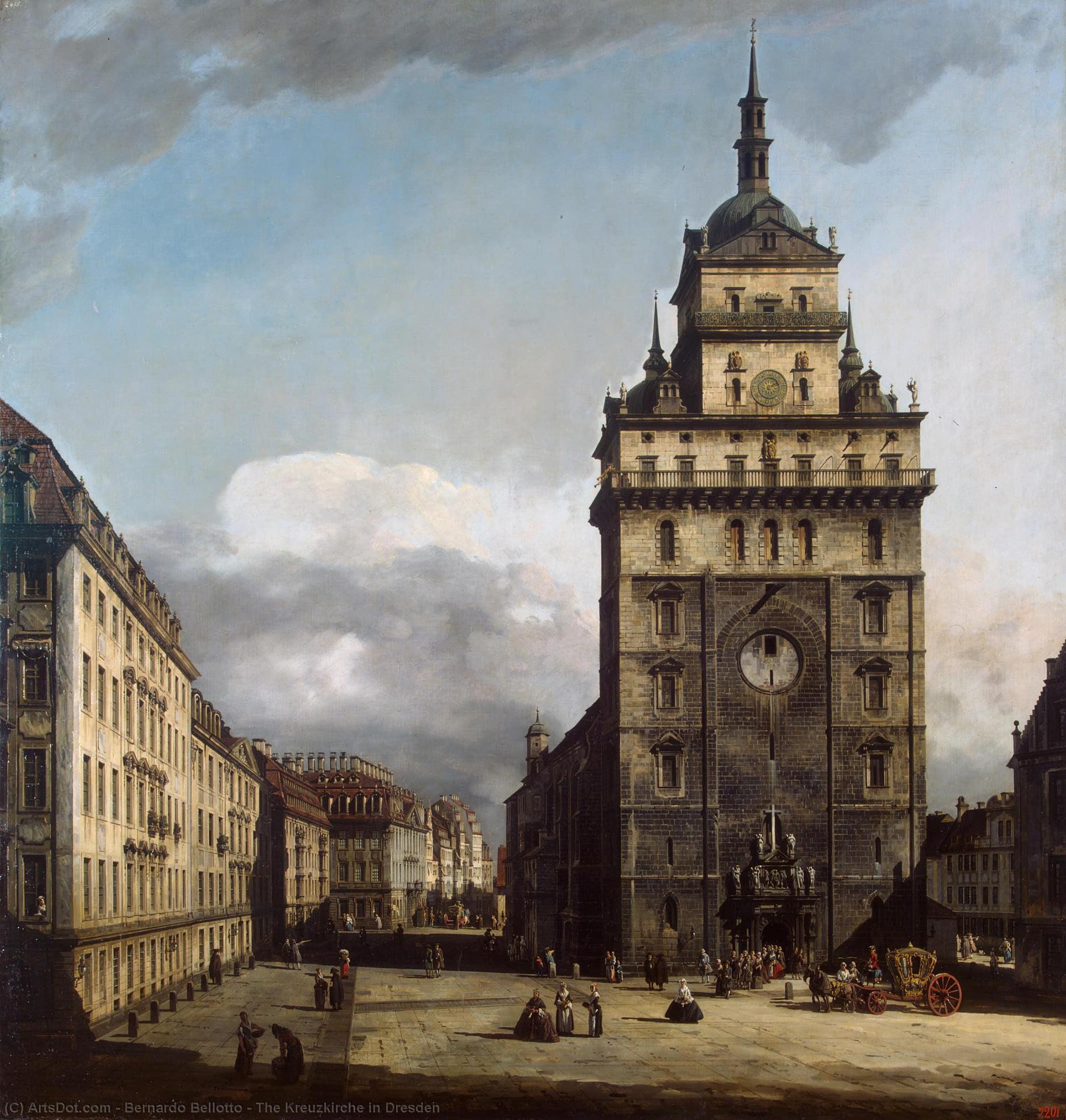
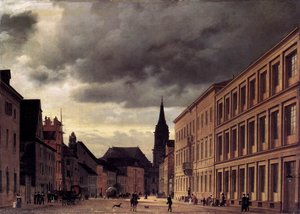
The Kreuzkirche in Dresden
 Oil On Canvas
- WallArt
- Baroque Landscape Painting
 1747
1747- Renaissance
 197.0 x 187.0 cm
 Hermitage Museum
 Read More
Hand Made Oil Reproduction
Hand-painted oil on canvas in your size and frame, made to order by our artists. ( Buy Print Buy Image)




P118B $10

P118H $10

P118W $10

P438Z $10

P508JH $12

P508YH $12

P805H $10

P805Z $10

P919BZ $10

P919G $10

P919XJ $10

P959ZH $10

P968JZ $12

W106C $8

W218G $10

W218JH $8

W218Y $10

W307PJ $10

W316G $10

W316PJ $8

W316Y $10

W398PJ $8

W4111J $10

W500HY $15

W500JH $15

W692G $12

W849H $8

W940BG $15

W953PJ $8




Pick from our preset sizes that match the artwork's original proportions.

You may enter your own dimensions to fit a specific frame or space. If your selected size does not match the original image's proportions, we will either crop the artwork or extend the painting with additional hand-painted elements. A digital mockup will be sent for your approval before production begins.
Please note that the on-screen preview does not reflect the actual cropping or extension. Only the mockup will accurately show the final composition.
While custom sizes are available, we recommend selecting a dimension from the predefined list to preserve the original proportions.
After order, ArtsDot.com team will email client for instructions and provide a mockup preview
Worldwide Delivery () in 3/4 weeks instead of standard 5 weeks. (17 August). No compromise on quality.

Free Worldwide Express Shipping

High-Quality Linen Canvas

Full Shipping Insurance

Customs Tax Refund Guarantee

True Color Matching Guarantee

60-Day Return Policy (Defects Only)

100% Money-Back Guarantee

Bulk Discount Offer
 Glass option is only available in size under 110 CM

The Kreuzkirche in Dresden
Reproduction Medium
Reproduction Size
-


Total Price
$ 263
Artwork Description
Bernardo Bellotto’s ‘The Kreuzkirche in Dresden’: A Window into a Lost City
Bernardo Bellotto's 1747 depiction of the Kreuzkirche in Dresden is more than just a cityscape; it’s a meticulously rendered testament to a vanished world and a poignant reflection on the fragility of beauty. Executed during a pivotal moment in European history – a period marked by shifting alliances, burgeoning empires, and devastating conflicts – this large-scale drawing offers an intimate glimpse into the heart of Saxony's capital, just years before the catastrophic destruction wrought by Allied bombing during the final stages of World War II. Bellotto, apprenticed to the celebrated Canaletto, inherited his mentor’s extraordinary ability to capture not merely the appearance of a place, but its very soul. This work exemplifies that skill, showcasing a profound understanding of urban space and a masterful command of perspective and light.
A Venetian Legacy: Bellotto's Artistic Training
- Canaletto’s Influence: Bellotto’s artistic journey began under the tutelage of Giovanni Antonio Canal, better known as Canaletto. This formative period instilled in him a deep appreciation for detailed observation and a distinctive approach to architectural drawing – one characterized by a precise rendering of buildings, streets, and public spaces.
- Technical Mastery: Like his mentor, Bellotto employed the techniques of linear perspective with remarkable accuracy, creating an illusion of depth that draws the viewer into the scene. His use of hatching and cross-hatching adds subtle variations in tone, enhancing the realism and atmospheric quality of the drawing.
- Venetian Perspective: Bellotto’s early works demonstrate a Venetian sensibility – a focus on capturing the light and shadow effects unique to the city's canals and architecture. This influence is subtly present in ‘The Kreuzkirche,’ contributing to its overall sense of authenticity.
Dresden at a Crossroads: Historical Context and Artistic Purpose
Commissioned by King August III of Poland, Bellotto arrived in Dresden in 1747, tasked with documenting the city’s architectural landscape. This was not merely an act of artistic patronage; it served a strategic purpose – to create a visual record of Dresden's grandeur and stability, intended for diplomatic use and as a testament to the king’s power. The drawing captures the Kreuzkirche, one of Dresden’s most prominent landmarks, during a period of significant urban development and political maneuvering. The impending Seven Years' War casts a subtle shadow over the scene, hinting at the turbulent times ahead. Bellotto’s work is thus inextricably linked to the historical events unfolding around him, offering a valuable primary source for understanding the city’s appearance and social dynamics in the mid-18th century.
Symbolism and Emotional Impact: A Frozen Moment
Beyond its technical brilliance, ‘The Kreuzkirche’ possesses a powerful emotional resonance. The scene is alive with activity – figures strolling along the streets, horses pulling carriages, and merchants engaged in trade. This bustling atmosphere conveys a sense of vitality and prosperity, yet it's also tinged with melancholy, particularly considering the eventual destruction of Dresden. Bellotto’s meticulous attention to detail allows us to almost feel the texture of the stone buildings, smell the aromas of the city, and hear the sounds of its inhabitants. The drawing serves as a poignant reminder of what was lost – a beautiful city reduced to rubble by war. The inclusion of the clock tower, a symbol of time’s relentless passage, adds another layer of significance to this enduring masterpiece.
Related Artworks
Artist Biography
early life and training
bernardo bellotto, a renowned italian painter, was born in venice around 1721/2 or on january 30, 1721. he was the nephew and pupil of the famous giovanni antonio canal canaletto, a prominent figure in the venetian school of painting.artistic style and career
bellotto's artistic style was characterized by his elaborate representation of architectural and natural vistas, as well as the unique quality of each place's lighting. he was known for his exceptional skill in capturing the essence of urban landscapes, which led to his invitation to work for various european monarchs.- he traveled to rome (1742), northern italy (1744-1745), and later moved to dresden (1747-1758) at the behest of king august iii of poland.
- his works in dresden preserved the city's pre-war beauty, now destroyed.
- he received an invitation from empress maria theresa to work in vienna (1758), where he painted the city's monuments.
notable works and legacy
some of bellotto's notable works include:- view of the grand canal: santa maria della salute and the dogana from campo santa maria zobenigo (1743)
- architectural capriccio with a self-portrait of bellotto in the costume of a venetian nobleman
museums and collections
bellotto's works can be found in various museums, including the pinacoteca di vicenza in italy. to explore more of his artwork, visit [https://ArtsDot.com/@/bernardo bellotto](https://ArtsDot.com/@/bernardo bellotto) and discover the world of art.references
* /en/art/show/art-d3baj3-en/ * [https://www.wikiart.org/en/bernardo-bellotto/](https://www.wikiart.org/en/bernardo-bellotto/) * [https://fr.wikipedia.org/wiki/bernardo_bellotto](https://fr.wikipedia.org/wiki/bernardo_bellotto)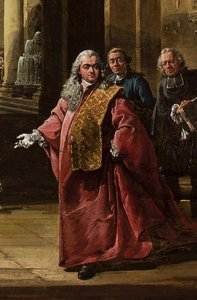
Bernardo Bellotto
1721 - 1780 , Italy
Quick Facts
- Artistic Movement Or Style: Vedute painting
- Artists Or Movements Influenced By This Artist: ['Urban reconstruction']
- Artists Who Influenced This Artist: ['Giovanni Canaletto']
- Date Of Birth: 1721
- Date Of Death: 1780
- Full Name: Bernardo Bellotto
- Nationality: Italian
- Notable Artworks:
- View of the Grand Canal
- Architectural Capriccio
- Place Of Birth: Venice, Italy
Related Articles
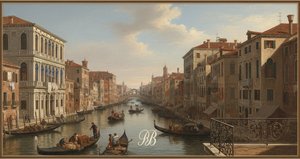
Bernardo Bellotto: Canaletto's Nephew & Master of Veduta Painting – A Comprehensive Exploration
Explore the life & art of Bernardo Bellotto, Canaletto’s nephew and a master of veduta painting. Discover his stunning cityscapes of Dresden & Warsaw, artistic techniques, and lasting legacy. Expert insights for collectors.

Baroque Drama: Bringing Opulence & Emotion into Contemporary Interiors
Explore the opulent world of Baroque interior design! Discover key elements, modern applications & how to bring dramatic elegance into your home with 's authentic reproductions.

The Enduring Power of Painting: A Historical & Contemporary Exploration of Form and Emotion
Explore the rich history & enduring techniques of oil painting with ArtsDot. Discover masterpieces, learn about art collecting, and find authentic handmade reproductions crafted by skilled artists.

The Enduring Legacy of Oil on Canvas: Technique, History & Aesthetic Impact
Explore the rich history & techniques of oil painting – from Renaissance masters to Impressionism. Discover pigments, layering methods, and why this timeless medium endures. Expert insights for artists & art enthusiasts.

The Dramatic Flourish: Exploring the Baroque Movement's Enduring Legacy in Art History
Explore the dramatic world of Baroque art! Discover iconic artists like Caravaggio & Rubens, defining techniques, and its lasting impact on art history. Expert insights for collectors & enthusiasts at ArtsDot.