 Preview
 Send
Send Share
Share
 Details

 Download
 Similars
 X-Ray
X-Ray Diaporama
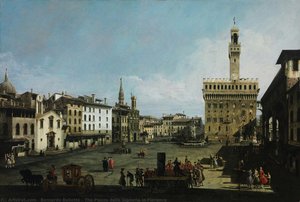
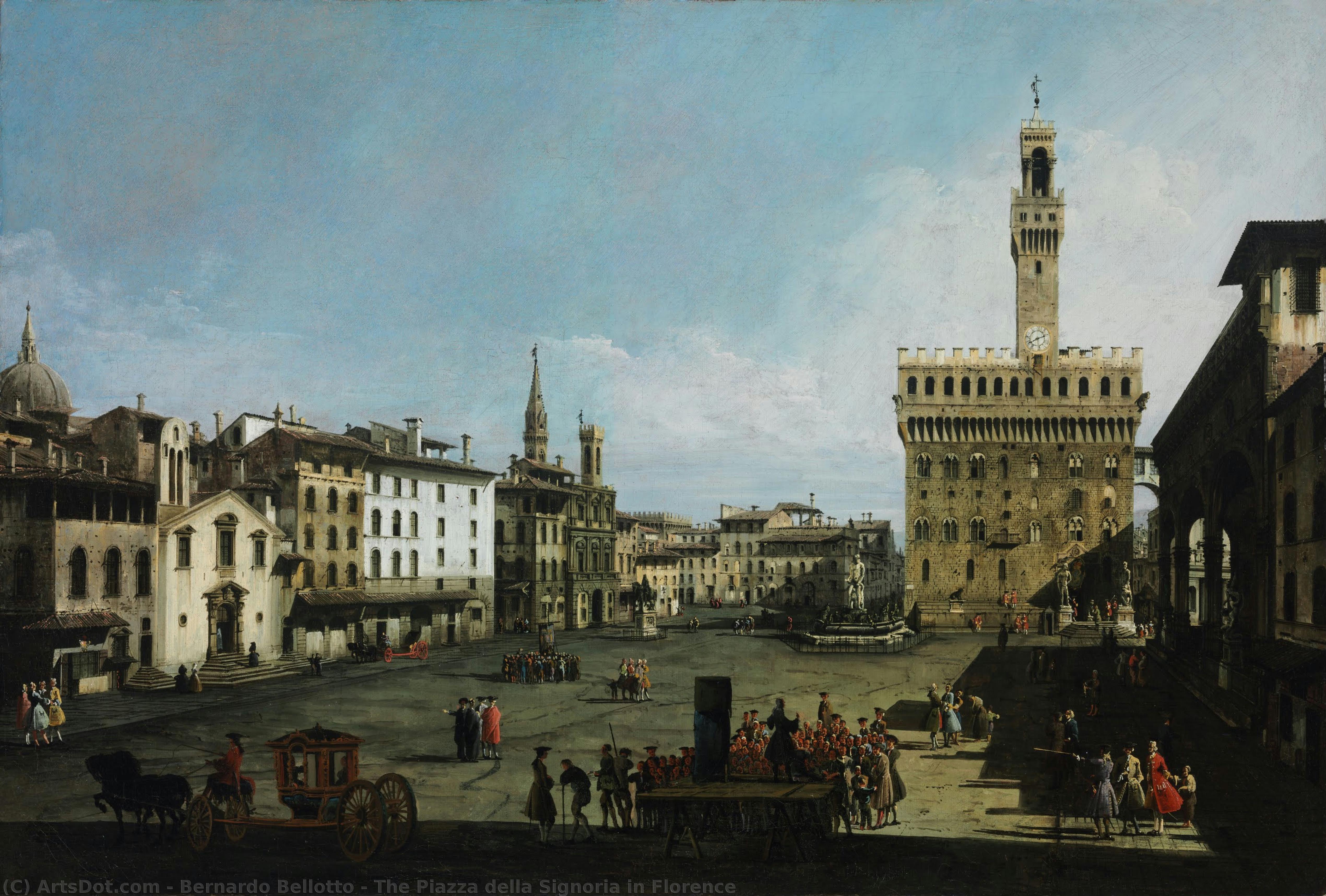
The Piazza della Signoria in Florence
 Acrylic On Canvas
- WallArt
- Venetian Baroque
 1740
1740 61.0 x 90.0 cm
 Museum of Fine Arts
 Read More
Hand Made Oil Reproduction
Hand-painted oil on canvas in your size and frame, made to order by our artists. ( Buy Print Buy Image)




P118B $10

P118H $10

P118W $10

P438Z $10

P508JH $12

P508YH $12

P805H $10

P805Z $10

P919BZ $10

P919G $10

P919XJ $10

P959ZH $10

P968JZ $12

W106C $8

W218G $10

W218JH $8

W218Y $10

W307PJ $10

W316G $10

W316PJ $8

W316Y $10

W398PJ $8

W4111J $10

W500HY $15

W500JH $15

W692G $12

W849H $8

W940BG $15

W953PJ $8




Pick from our preset sizes that match the artwork's original proportions.

You may enter your own dimensions to fit a specific frame or space. If your selected size does not match the original image's proportions, we will either crop the artwork or extend the painting with additional hand-painted elements. A digital mockup will be sent for your approval before production begins.
Please note that the on-screen preview does not reflect the actual cropping or extension. Only the mockup will accurately show the final composition.
While custom sizes are available, we recommend selecting a dimension from the predefined list to preserve the original proportions.
After order, ArtsDot.com team will email client for instructions and provide a mockup preview
Worldwide Delivery () in 3/4 weeks instead of standard 5 weeks. (17 August). No compromise on quality.

Free Worldwide Express Shipping

High-Quality Linen Canvas

Full Shipping Insurance

Customs Tax Refund Guarantee

True Color Matching Guarantee

60-Day Return Policy (Defects Only)

100% Money-Back Guarantee

Bulk Discount Offer
 Glass option is only available in size under 110 CM

The Piazza della Signoria in Florence
Reproduction Medium
Reproduction Size
-


Total Price
$ 263
Artwork Description
Bernardo Bellotto’s Florence: A Venetian Vision of Grandeur
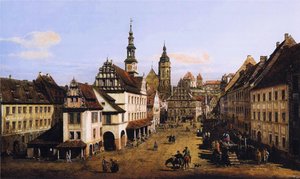
The Piazza della Signoria in Florence stands as a testament to Bernardo Bellotto's masterful ability to capture the spirit of his time—a pivotal moment in Venetian art history and a captivating glimpse into the opulent Baroque era. Painted around 1740, this veduta (Italian for “view”), commissioned by the Habsburg court, isn’t merely a depiction of a cityscape; it’s an embodiment of artistic ambition and a reflection of Florence's status as Europe’s cultural capital. Bellotto, deeply influenced by his mentor Giovanni Antonio Canaletto, skillfully blended observation with illusionistic technique to create an image that transcends simple representation.- Style & Technique: Bellotto adhered to the Venetian tradition of chiaro oscuro—a dramatic interplay of light and shadow—that Canaletto pioneered. This method emphasizes tonal gradations rather than precise color rendering, prioritizing atmospheric perspective to convey depth and realism. Notice how the hazy sky lends an ethereal quality to the scene, subtly highlighting the monumental architecture below. Bellotto’s brushstrokes are deliberate and confident, conveying a sense of meticulous detail without sacrificing overall harmony.
- Historical Context: Florence in 1740 was experiencing a resurgence of artistic patronage under Grand Duke Ferdinando III, who actively supported artists like Bellotto. The Piazza della Signoria itself housed significant monuments – Brunelleschi’s Dome and Michelangelo’s sculptures – symbols of Florentine Renaissance glory. Bellotto's painting served as a visual record of this era, documenting the grandeur of the city for posterity.
- Composition & Symbolism: The composition is carefully balanced, guiding the viewer’s eye across the piazza towards the Palazzo Vecchio and its imposing tower. The inclusion of a horse-drawn carriage adds to the dynamism of the scene, representing the bustling activity of Florentine life. Furthermore, the clock prominently displayed underscores the importance of time—a recurring motif in Bellotto's work—and reinforces the painting’s connection to the broader cultural landscape of its day.
- Emotional Impact: Viewing Bellotto’s Piazza della Signoria evokes a feeling of awe and admiration for Florentine artistry and civic pride. The artist successfully conveys not only the visual splendor of the piazza but also its intellectual and spiritual significance, transporting the viewer back to a time when Florence reigned supreme as a center of artistic innovation.
Related Artworks
Artist Biography
early life and training
bernardo bellotto, a renowned italian painter, was born in venice around 1721/2 or on january 30, 1721. he was the nephew and pupil of the famous giovanni antonio canal canaletto, a prominent figure in the venetian school of painting.artistic style and career
bellotto's artistic style was characterized by his elaborate representation of architectural and natural vistas, as well as the unique quality of each place's lighting. he was known for his exceptional skill in capturing the essence of urban landscapes, which led to his invitation to work for various european monarchs.- he traveled to rome (1742), northern italy (1744-1745), and later moved to dresden (1747-1758) at the behest of king august iii of poland.
- his works in dresden preserved the city's pre-war beauty, now destroyed.
- he received an invitation from empress maria theresa to work in vienna (1758), where he painted the city's monuments.
notable works and legacy
some of bellotto's notable works include:- view of the grand canal: santa maria della salute and the dogana from campo santa maria zobenigo (1743)
- architectural capriccio with a self-portrait of bellotto in the costume of a venetian nobleman
museums and collections
bellotto's works can be found in various museums, including the pinacoteca di vicenza in italy. to explore more of his artwork, visit [https://ArtsDot.com/@/bernardo bellotto](https://ArtsDot.com/@/bernardo bellotto) and discover the world of art.references
* /en/art/show/art-d3baj3-en/ * [https://www.wikiart.org/en/bernardo-bellotto/](https://www.wikiart.org/en/bernardo-bellotto/) * [https://fr.wikipedia.org/wiki/bernardo_bellotto](https://fr.wikipedia.org/wiki/bernardo_bellotto)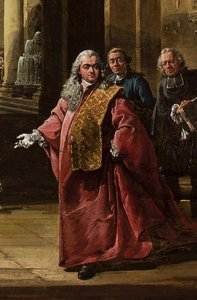
Bernardo Bellotto
1721 - 1780 , Italy
Quick Facts
- Artistic Movement Or Style: Vedute painting
- Artists Or Movements Influenced By This Artist: ['Urban reconstruction']
- Artists Who Influenced This Artist: ['Giovanni Canaletto']
- Date Of Birth: 1721
- Date Of Death: 1780
- Full Name: Bernardo Bellotto
- Nationality: Italian
- Notable Artworks:
- View of the Grand Canal
- Architectural Capriccio
- Place Of Birth: Venice, Italy
Related Articles
Bernardo Bellotto: Canaletto's Nephew & Master of Veduta Painting – A Comprehensive Exploration
Explore the life & art of Bernardo Bellotto, Canaletto’s nephew and a master of veduta painting. Discover his stunning cityscapes of Dresden & Warsaw, artistic techniques, and lasting legacy. Expert insights for collectors.

Jacopo Tintoretto's Masterpieces: 25 Paintings That Define Venetian Drama | ArtsDot
Explore 25 breathtaking masterpieces by Jacopo Tintoretto, the Venetian master of drama and light. Discover the stories behind iconic Renaissance paintings & find museum-quality art reproductions to elevate your home decor on ArtsDot.com.
Pietro Longhi's Venetian Scenes: A Study of Rococo Society & Domestic Life
Explore the captivating world of Pietro Longhi's Venetian scenes! Discover insightful analysis of his Rococo masterpieces & social commentary on 18th-century life. Learn about this 'Venetian Hogarth' and his lasting artistic legacy.
The Golden Light of Innovation: Exploring the Venetian Renaissance Art Movement (1430–1580)
Explore the Golden Age of Venetian art (1430–1580). Discover Giorgione, Titian & Tintoretto's techniques, the 'colorito' revolution, and lasting influence. Expert insights for collectors & enthusiasts.
Michelangelo Morlaiter: Venetian Landscapes & the Pursuit of Atmospheric Realism
Explore the captivating landscapes of Michelangelo Morlaiter, a key figure in 18th-century Venetian painting. Discover his mastery of atmospheric perspective and lasting influence on Italian art history. Learn more at ArtsDot.