Introduction: The Venetian Roots of Michelangelo Morlaiter
Michelangelo Morlaiter (Venice, 23 December 1729 – 1806) was an Italian painter, active mainly in Venice. He was one of the founding members and professor of the Accademia di Scoltura, Pittura, ed Architettura Civile in Venice in 1766. His father, Gi...
The name Michelangelo Morlaiter may not resonate with the immediate recognition afforded to Canaletto or Guardi, yet this Venetian painter occupies a significant, if often overlooked, position in the artistic landscape of 18th-century Italy. Born into a family steeped in sculptural tradition – his father, Giovanni Maria Morlaiter, was a prominent sculptor – Michelangelo forged his own path, becoming a founding member and professor at the Accademia di Scoltura, Pittura, ed Architettura Civile in Venice in 1766. His work embodies a fascinating transition, bridging the opulent grandeur of Baroque aesthetics with an emerging sensibility for naturalism and atmospheric realism that would foreshadow the Romantic movement. To understand Morlaiter is to glimpse a pivotal moment in Venetian art, where established conventions began to yield to a more nuanced observation of light, space, and the subtle poetry of the surrounding world.
Morlaiter's Artistic Formation & Early Career in Venice
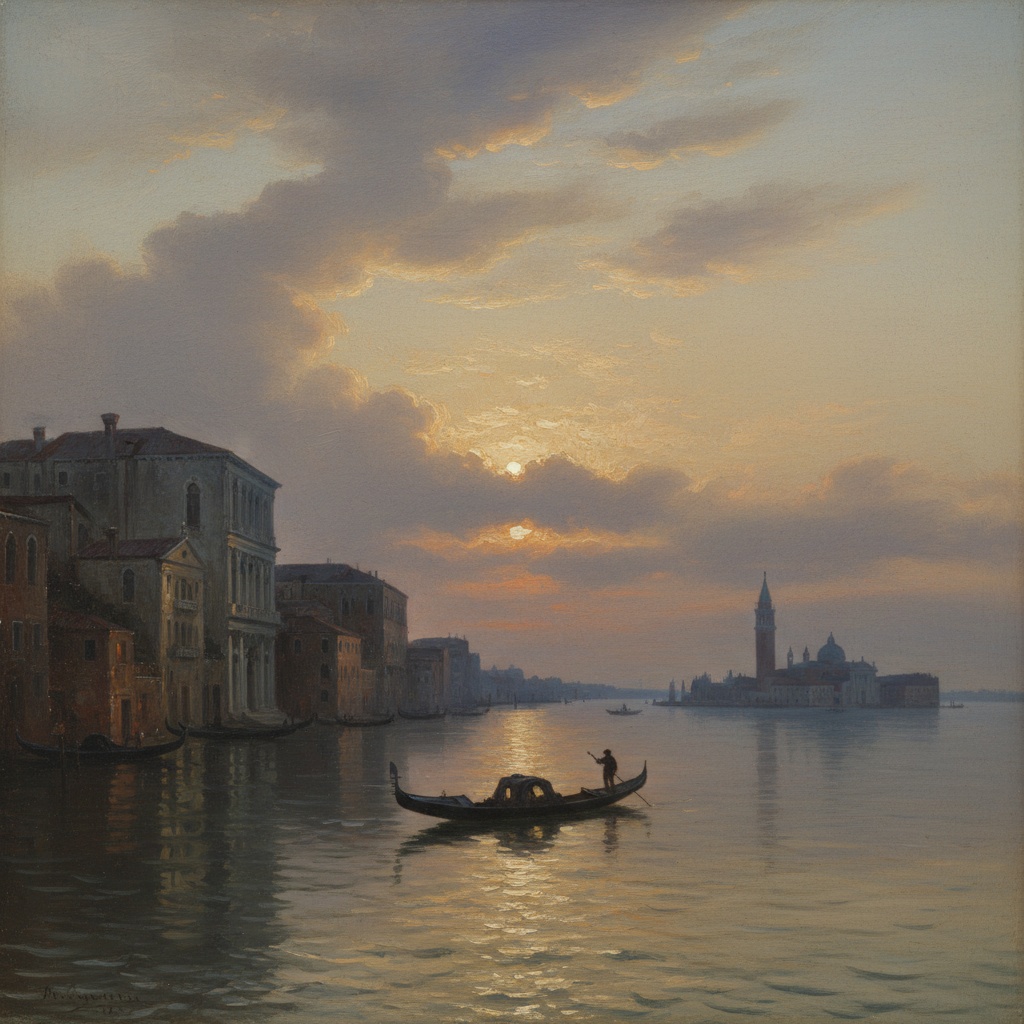
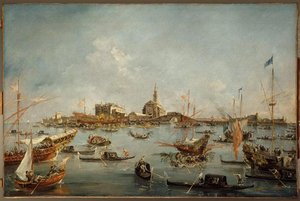
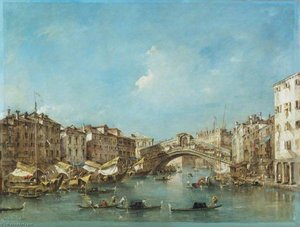
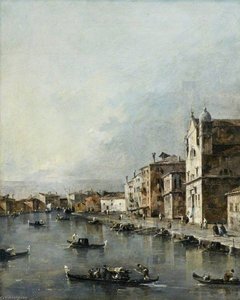
Venice itself was Morlaiter’s first and most enduring teacher. The city, with its unique interplay of water, stone, and sky, presented an unparalleled visual education. While details regarding his formal training remain somewhat scarce, it is clear that he absorbed the prevailing artistic currents of the time. The influence of Sebastiano Ricci and Francesco Solimena – masters known for their dynamic compositions and vibrant color palettes – likely shaped his early style. However, Morlaiter quickly distinguished himself through a growing preoccupation with landscape as more than merely a backdrop. He wasn’t simply *depicting* Venice; he was striving to capture its very essence—the shimmering quality of the lagoon light, the delicate haze that softened architectural edges, and the palpable sense of atmosphere that defined the city's character. His early commissions, primarily frescoes and stucco decorations for Venetian palazzi – notably at Palazzo Grassi and Palazzo Michiel dalle Colonne – provided valuable experience in large-scale decorative projects, honing his skills in composition and color harmony.
The Rise of Landscape Painting in 18th-Century Italy
Landscape painting, also known as landscape art, is the depiction in painting of natural scenery such as mountains, valleys, rivers, trees, and forests, especially where the main subject is a wide view—with its elements arranged into a coherent compo...
The 18th century witnessed a gradual but significant elevation of landscape painting within the European artistic hierarchy. Traditionally relegated to a lower status than history or portraiture, landscape began to gain recognition as an independent genre capable of conveying profound emotional and philosophical meaning. This shift was fueled by several factors: the rise of Enlightenment ideals emphasizing observation and scientific inquiry, increased travel and exploration fostering a greater appreciation for natural beauty, and a growing interest in capturing the sublime—the awe-inspiring power of nature. In Italy, while history painting remained dominant, artists like Morlaiter played a crucial role in expanding the possibilities of landscape art. He wasn’t alone; however, his approach differed from many contemporaries who favored idealized or picturesque scenes. Morlaiter sought to represent the Venetian countryside and cityscape with a degree of fidelity that was both innovative and compelling.
Mastering Atmosphere: Aerial Perspective and Light in Morlaiter’s Works
Aerial perspective, or atmospheric perspective, is the effect the atmosphere has on the appearance of an object as viewed from a distance. As the distance between an object and a viewer increases, the contrast between the object and its background de...
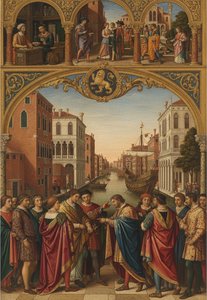
Central to Morlaiter's artistic achievement is his masterful use of aerial perspective, also known as atmospheric perspective. This technique, understood even in antiquity but refined during the Renaissance by artists like Leonardo da Vinci, involves rendering distant objects paler, less detailed, and often with a bluish tint to simulate the effect of atmosphere on visibility. Morlaiter didn’t merely apply this principle mechanically; he imbued it with a poetic sensitivity. His skies are not simply blue expanses but dynamic fields of light and shadow that subtly modulate color and tone across the canvas. The result is a remarkable sense of depth and realism, drawing the viewer into the scene and creating an immersive experience. Consider his frescoes in the Gallerie dell'Accademia (sala 18), where he depicts “Venice awards the arts.” Here, the distant buildings recede into a hazy horizon, their forms softened by atmospheric effects, while foreground figures remain sharply defined. This interplay of focus and diffusion is characteristic of his style. He understood that light wasn’t simply illumination; it was a transformative force that shaped perception and imbued landscapes with emotional resonance.
Key Commissions and Notable Paintings by Michelangelo Morlaiter
Morlaiter's career encompassed a diverse range of commissions, reflecting the breadth of his talent. Beyond the palazzi, he undertook significant religious projects, including canvas work for the ceiling of the presbytery in the Church of San Bartolomeo, depicting *San Bartolomeo in gloria*. His frescoes at the Church of Angelo San Raffaele showcase his ability to integrate architectural elements with dynamic figural compositions and atmospheric backgrounds. The altarpiece of the Virgin and Child with Saints Simon and Giuda for the Parochial church of Biancade in Roncade demonstrates his skill in devotional painting, while the *Coronation of the Virgin* at Palazzolo sull'Oglio reveals a more classical sensibility. However, it is perhaps his depictions of Venice itself – though less widely documented than those of Canaletto – that best exemplify his artistic vision. These paintings capture not just the physical appearance of the city but also its unique mood and character, offering a glimpse into 18th-century Venetian life.
Morlaiter's Legacy & Influence on Subsequent Venetian Artists
While Morlaiter may not have founded a large school of followers, his influence can be detected in the work of subsequent Venetian artists who embraced a more naturalistic and atmospheric approach to landscape painting. His emphasis on observation, coupled with his technical mastery of aerial perspective, paved the way for a greater appreciation of light and space within the Venetian artistic tradition. He represents a crucial link between the Baroque exuberance of earlier generations and the emerging Romantic sensibility that would define the 19th century. His dedication to capturing the subtle nuances of the Venetian environment—the shimmering water, the hazy skies, and the delicate interplay of light and shadow—continues to resonate with viewers today. For those seeking a deeper understanding of Venetian art beyond the well-trodden paths, exploring the works of Michelangelo Morlaiter offers a rewarding journey into a world of understated beauty and artistic innovation. Discover his captivating paintings and bring the essence of Venice into your home with ArtsDot, where masterpieces are meticulously recreated to preserve their timeless allure.