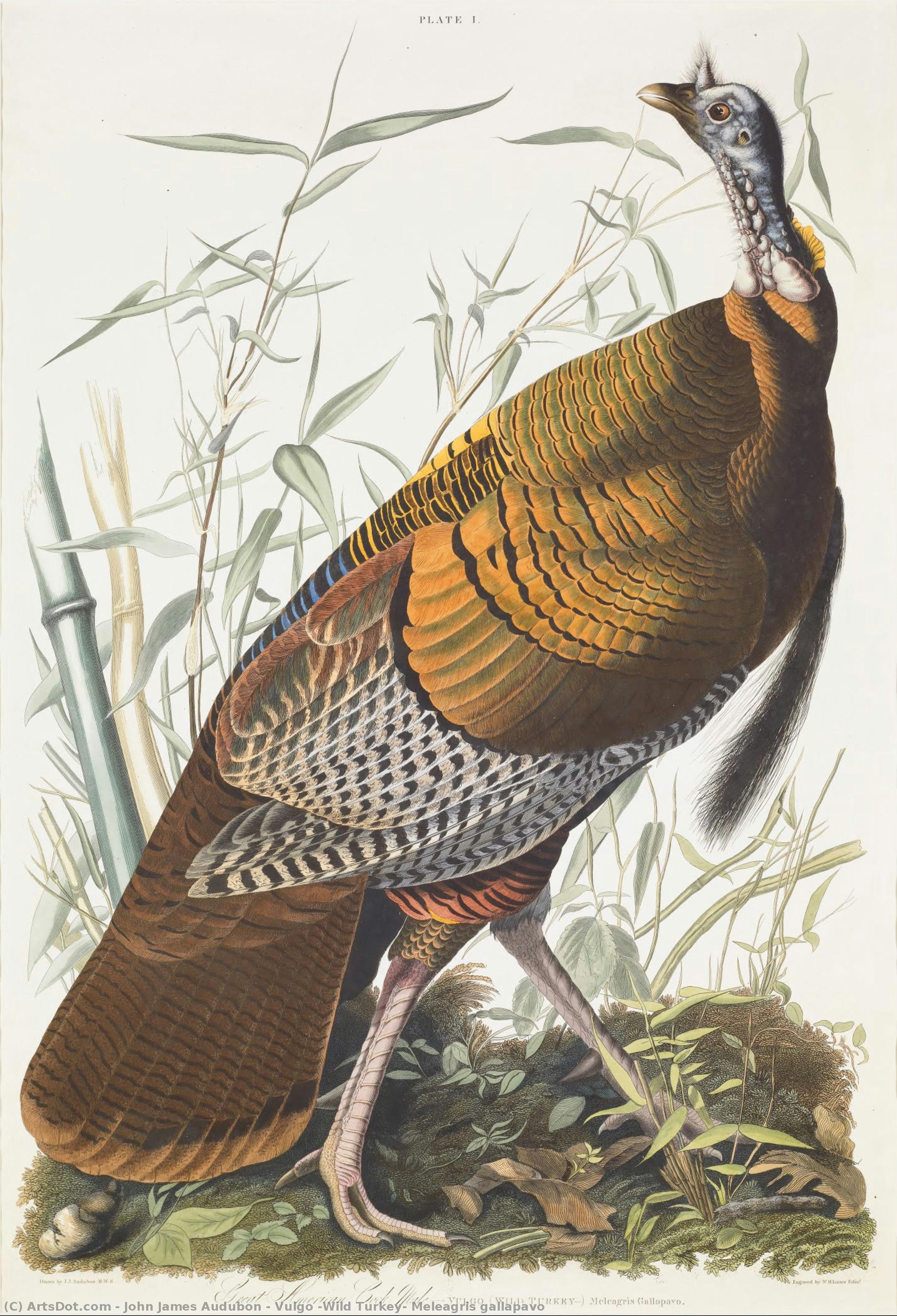
A Masterpiece of Natural Observation: John James Audubon’s *Vulgo* (Wild Turkey)
This exceptional hand-painted reproduction captures the essence of John James Audubon's groundbreaking work, specifically his meticulous depiction of a wild turkey – scientifically known as Meleagris gallapavo, and locally referred to as “vulgo” or simply “turkey.” Executed in 1826, this artwork transcends a simple portrait of a bird; it’s a testament to Audubon's revolutionary approach to natural history illustration and his profound connection with the American wilderness. Measuring 67 x 100 cm, the scale allows for an intimate appreciation of the intricate details that define Audubon’s signature style.
The Ornithological Revolution: Audubon’s Technique
John James Audubon (1785-1851), born Jean-Jacques Rabine in Les Cayes, Haiti, fundamentally altered the way we understand and represent birds. Unlike previous illustrators who relied on secondhand accounts or idealized depictions, Audubon immersed himself directly within the natural world. He spent years meticulously observing and sketching birds in their native habitats, often enduring harsh conditions and employing innovative techniques to capture movement and texture. This painting exemplifies his approach: the turkey is rendered with astonishing realism, from the iridescent sheen of its feathers to the subtle musculature beneath. The use of watercolor—a medium Audubon mastered through tireless experimentation—allows for a luminous quality, faithfully recreating the bird’s vibrant plumage against the backdrop of the natural setting. Note the layering of washes and precise detailing – hallmarks of his painstaking process.
Symbolism and Context: A Reflection of America
More than just a scientific illustration, Audubon's work carried significant symbolic weight within the context of early 19th-century America. The wild turkey was deeply embedded in American folklore and mythology, representing courage, strength, and prosperity – qualities highly valued by the nascent nation. Audubon’s detailed portrayal elevated the turkey to the status of a national icon, contributing to its enduring presence in American art and culture. The inclusion of smaller birds in the background adds depth and complexity, suggesting a broader ecosystem and reinforcing the theme of interconnectedness within nature. This piece reflects Audubon's commitment to documenting America's unique biodiversity – a crucial contribution to early American natural history.
Emotional Impact & ArtsDot’s Reproduction
This reproduction offers an unparalleled opportunity to experience the power and beauty of Audubon’s vision. The meticulous attention to detail, combined with the artist’s masterful use of color and composition, evokes a sense of wonder and reverence for the natural world. ArtsDot's hand-painted reproductions ensure that you receive an artwork of exceptional quality, faithfully replicating the original’s nuances and capturing its emotional resonance. Each reproduction is created by skilled artisans, preserving Audubon’s legacy for generations to come.