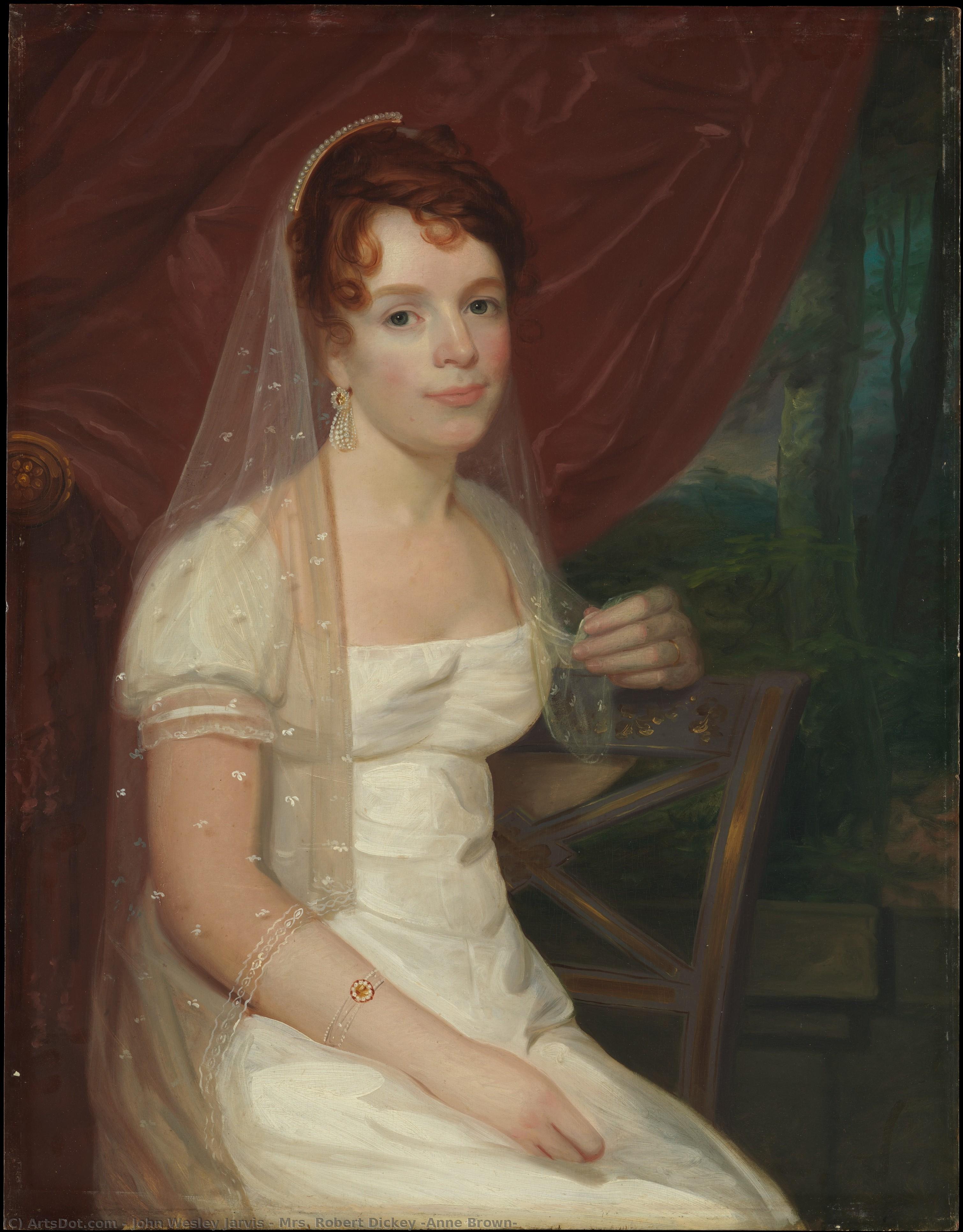
Experience Neoclassical elegance with John Wesley Jarvis's 1807 portrait of Mrs. Robert Dickey; capture the refined spirit of early American life today.
Discover John Wesley Jarvis (1780-1840), a celebrated American portraitist! Explore his vibrant depictions of New York's elite, War of 1812 heroes & iconic artworks.
Explore The Metropolitan Museum of Art: 5,000 years of art from around the world! Discover masterpieces, ancient artifacts & immersive exhibitions – a global art destination awaits.
A Portrait Steeped in Elegance: John Wesley Jarvis’s ‘Mrs. Robert Dickey (Anne Brown)’
John Wesley Jarvis's “Mrs. Robert Dickey (Anne Brown)” transcends mere representation; it embodies the spirit of its time—a burgeoning American identity grappling with European artistic influences while simultaneously striving for domestic tranquility and refined sensibilities. Painted in 1807, this portrait offers a glimpse into the lives of affluent Philadelphia families during the early Romantic era, capturing Anne Brown Dickey – Robert Dickey’s wife – with remarkable sensitivity and precision.
Subject Matter & Composition
The painting depicts Mrs. Dickey seated gracefully before a draped curtain, a pose typical of Neoclassical portraiture yet subtly infused with Romantic warmth. Jarvis skillfully utilizes light to illuminate her face and hands, emphasizing her serene expression and conveying an aura of quiet dignity. The inclusion of two chairs – one behind her and another slightly further back – establishes a sense of intimacy and formality, reflecting the social conventions of the period. A potted plant in the background serves as a visual anchor, grounding the composition and introducing a touch of natural beauty into the interior setting.
Style & Technique: Neoclassical Influences with Romantic Nuances
Jarvis’s artistic approach leans heavily toward Neoclassical ideals—characterized by balanced lines, idealized forms, and meticulous attention to detail—yet he deftly incorporates elements suggestive of Romanticism. The muted palette – predominantly creams and browns – contributes to the painting's understated elegance, mirroring the restrained aesthetic favored by discerning patrons. Jarvis employed oil paint on canvas with a glazing technique, layering thin translucent washes over thicker underpaintings to achieve luminous effects and subtle tonal variations. This meticulous craftsmanship ensures that every brushstroke conveys an exceptional level of realism and artistic finesse.
Historical Context: Philadelphia Society & Artistic Patronage
Philadelphia in 1807 was a vibrant hub of intellectual and artistic activity, fueled by the influx of European immigrants and bolstered by the patronage of wealthy industrialists and merchants like Robert Dickey. Jarvis benefited greatly from this environment, honing his skills under Matthew Pratt and collaborating with fellow artists who championed classical ideals alongside emerging Romantic sensibilities. The portrait reflects the broader cultural preoccupation with portraying idealized beauty and domestic harmony—themes central to both Neoclassical and Romantic artistic discourse.
Symbolism & Emotional Impact
The handkerchief held delicately in Mrs. Dickey’s hand speaks volumes about Victorian values – modesty, compassion, and feminine grace. Similarly, the ring adorning her finger symbolizes marital commitment and enduring affection. Jarvis's masterful depiction captures not only Mrs. Dickey’s physical appearance but also her inner composure and emotional depth. The painting evokes a feeling of quiet contemplation and understated elegance—a testament to Jarvis’s ability to translate visual beauty into profound psychological resonance.
Conclusion: A Timeless Masterpiece
“Mrs. Robert Dickey (Anne Brown)” remains an enduring symbol of American artistic achievement during the Romantic era, demonstrating Jarvis's mastery of technique and his astute understanding of prevailing aesthetic ideals. Its exquisite detail and luminous quality continue to inspire admiration and offer a captivating glimpse into the lives of Philadelphia’s elite families—a timeless masterpiece that transcends its historical context and speaks directly to our appreciation for beauty and artistic excellence.