The Enigmatic Beauty of "Berber Bride"
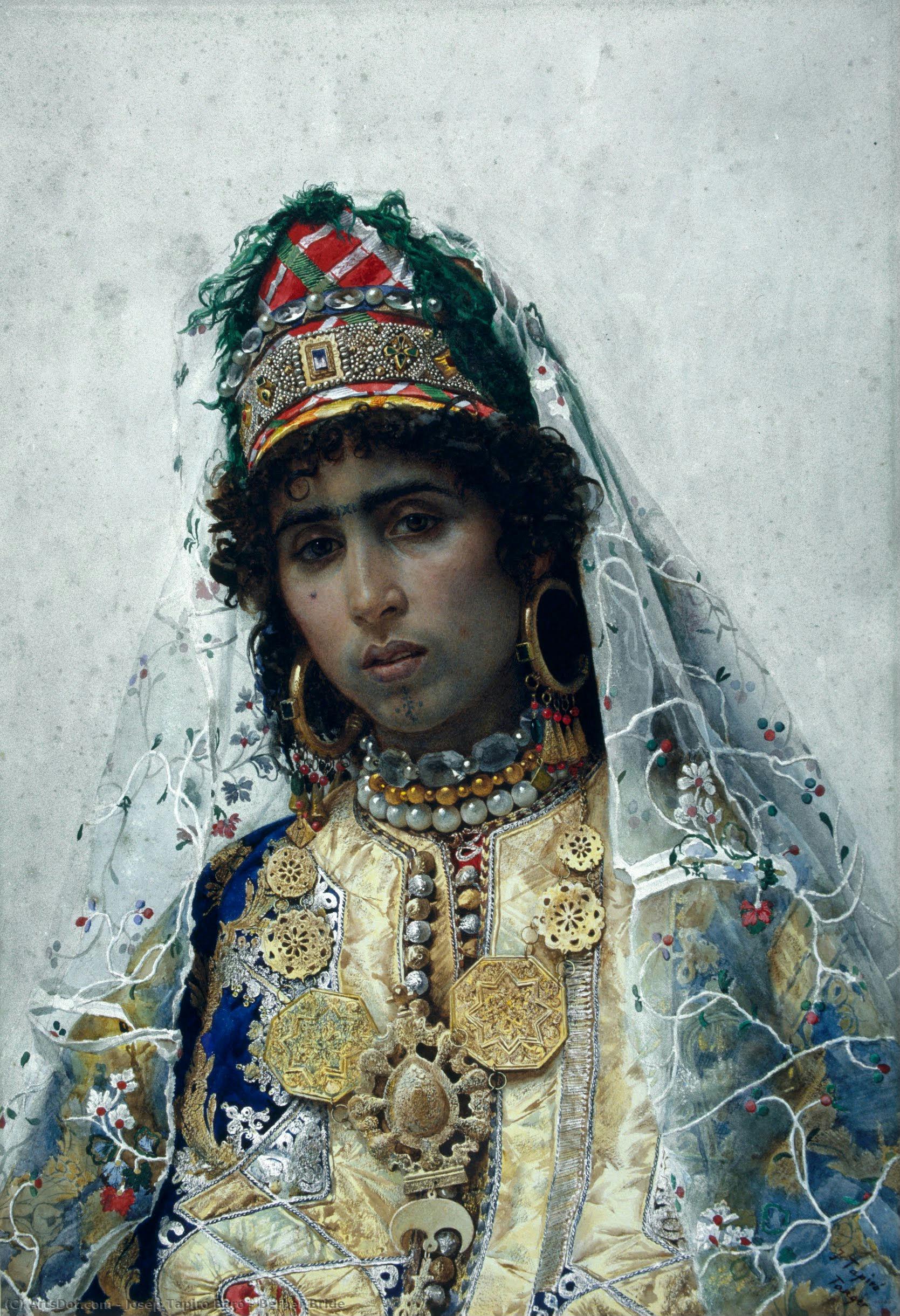
Josep Tapiró Baró’s “Berber Bride,” painted in 1896, isn't merely a depiction of a Moroccan woman; it’s a meticulously crafted window into a vanished world – a vibrant tapestry woven with threads of cultural observation, artistic skill, and a profound sense of romanticized exoticism. The painting immediately draws the eye with its rich palette: deep ochres, burnished golds, and the startling turquoise of her headscarf create an immediate visual feast, transporting the viewer to the sun-drenched landscapes of southern Morocco. Tapiró’s masterful use of light is particularly striking; it pools around the bride's face, highlighting her features with a gentle warmth that contrasts beautifully with the cooler tones of the surrounding textiles and architecture.
Tapiró was a pivotal figure in the Orientalist movement, a European artistic trend focused on depicting scenes from the Middle East and North Africa. However, unlike many of his contemporaries who relied heavily on stereotypical representations, Tapiró demonstrated an extraordinary level of detail and sensitivity. He spent several years living in Tangier, immersing himself in Berber culture and meticulously documenting its customs, dress, and architecture. “Berber Bride” is a testament to this dedication; the bride’s jewelry—intricately worked silver and coral—and her elaborate headdress are rendered with astonishing precision, reflecting Tapiró's commitment to authentic representation. The background, subtly hinting at a traditional Berber dwelling, further reinforces this sense of immersion.
A Window into Berber Life
The painting offers a glimpse into the lives of the Berber people, a nomadic and fiercely independent group who inhabited North Africa for centuries before the arrival of Islam. Berber society was traditionally organized around tribal structures, with strong emphasis on hospitality, family honor, and intricate social customs. The bride’s attire—the veil, the jewelry, the headscarf—all speak to these traditions, signifying her status within the tribe and her readiness for marriage. Note the subtle gestures of her hands – a gesture of welcome, perhaps, or a quiet contemplation reflecting on her future role.
It’s important to acknowledge that Tapiró's portrayal is filtered through a European lens. While he clearly sought to represent Berber culture with respect and accuracy, his perspective was inevitably shaped by his own cultural biases and the prevailing attitudes of his time. The painting romanticizes aspects of Berber life, presenting an idealized image of a world largely untouched by Western influence. However, this doesn’t diminish the artistic merit or historical significance of the work; rather, it invites us to consider the complexities of intercultural exchange and the challenges of representing other cultures accurately.
Technique and Artistic Style
“Berber Bride” is executed in Tapiró's signature watercolor technique – a medium he mastered during his time in Tangier. The delicate washes of color, combined with meticulous detailing achieved through layering and dry-brush techniques, create a remarkable sense of texture and depth. The painting’s surface appears almost luminous, capturing the play of light and shadow with breathtaking subtlety. Tapiró's use of atmospheric perspective—the gradual softening of colors as they recede into the distance—further enhances the illusion of space and creates a truly immersive viewing experience.
He employed a pyramidal composition, drawing the eye to the bride’s face – the focal point of the painting. The careful arrangement of elements within this pyramid contributes to the overall sense of balance and harmony. The artist's attention to detail extends beyond mere representation; he captures not just the outward appearance of the subject but also her inner dignity and grace.
Symbolism and Emotional Resonance
Beyond its technical brilliance, “Berber Bride” is rich in symbolism. The veil, a ubiquitous feature of Berber women’s attire, represents modesty, privacy, and protection. The jewelry—particularly the coral—is associated with fertility and prosperity. The bride's serene expression conveys a sense of quiet strength and resilience – qualities that were highly valued within Berber society.
Ultimately, “Berber Bride” evokes a powerful emotional response. It’s a painting that speaks to our enduring fascination with the exotic, with the mysteries of distant lands and unfamiliar cultures. It invites us to contemplate the beauty of tradition, the complexities of identity, and the timeless appeal of human connection. Reproductions of this captivating artwork offer a unique opportunity to bring a piece of Moroccan history and artistry into your home, serving as both a decorative object and a poignant reminder of a world long past.