A Glimpse into a Lost Majesty: Joseph Bartholomew Kidd’s Ivory-billed Woodpeckers
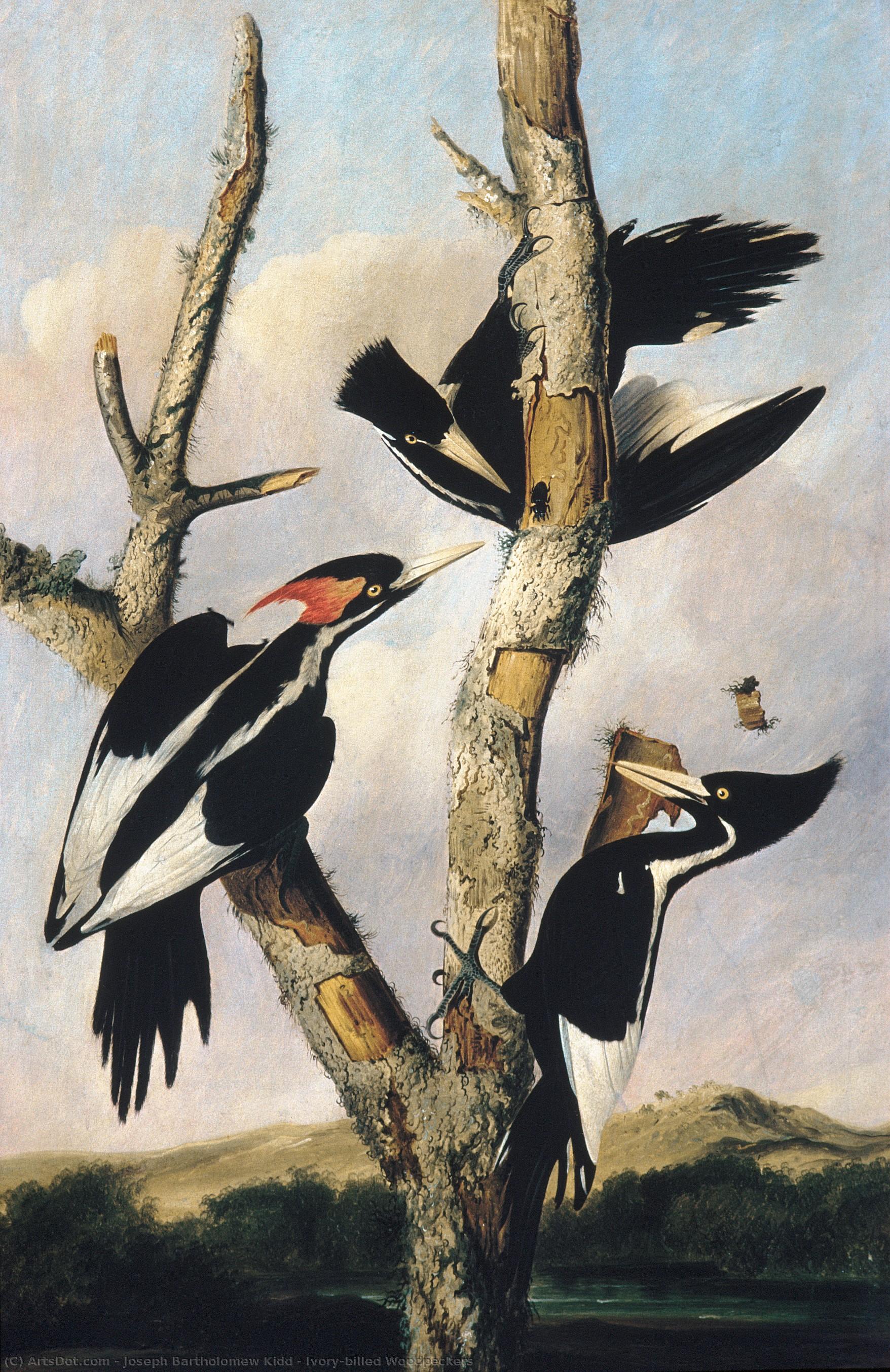
The painting before us, “Ivory-billed Woodpeckers,” created circa 1830-31 by the Scottish artist Joseph Bartholomew Kidd, isn't merely a depiction of two birds; it’s a poignant echo of a vanished world. Kidd, a skilled follower of John James Audubon, meticulously recreated Audubon’s own watercolor, adding a rich landscape background that elevates the scene beyond simple observation and into the realm of evocative storytelling. This piece, now available as a stunning reproduction, offers a rare opportunity to connect with a creature once considered the “Lord God Bird,” a title bestowed upon it for the sheer awe it inspired in those fortunate enough to witness its grandeur.
Kidd’s technical mastery is immediately apparent. The brushstrokes are confident and deliberate, capturing not just the physical form of the ivory-billed woodpeckers but also their alertness, their poised readiness for action. Note the subtle variations in texture – the rough bark against which they perch, the delicate feathers catching the light, the suggestion of movement within their plumage. The composition is carefully balanced; the birds are positioned with a natural grace, drawing the eye across the canvas and inviting contemplation of their habitat. The muted palette—earthy browns, deep greens, and hints of ochre—creates an atmosphere of quiet dignity, reflecting the bird’s status as a symbol of wilderness.
The Audubon Legacy & A Shared Vision
Kidd's commission to copy Audubon’s watercolor is significant. Audubon was a revolutionary figure in ornithology, meticulously documenting North American birds with unprecedented detail and artistic flair. His work shifted the perception of birds from mere creatures to subjects worthy of profound respect and admiration. Kidd, deeply influenced by Audubon’s approach, embraced this spirit of scientific observation combined with artistic expression. The painting is not simply a record; it's an interpretation—Kidd subtly enhances the scene, adding depth and atmosphere that amplify the bird’s majesty.
Interestingly, Kidd wasn’t merely replicating Audubon’s work. He expanded upon it, incorporating his own artistic sensibilities to create a distinct piece. The landscape background, painted by Kidd himself, is particularly noteworthy. It's not a literal representation of Arkansas; instead, it’s an idealized vision of the southeastern woodlands—a place of ancient trees and shadowed glades, imbued with a sense of timelessness. This addition elevates the painting beyond a portrait of two birds, transforming it into a meditation on the beauty and fragility of the natural world.
Symbolism & The Echoes of Extinction
The ivory-billed woodpecker itself carries profound symbolic weight. Once abundant across the southeastern United States, its decline is a tragic story of habitat loss, hunting, and ultimately, extinction. This painting serves as a powerful reminder of what has been lost—a symbol of wilderness, resilience, and the interconnectedness of all living things. The bird’s name, “Ivory-billed,” speaks to its striking appearance and its association with the ancient forests where it once thrived.
Despite its historical context, this artwork retains a haunting beauty. It's not simply a depiction of an extinct species; it’s a meditation on memory, loss, and the enduring power of nature. The painting invites us to reflect on our relationship with the environment and to consider the consequences of our actions. As a reproduction, it offers a tangible connection to this lost world—a chance to bring its beauty into your home and to carry its message forward.
Consider commissioning a hand-painted reproduction to add a touch of timeless elegance and poignant symbolism to your space. It’s more than just art; it's a legacy preserved.