The Enigmatic Figure of Päsesick-Kaskutäu
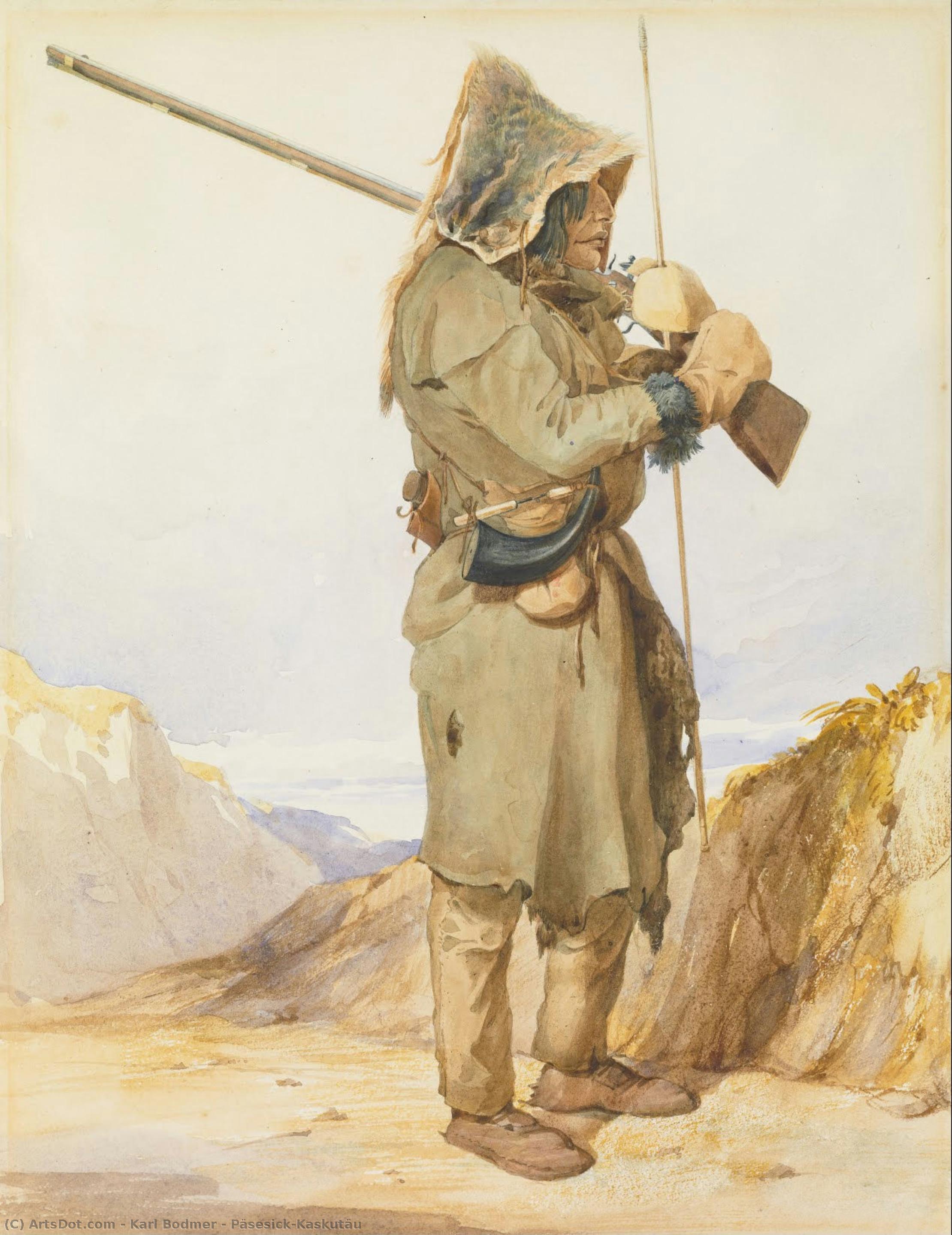
Karl Bodmer’s “Päsesick-Kaskutäu” isn't merely a portrait; it’s a meticulously rendered snapshot of a fleeting moment in the vast, untamed landscape of 19th-century North America. Painted in 1833 during Prince Maximilian zu Wied-Neuwied’s expedition along the Missouri River, the image captures an Assiniboine man – identified as Päsesick-Kaskutäu – standing atop a windswept hill, rifle in hand, against a dramatic backdrop of towering mountains. The painting immediately draws the viewer into a scene brimming with both stoic resilience and quiet contemplation. Bodmer’s skill lies not just in his technical proficiency but in his ability to imbue this single figure with an almost palpable sense of history and cultural significance.

A Chronicle of the Maximilian Expedition
The context surrounding “Päsesick-Kaskutäu” is crucial to understanding its profound impact. Prince Maximilian’s expedition, a grand undertaking funded by the German aristocracy, aimed to document the natural history and indigenous cultures of the American West. Bodmer was tasked with visually recording this journey, creating a series of watercolors, drawings, and later, lithographs that would serve as a lasting testament to the era. The painting reflects the meticulous approach of the expedition – every detail, from the man’s weathered clothing to the rugged terrain, is rendered with painstaking accuracy. It's important to note that Bodmer wasn’t simply an observer; he was actively engaged in building relationships with the Native American tribes they encountered, fostering a degree of trust and respect that allowed him to capture authentic representations of their lives.
The title itself, “Päsesick-Kaskutäu,” offers a tantalizing glimpse into the complexities of communication between cultures. It’s likely a name given by the Assiniboine people, reflecting their own linguistic and cultural framework – a reminder that Bodmer's work is not just a European interpretation but a dialogue across vastly different worlds.
Technique and Artistic Style
Bodmer’s artistic style is characterized by a remarkable blend of realism and Romanticism. His watercolors, executed on paper, possess a luminous quality, capturing the play of light and shadow with exquisite sensitivity. The use of graphite adds depth and texture to the landscape, emphasizing its scale and grandeur. The composition is carefully balanced, drawing the eye towards the central figure while simultaneously immersing the viewer in the vastness of the surrounding wilderness. Notice the subtle details – the folds of the man’s clothing, the glint of sunlight on his rifle, the intricate patterns of the mountains – all contribute to a sense of immediacy and realism.
The painting's palette is restrained yet evocative, dominated by earthy tones—ochres, browns, and grays—that mirror the colors of the landscape. This muted color scheme reinforces the feeling of ruggedness and timelessness, suggesting that this scene could have unfolded centuries ago.
Symbolism and Emotional Resonance
“Päsesick-Kaskutäu” transcends a simple portrait; it embodies themes of exploration, cultural encounter, and the enduring spirit of the American West. The man’s posture – upright, alert, yet seemingly contemplative—suggests both resilience and wisdom. He is not merely a hunter or warrior but a representative of his people, standing as a silent witness to the changing landscape. The painting invites us to reflect on the complexities of westward expansion, the impact of European contact on indigenous cultures, and the enduring beauty of the natural world. It’s a poignant reminder of a pivotal moment in American history—a moment captured with remarkable artistry and lasting significance.