Katsushika Hokusai
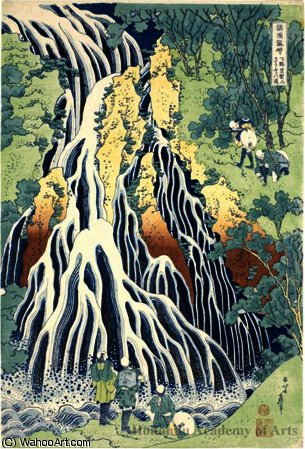
Kirifuri Waterfall on Mount Kurokami in Shimotsuke Province
Tokyo
Japan
1760
1849
The image is a painting of a waterfall with trees surrounding it. The waterfall appears to be located in the mountains, as indicated by the presence of rocks and the natural landscape. There are several people in the scene, some standing near the waterfall while others are further away. One p
A Vision of Tranquility Amidst Turbulent Landscapes
Katsushika Hokusai’s *Kirifuri Waterfall at Mount Kurokami in Shimotsuke Province*, part of his celebrated *Shokoku taki meguri* (“A Tour of Waterfalls”), transcends mere depiction; it embodies a profound appreciation for the ephemeral beauty of nature and reflects the artistic sensibilities of Edo-period Japan. Created between 1833 and 1834, this stunning color woodblock print captures a dramatic vista of Kirifuri Falls – one of Japan’s most impressive cascades – nestled within the rugged slopes of Mount Kurokami.
Technical Mastery: The Art of Ukiyo-e
- Style: Hokusai exemplifies the pinnacle of *ukiyo-e*, or “floating world” printmaking, a genre that flourished during Japan’s Edo period. Unlike Western painting traditions focused on idealized representations, *ukiyo-e* embraced realism combined with artistic license to convey emotion and atmosphere.
- Technique: The printmaker employed meticulous layering of Prussian blue pigment – an imported dye at the time – onto paper treated with a graining process to simulate the texture of stone. This technique skillfully replicates the misty spray and turbulent flow of the waterfall, creating an illusion of depth and movement that captivated viewers.
- Printing Process: The print was produced using multiple blocks carved from wood, each representing a different part of the image—the waterfall itself, surrounding trees, and distant mountains. Careful registration ensured precise alignment during printing, resulting in exceptional tonal accuracy and visual harmony.
Symbolism and Contextual Significance
More than just a topographical record, *Kirifuri Waterfall* carries symbolic weight within the broader context of Hokusai’s artistic vision. The waterfall represents dynamism and change—forces constantly reshaping the landscape—mirroring the anxieties and aspirations of a society grappling with social upheaval during the Tokugawa shogunate. Simultaneously, the serene depiction of nature serves as an antidote to urban pressures, inviting contemplation and fostering a connection with the natural world.
Emotional Resonance: Capturing Transient Beauty
Hokusai’s masterful composition achieves remarkable emotional impact. The artist skillfully utilizes perspective—compressing distant mountains into hazy silhouettes—to heighten the drama of the scene and emphasize the waterfall's grandeur. The subtle gradations of color and tonal variation contribute to a palpable sense of atmosphere, transporting viewers to the precipice of Kirifuri Falls and eliciting feelings of awe and wonder. As exemplified in *The Great Wave*, Hokusai’s ability to convey emotion through visual imagery cemented his legacy as one of Japan's greatest artists.
Resources for Further Exploration