A Glimpse into Myth and Majesty
Lorenzo Costa’s “The Reign of Comus,” completed in 1511, isn't merely a painting; it’s a meticulously crafted window into the opulent world of Isabella d’Este, Marchioness of Mantua. This captivating work, now residing within the hallowed halls of the Louvre Museum, offers a vibrant tableau of celebration, intrigue, and the enduring power of myth – a testament to the Renaissance’s fascination with classical ideals and humanist thought. More than just a depiction of revelry, it's a carefully orchestrated visual poem, brimming with symbolism and reflecting the sophisticated tastes of its discerning patron.

(Image courtesy of Musée du Louvre)
A Courtly Celebration and a Complex Narrative
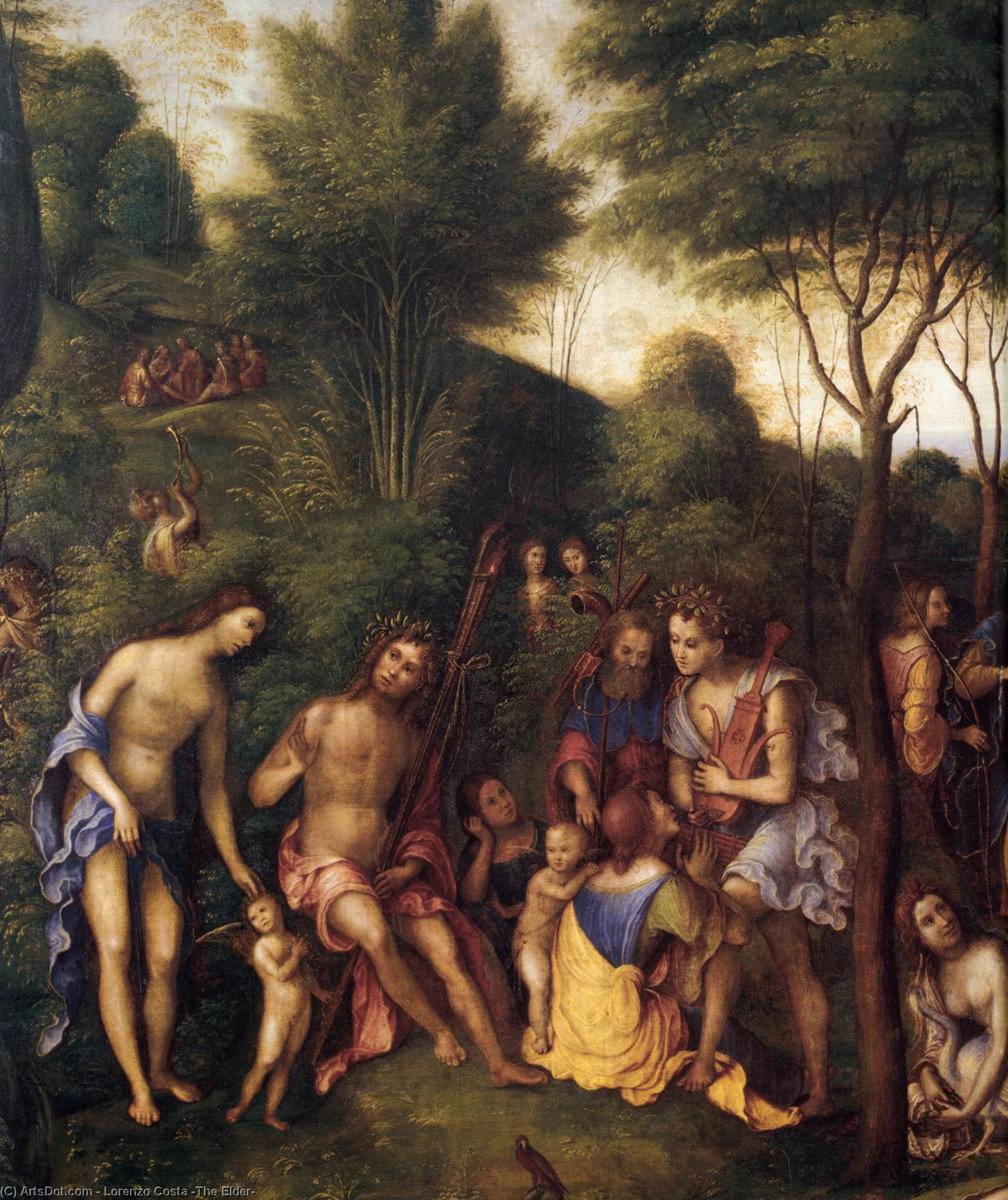
Commissioned for Isabella’s private studiolo – a miniature, richly decorated chamber designed as her personal sanctuary – “The Reign of Comus” embodies the spirit of Renaissance court life. The scene unfolds within a grand hall, overflowing with figures engaged in a joyous celebration. A central group, dominated by a woman dressed in blue and holding a baby, immediately draws the eye. Around her swirl musicians playing lutes and pipes, dancers twirling with abandon, and noblemen indulging in feasting and merriment. Yet, beneath this surface of exuberant festivity lies a complex narrative rooted in classical mythology.
The painting’s title refers to Comus, a figure from John Milton's epic poem *Paradise Lost*, representing the ideal of pastoral innocence and virtue. Costa skillfully weaves elements of this mythic character into the scene, suggesting a harmonious balance between earthly pleasures and spiritual ideals – a key theme within Isabella d’Este’s courtly world.
The Painter’s Technique: Softness and Atmospheric Depth
Lorenzo Costa was renowned for his distinctive style, characterized by a remarkable softness of color and an exceptional ability to create atmospheric depth. In “The Reign of Comus,” this is immediately apparent. The figures are rendered with delicate brushstrokes, their forms subtly blended into the surrounding space. He masterfully employs sfumato – a technique borrowed from Leonardo da Vinci – to soften edges and create a hazy, dreamlike quality. This contributes significantly to the painting’s overall sense of warmth and intimacy.
The use of rich, layered colors—deep reds, blues, golds, and greens—further enhances the visual impact. Notice how Costa uses light to guide the viewer's eye through the crowded scene, highlighting key figures and creating a dynamic interplay between illumination and shadow. The background, filled with trees and foliage, provides a sense of depth and reinforces the feeling that this is an outdoor celebration.
Symbolism and Historical Context
Beyond its immediate visual appeal, “The Reign of Comus” is laden with symbolism. The presence of musicians suggests harmony and artistic expression, while the dancers represent grace and elegance. The woman holding a baby symbolizes fertility and continuity – important themes within Renaissance art. Furthermore, the painting’s creation coincided with Isabella d'Este’s reign, a period marked by intellectual ferment and artistic patronage. She was a keen collector of art and literature, and her studiolo served as a showcase for her refined taste and humanist ideals.
The work’s commission reflects the importance of courtly entertainment and the celebration of human achievement during this era. It's a vibrant snapshot of a world where art, music, and social interaction were intertwined, creating an atmosphere of unparalleled splendor and intellectual stimulation. “The Reign of Comus” stands as a powerful reminder of the enduring legacy of the Renaissance and its profound influence on Western art.