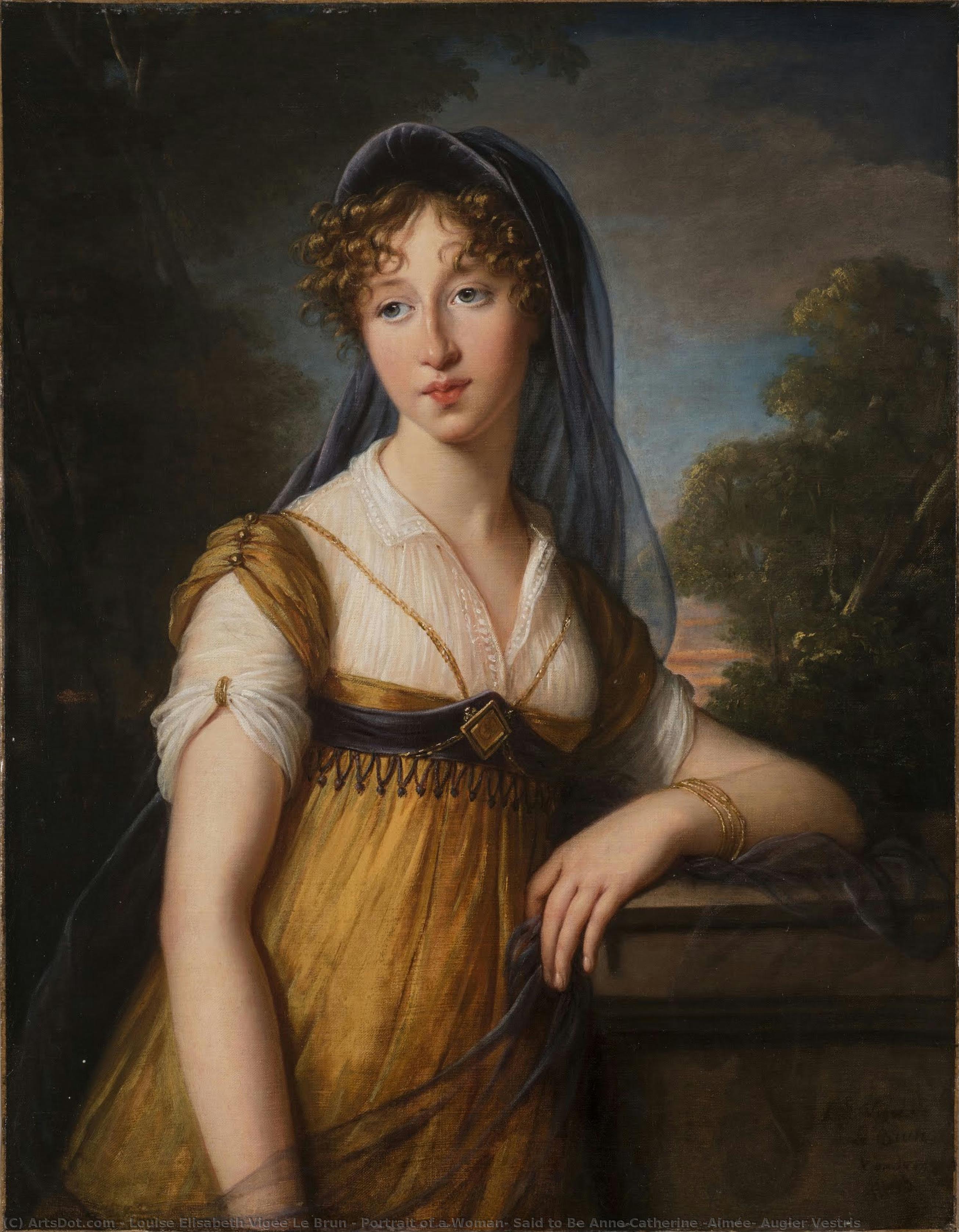
A Portrait of Melancholy: Unveiling Vigée-LeBrun’s ‘Portrait of a Woman, Said to Be Anne Catherine (Aimée) Augier Vestris’
Élisabeth Louise Vigée Le Brun's “Portrait of a Woman, Said to Be Anne Catherine (Aimée) Augier Vestris” is more than simply a likeness; it’s a poignant meditation on beauty, loss, and the fleeting nature of life. Painted during a turbulent period in European history – immediately following the French Revolution – the portrait captures a moment of quiet contemplation within a carefully constructed tableau. The sitter, a young woman draped in a Grecian-inspired gown of rich blue and adorned with a delicate veil, embodies the aesthetic ideals of the late 18th century while simultaneously hinting at an underlying sadness.
- Technical Brilliance: Vigée-Le Brun’s mastery is immediately apparent in her use of light. The setting sun, glimpsed through the trees behind the sitter, bathes her face in a warm, golden glow, expertly highlighting the luminous quality of her skin and the large, dark intensity of her eyes. This technique, so characteristic of Vigée-Le Brun’s work, creates an almost ethereal effect, elevating the portrait beyond a mere representation to a study of mood and emotion.
- The Ambiguity of Expression: The woman's gaze – fixed on some distant point – invites endless interpretation. Is she wistful? Melancholy? Perhaps simply thoughtful? Vigée-Le Brun deliberately avoids offering a definitive answer, allowing the viewer to project their own emotions onto the image. This ambiguity is central to the portrait’s enduring appeal.
A Story Etched in Paint: Historical Context and Intrigue
The painting's narrative is inextricably linked to its subject’s tragic fate. Anne Catherine Augier Vestris, known as Aimée, was a dancer whose life took a dramatic turn amidst the upheaval of the French Revolution. Fleeing France after the revolution, Vigée-Le Brun encountered her and painted this portrait. The story surrounding Aimée is steeped in sorrow; her marriage to Auguste Vestris, a renowned performer himself, proved unhappy, marked by infidelity. Driven to despair, she attempted suicide, an event that ultimately claimed her life at the young age of 32. This biographical detail imbues the painting with a palpable sense of loss and vulnerability – a testament to Vigée-Le Brun’s ability to translate personal narratives into enduring works of art.
- Symbolism of Dress: The Grecian-inspired dress is not merely fashionable; it symbolizes classical ideals of beauty, harmony, and grace. It also subtly references the era's fascination with antiquity, a common theme in 18th-century portraiture.
- The Setting: The background landscape – trees silhouetted against a twilight sky – adds to the overall mood of quiet contemplation and isolation. It’s a carefully constructed space that reinforces the sitter’s sense of detachment and melancholy.
Vigée-Le Brun's Legacy and Artistic Significance
“Portrait of a Woman, Said to Be Anne Catherine (Aimée) Augier Vestris” stands as a prime example of Vigée-Le Brun’s artistic genius. As one of the most celebrated portrait painters of her time, she skillfully blended technical virtuosity with profound psychological insight. Her ability to capture not just physical likeness but also the inner lives of her subjects cemented her reputation as a master of the genre. This particular portrait exemplifies her signature style – characterized by luminous skin tones, dramatic lighting, and an acute awareness of human emotion. It’s a work that continues to resonate with viewers today, offering a glimpse into a bygone era and a poignant reminder of the fragility of life.
Provenance: The painting is currently housed in the National Museum of Women in the Arts in Washington, United States.