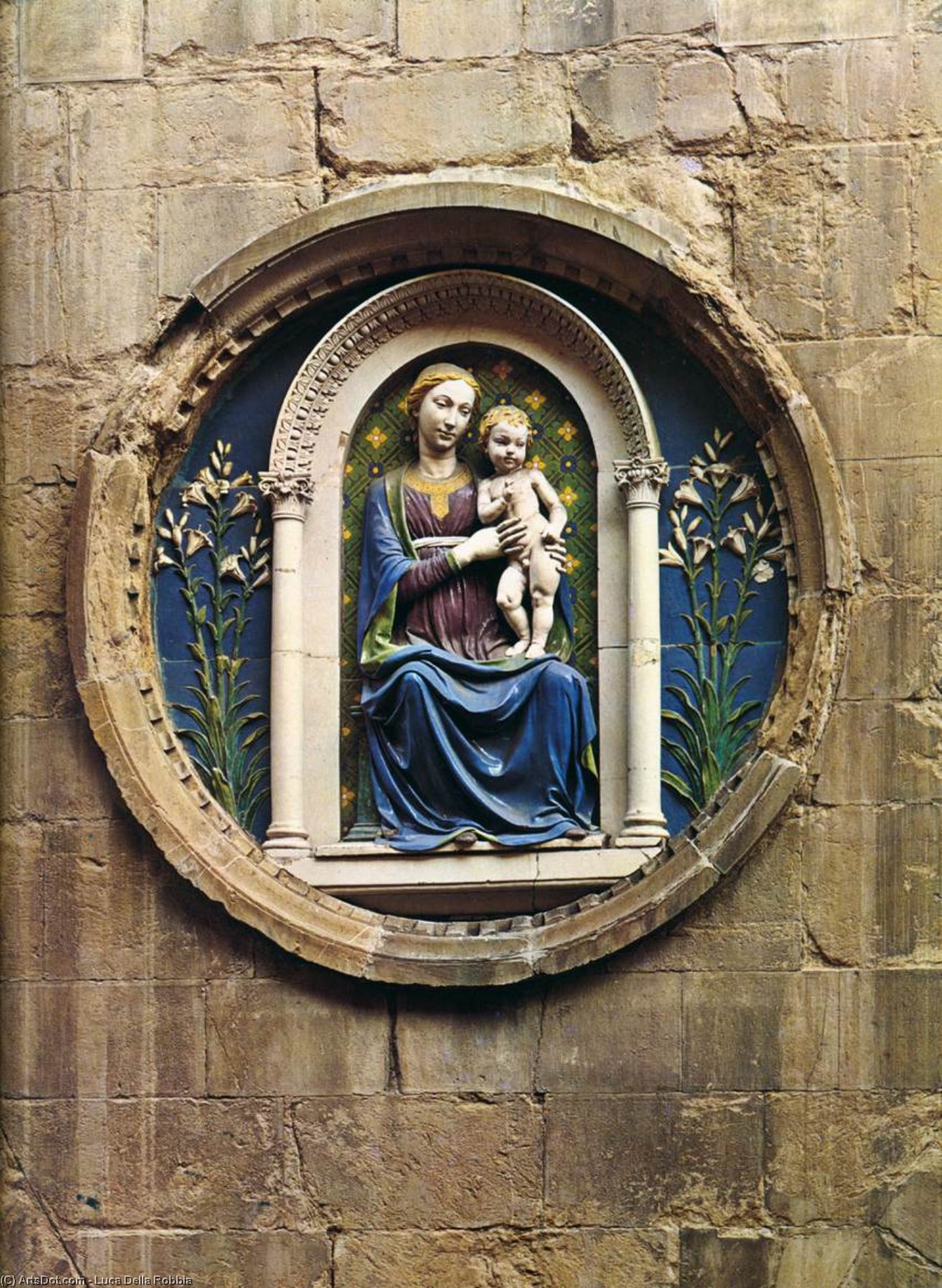
Admire Luca della Robbia's masterpiece – Madonna and Child (11), a stunning terracotta sculpture embodying Florentine Renaissance artistry. Explore its intricate details and timeless beauty.
Discover Luca della Robbia’s vibrant tin-glazed terracotta sculptures! This Florentine master pioneered innovative art & influenced generations of artists. Explore his religious works & legacy.
Discover Orsanmichele: Florence's unique church & former grain market housing stunning Renaissance sculptures by Donatello & Ghiberti—a testament to Florentine art, faith & guild history.
Luca della Robbia: A Florentine Master of Terracotta Sculpture
Luca della Robbia (1399 – 1482) stands as a monumental figure in the history of Renaissance art, primarily recognized for his groundbreaking innovation in terracotta sculpture—a technique he perfected and disseminated throughout Florence and beyond. Born into a family steeped in craftsmanship, Luca’s early life remains shrouded in relative obscurity, though scholarly consensus suggests he honed his skills under Leonardo di ser Giovanni, absorbing the humanist ideals prevalent during the period. His formative years coincided with the burgeoning artistic fervor surrounding Donatello and Ghiberti, collaborations that profoundly shaped his aesthetic sensibilities and cemented his position within the Florentine artistic milieu.
Early Influences and Artistic Training
Luca’s apprenticeship instilled in him a deep understanding of classical sculpture and humanist principles—elements which would subsequently permeate his own oeuvr He absorbed the lessons imparted by masters like Donatello and Ghiberti, artists who championed naturalism and anatomical accuracy, mirroring the humanist movement's emphasis on human dignity and observation. This exposure to sculptural excellence undoubtedly fueled Luca’s ambition to elevate terracotta – previously considered a humble material – into an art form worthy of grandeur and beauty.
The Invention of Tin-Glazed Terracotta: A Revolutionary Technique
Luca della Robbia didn’t merely sculpt in terracotta; he fundamentally transformed its potential through the pioneering application of tin glaze—a process that involved fusing a thin layer of glass onto the sculpted surface. This innovation represented a decisive break from traditional ceramic methods, allowing for unprecedented vibrancy and luminosity. Unlike matte earthenware, Luca's sculptures achieved astonishing color fidelity thanks to this glazing technique, capturing the nuances of pigment with remarkable precision. The resulting surfaces shimmered with an ethereal glow, mirroring the spiritual aspirations of the Renaissance era.
A Celebration of Faith and Human Form: Madonna and Child (1455)
The masterpiece “Madonna and Child” exemplifies Luca della Robbia’s artistic vision perfectly. Executed in 1455, this sculpture depicts Mary cradling Jesus Christ, a scene imbued with profound religious symbolism. The Virgin Mother is portrayed with serene dignity, her gaze directed upwards towards heaven—a gesture signifying piety and devotion. Simultaneously, the anatomical accuracy of Jesus's infant form underscores the humanist preoccupation with representing human anatomy realistically. Luca’s meticulous attention to detail reflects the Renaissance ideal of beauty as harmony between divine grace and earthly flesh. The vibrant blues and reds of the glaze contribute to an emotional impact that transcends mere visual spectacle; they evoke feelings of tenderness, compassion, and spiritual contemplation.
Legacy and Influence
Luca della Robbia's contribution to Florentine art extended far beyond his individual creations. He established a prolific workshop where he trained numerous apprentices, ensuring the continuation of his innovative technique and fostering a vibrant artistic community. His influence resonated throughout Europe, inspiring artists across generations to explore the expressive possibilities of terracotta sculpture. Today, “Madonna and Child” stands as an enduring testament to Luca della Robbia’s genius—a timeless masterpiece that continues to captivate audiences with its beauty, craftsmanship, and spiritual depth. Its reproduction offers a window into the artistic spirit of Florence during the Renaissance, transporting viewers back to a period defined by intellectual curiosity and aesthetic refinement.