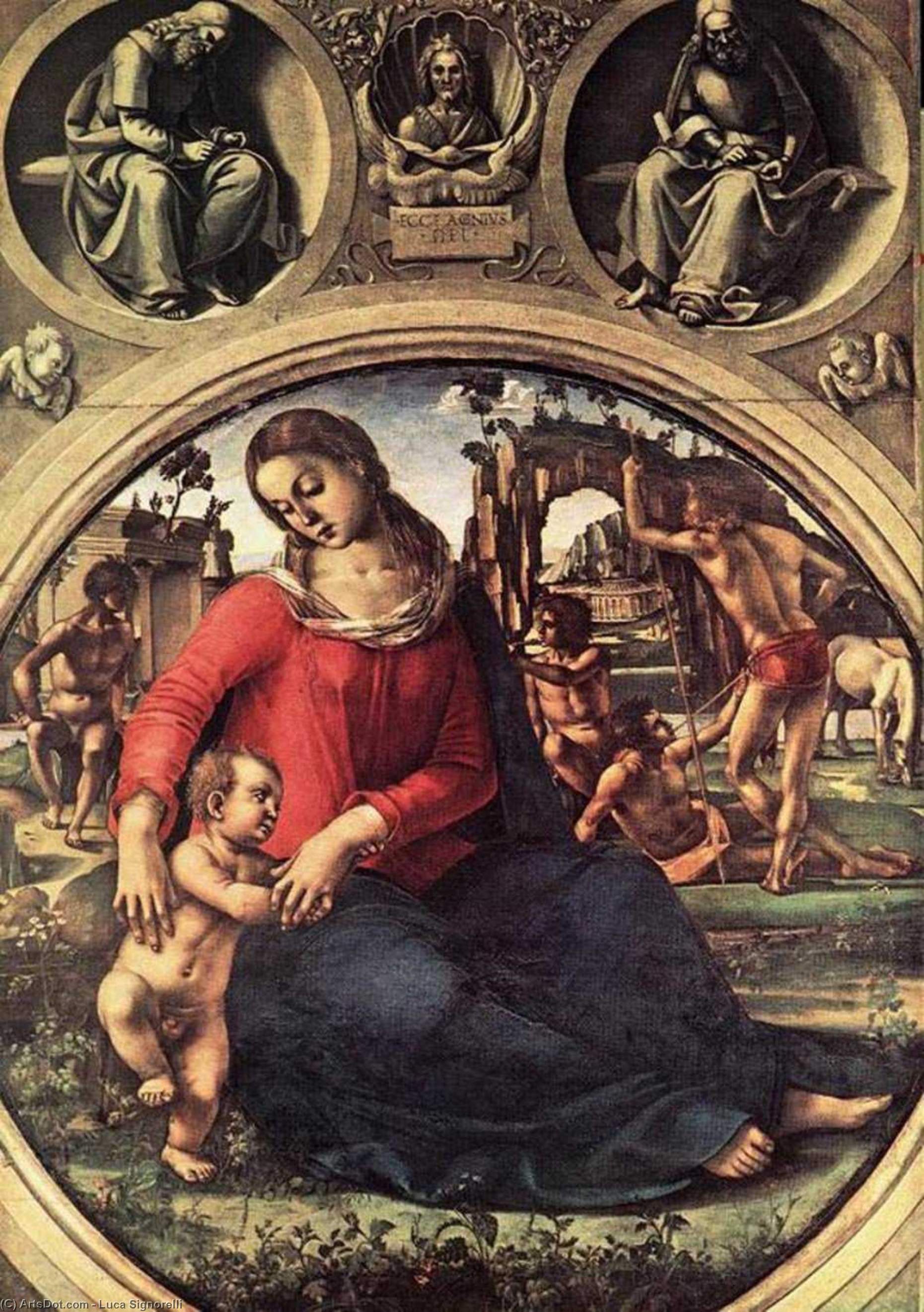
Historical Context: Painted during the High Renaissance, “Madonna and Child” reflects the burgeoning interest in classical ideals of beauty and proportion alongside Christian piety. It was commissioned by Giovanni Battista Ciuffagni, Bishop of Sora and Amelia, and intended for the chapel of Saint Catherine in Sora Cathedral – a testament to the importance of religious patronage within Florentine society.
Symbolism: Echoes of Antiquity and Divine Grace
Beyond its visual splendor, “Madonna and Child” is rich in symbolic resonance. The circular composition—a deliberate reference to ancient Roman mosaics—represents eternity and divine perfection. Mary’s serene gaze embodies compassion and maternal devotion, while Jesus’ outstretched hand symbolizes humility and acceptance of God's grace. The inclusion of Saint John the Baptist, dressed in camel skin and holding a reed trumpet, recalls images from classical sculpture and signifies repentance and heraldry – preparing for Christ’s arrival.
Emotional Impact: A Window into Renaissance Spirituality
The painting’s enduring appeal lies in its ability to evoke feelings of tranquility and reverence. Signorelli skillfully captures the tenderness between mother and child, conveying a profound sense of spiritual harmony. The golden background—a deliberate choice—symbolizes divine illumination and elevates the scene beyond earthly concerns, inviting contemplation on themes of faith, purity, and redemption. As Giorgio Vasari noted, Signorelli’s work exemplifies “the noble spirit of the Renaissance,” capturing its aspiration for moral excellence and artistic grandeur.
- Further Research: For a deeper understanding of Signorelli's oeuvre and the broader context of Florentine art during the Renaissance, consult Henry (2001) "Luca Signorelli"