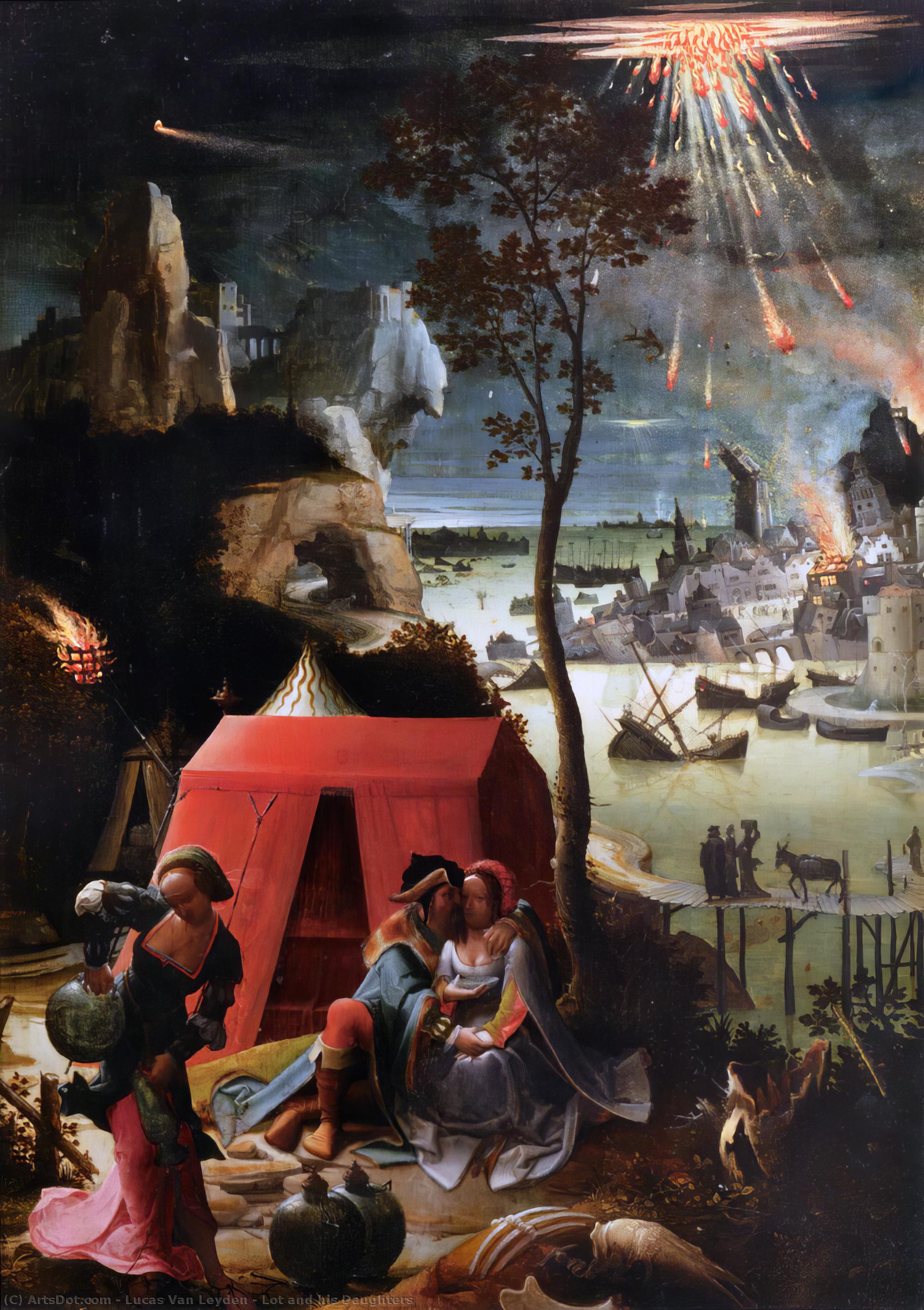
Lucas van Leyden’s ‘Lot and His Daughters,’ created around 1530, portrays the biblical narrative of Lot's encounter with his daughters after the destruction of Sodom. The artwork showcases meticulous detail in depicting a gathering scene featuring multiple figures and symbolic elements like bowls and birds, reflecting Van Leyden’s skill as a genre painter and engraver.
A Biblical Drama Captured in Pigment
In the quiet, somber depths of Lucas van Leyden’s “Lot and His Daughters,” we are invited into a moment of profound biblical tension and moral ambiguity. Created around 1520-1530, this masterpiece serves as a window into the Northern Renaissance, capturing the immediate, heavy aftermath of the destruction of Sodom and Gomorrah. The scene is not one of outward chaos, but of a hushed, unsettling intimacy. Under the protective, crimson canopy of a tent, Lot sits amidst the remnants of his flight, flanked by his two daughters. There is a palpable sense of weight in the air—a mixture of grief for the lost cities and the burgeoning, complex narrative of survival and seduction that follows their escape. For the discerning collector, this work offers more than just a historical depiction; it provides a profound psychological study of humanity at its most vulnerable.
The composition is masterfully orchestrated to draw the eye through a landscape of both physical and emotional terrain. Van Leyden utilizes a muted, earthy palette—rich ochres, deep browns, and blood-like reds—to establish an atmosphere of solemnity and contemplation. This tonal restraint allows the subtle details to emerge with startling clarity: the way light catches a ceramic bowl, the delicate positioning of the figures, and the distant, watchful presence of others near the tent. The artist’s background as a premier engraver is evident in the meticulous precision of his brushwork; every fold of fabric and every element of the surrounding landscape feels etched with intention, lending the painting a tactile, almost sculptural quality that breathes life into the 16th-century setting.
Symbolism and the Human Condition
Beyond its narrative function, “Lot and His Daughters” is a tapestry of symbolic depth. The red tent acts as a focal point of both sanctuary and sin, a threshold between the divine judgment that has passed and the uncertain moral future of the survivors. The presence of scattered objects—bowls, cups, and even birds in flight—serves to ground this biblical epic in a tangible, human reality, bridging the gap between the sacred text and the everyday world. This synthesis of the monumental and the mundane is what makes van Leyden’s work so enduringly relevant for modern interiors; it possesses a quiet gravity that commands attention without overwhelming a space.
For interior designers and art enthusiasts, a high-quality reproduction of this work offers an opportunity to introduce a sense of historical intellectualism and emotional resonance into a room. The painting does not merely decorate a wall; it invites conversation about resilience, the complexities of family, and the shadows of human nature. It is a piece that rewards long periods of observation, revealing new layers of detail and nuance with every glance. Whether placed in a curated gallery setting or as a soulful centerpiece in a sophisticated study, this reproduction of van Leyden’s genius brings the timeless drama of the Northern Renaissance into the contemporary home.