 Preview
 Send
Send Share
Share
 Details

 Download
 Similars
 X-Ray
X-Ray Diaporama
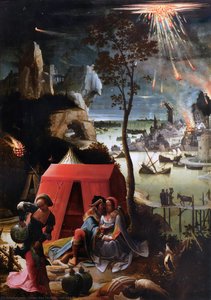
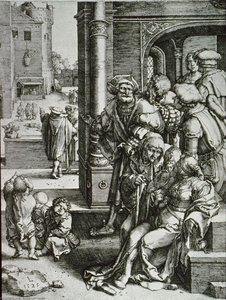
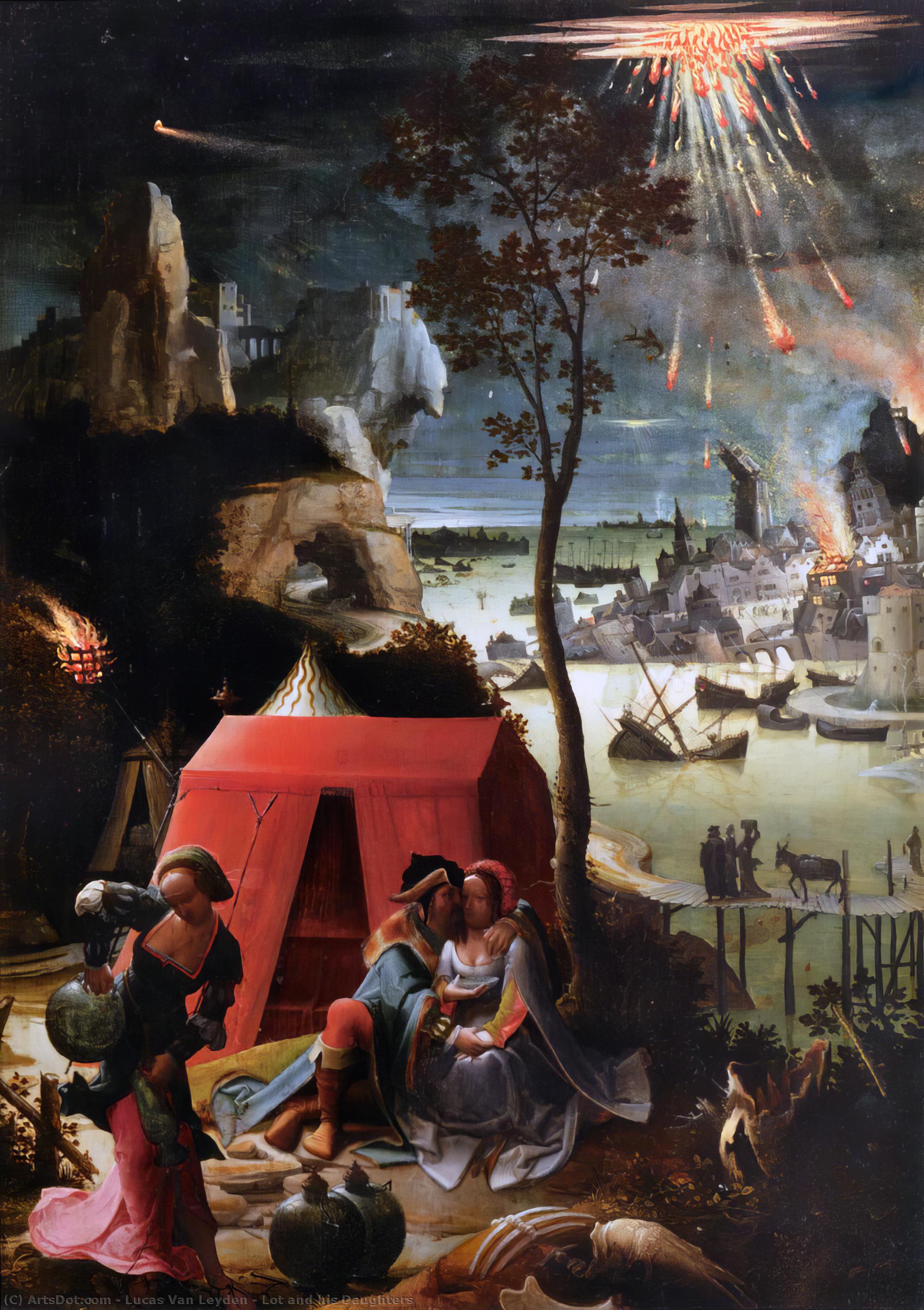
Lot and his Daughters
 Acrylic On Canvas
- WallArt
- Renaissance Genre Painting
 1520
1520 48.0 x 34.0 cm
 The Louvre
 Read More
Hand Made Oil Reproduction
Hand-painted oil on canvas in your size and frame, made to order by our artists. ( Buy Print Buy Image)




P118B $10

P118H $10

P118W $10

P438Z $10

P508JH $12

P508YH $12

P805H $10

P805Z $10

P919BZ $10

P919G $10

P919XJ $10

P959ZH $10

P968JZ $12

W106C $8

W218G $10

W218JH $8

W218Y $10

W307PJ $10

W316G $10

W316PJ $8

W316Y $10

W398PJ $8

W4111J $10

W500HY $15

W500JH $15

W692G $12

W849H $8

W940BG $15

W953PJ $8




Pick from our preset sizes that match the artwork's original proportions.

You may enter your own dimensions to fit a specific frame or space. If your selected size does not match the original image's proportions, we will either crop the artwork or extend the painting with additional hand-painted elements. A digital mockup will be sent for your approval before production begins.
Please note that the on-screen preview does not reflect the actual cropping or extension. Only the mockup will accurately show the final composition.
While custom sizes are available, we recommend selecting a dimension from the predefined list to preserve the original proportions.
After order, ArtsDot.com team will email client for instructions and provide a mockup preview
Worldwide Delivery () in 3/4 weeks instead of standard 5 weeks. (17 August). No compromise on quality.

Free Worldwide Express Shipping

High-Quality Linen Canvas

Full Shipping Insurance

Customs Tax Refund Guarantee

True Color Matching Guarantee

60-Day Return Policy (Defects Only)

100% Money-Back Guarantee

Bulk Discount Offer
 Glass option is only available in size under 110 CM

Lot and his Daughters
Reproduction Medium
Reproduction Size
-


Total Price
$ 263
Artwork Description
Lucas van Leyden’s “Lot and His Daughters”: A Testament to Biblical Narrative and Artistic Innovation
“Lot and His Daughters” by Lucas van Leyden is more than just a depiction of a biblical tale; it's a masterful achievement in Northern Renaissance art that encapsulates the anxieties and moral complexities of its time while demonstrating remarkable artistic skill. Executed around 1530, this painting resides within the Louvre’s collection and offers viewers an unparalleled glimpse into van Leyden’s evolving style and his profound engagement with humanist ideals.Subject Matter and Narrative Context
The artwork portrays Lot, Abraham's nephew, fleeing Sodom after divine judgment descends upon the city. Following God’s command to abandon Sodom and Gomorrah due to their wickedness, Lot chooses to protect his family by retreating into a tent erected by his two daughters—a decision fraught with moral ambiguity. The scene captures the immediate aftermath of this event: Lot sits beneath the tent, attended by his daughters who are visibly distressed by the recent events. This biblical narrative served as inspiration for artists throughout Europe during the Renaissance, reflecting concerns about sin, redemption, and familial responsibility – themes central to humanist thought.Style and Technique: A Synthesis of Genre Painting and Engraving Mastery
Van Leyden’s artistic approach exemplifies the burgeoning genre painting movement of his era, blending meticulous observation with idealized representation. He skillfully employs a muted palette dominated by earthy tones—browns, reds, and ochres—creating an atmosphere of solemn contemplation. The artist's mastery extends beyond pigment; he achieved remarkable detail through etching and engraving techniques, mirroring the precision demanded by printmaking. This dual skill set allowed him to produce stunningly realistic landscapes alongside intricately rendered figures, a hallmark of van Leyden’s oeuvre. Notice particularly the careful rendering of the tent fabric and the subtle shading that conveys depth and texture—evidence of his dedication to capturing naturalism within a stylized framework.Symbolism and Emotional Resonance
The painting is laden with symbolic significance. The tent itself represents refuge from divine wrath, yet it also symbolizes vulnerability and familial discord. The daughters’ expressions convey profound sorrow and despair, mirroring the psychological impact of trauma and moral transgression. Furthermore, the inclusion of birds—often interpreted as messengers of God—adds a layer of spiritual contemplation to the scene. Van Leyden's deliberate composition directs the viewer's gaze towards Lot and his daughters, emphasizing their predicament and prompting reflection on themes of guilt, repentance, and the consequences of human failings.Legacy and Artistic Influence
“Lot and His Daughters” stands as a testament to Lucas van Leyden’s artistic genius and his contribution to Northern Renaissance art history. It solidified his reputation as one of the foremost engravers of his time and influenced subsequent generations of artists who sought to emulate his stylistic innovations. Its enduring appeal lies in its ability to convey complex emotions and moral dilemmas within a visually compelling framework—a feat that continues to inspire admiration and scholarly study centuries later. The painting’s meticulous detail and evocative atmosphere serve as a reminder of the power of art to illuminate human experience and grapple with profound spiritual questions.Related Artworks
Artist Biography
early life and training
lucas van leyden, a dutch painter and printmaker, was born in 1494 in leiden, netherlands. he was the son of huygh jacobsz, a painter, and began his artistic training under his father's guidance. later, he joined the workshop of cornelis engelbrechtsz in 1508, where he refined his skills.artistic development
lucas van leyden was among the first dutch exponents of genre painting and a highly accomplished engraver. his early work, characterized by half-length figures (c. 1506-1512), showcases his precocious originality. as he matured, his landscapes developed, and he became skilled in engraving at a remarkably young age. the earliest known print by him, mohammed and the murdered monk (1508), demonstrates his mastery of the medium.notable works and style
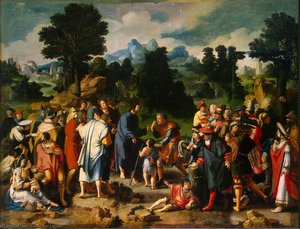
seventeen paintings surely attributed to lucas van leyden survive, including:- the healing of the blind man of jericho, a masterpiece showcasing multiple figures against wooded landscapes.
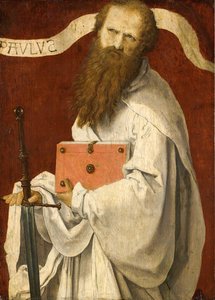
- saint paul, attr. leyden, exemplifying his engraving prowess.
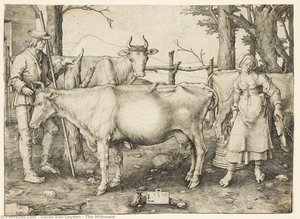
- the milkmaid (engraving, 1510), highlighting his early skill in the medium.
museum collections and online presence
lucas van leyden's works can be found in various museums, including the van gogh museum (netherlands), which houses an extensive collection of his engravings and paintings. online platforms like ArtsDot.com offer a comprehensive selection of his works, allowing art enthusiasts to explore his oeuvre in detail.legacy
lucas van leyden's contributions to dutch genre painting and engraving are undeniable. his innovative style and technical skill have made him a celebrated figure in the art world. as a pioneer of dutch art, his legacy continues to inspire artists and art lovers alike.- view lucas van leyden's artworks on ArtsDot.com
- explore the van gogh museum (netherlands) collection online
- discover more about dutch art and its pioneers on ArtsDot.com's blog
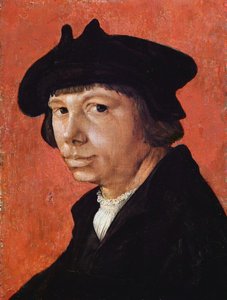
Lucas van Leyden
1494 - 1533 , Netherlands
Quick Facts
- Artistic Movement Or Style: Early Netherlandish Renaissance
- Artists Or Movements Influenced By This Artist: ['German Renaissance']
- Artists Who Influenced This Artist: ['Albrecht Dürer']
- Date Of Birth: Leiden, Netherlands (1494)
- Date Of Death: 1533
- Full Name: Lucas Hugensz van Leyden
- Nationality: Dutch
- Notable Artworks:
- The Healing of the Blind Man of Jericho
- Saint Paul
- The Milkmaid
- Place Of Birth: Leiden
Related Articles
Van Gogh's Masterpieces: Explore 25 Iconic Paintings & Art for Your Home
Journey through Vincent van Gogh's 25 most iconic paintings! Explore 'Starry Night', 'Sunflowers,' and more—discover the stories, techniques & emotions behind these Post-Impressionist masterpieces. Find museum-quality art reproductions for your home at ArtsDot.com.
Lucas van Leyden: Innovation & Intimacy in Early Netherlandish Printmaking
Explore the groundbreaking prints of Lucas van Leyden, a Dutch master bridging Gothic detail & Renaissance innovation. Discover his rare works, investment potential, and legacy for discerning collectors.

Rembrandt's Masterpieces: Explore 25 Iconic Paintings & Prints | ArtsDot
Journey through Rembrandt van Rijn's 25 most iconic paintings & etchings. Explore Dutch Golden Age masterpieces, dramatic chiaroscuro, and timeless portraits. Find museum-quality art reproductions to elevate your home decor on ArtsDot.com.

Early Netherlandish Masters: 10 Paintings That Revolutionized Art & Decor
Journey into the world of Early Netherlandish painting! Explore 10 masterpieces by Jan van Eyck, Rogier van der Weyden & more. Discover stunning detail, symbolism & Renaissance art for your home decor. Find museum-quality reproductions on ArtsDot.com
Early Netherlandish Masters: 10 Paintings That Revolutionized Art & Decor
Journey into the Early Netherlandish Renaissance! Explore 10 iconic paintings by Jan van Eyck, Rogier van der Weyden & more. Discover stunning detail, symbolism, and oil painting techniques. Find museum-quality art reproductions for your home at ArtsDot.com.