 Preview
 Send
Send Share
Share
 Details

 Download
 Similars
 X-Ray
X-Ray Diaporama
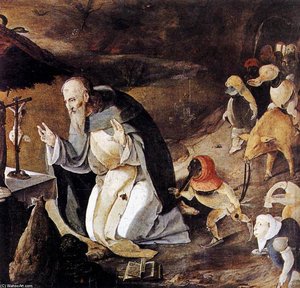
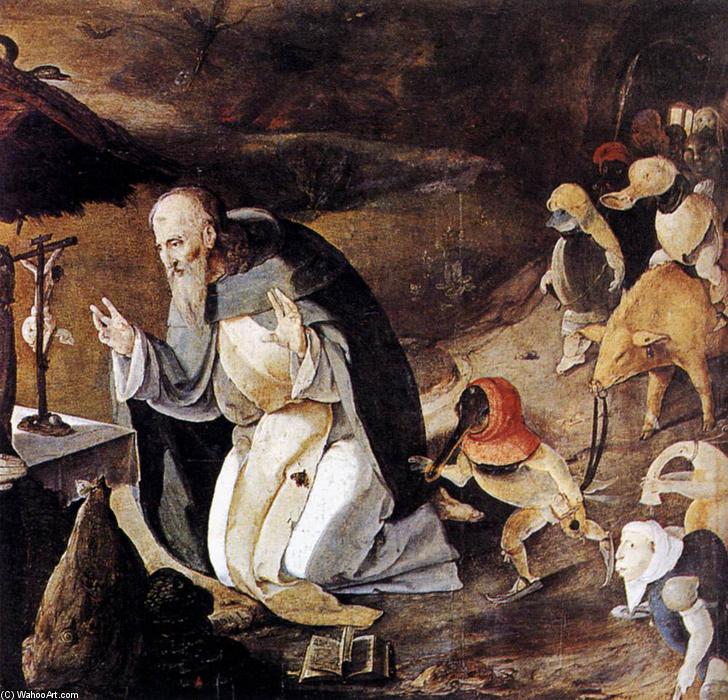
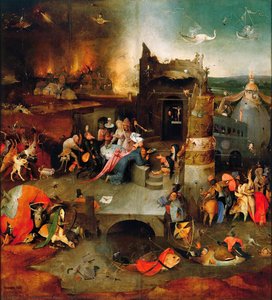
The Temptation of St Anthony
 Oil On Panel
- Baroque Painting
 1530
1530- Renaissance
 66.0 x 71.0 cm
 Musées Royaux des Beaux-Arts
 Read More
Hand Made Oil Reproduction
Hand-painted oil on canvas in your size and frame, made to order by our artists. ( Buy Print Buy Image)




P118B $10

P118H $10

P118W $10

P438Z $10

P508JH $12

P508YH $12

P805H $10

P805Z $10

P919BZ $10

P919G $10

P919XJ $10

P959ZH $10

P968JZ $12

W106C $8

W218G $10

W218JH $8

W218Y $10

W307PJ $10

W316G $10

W316PJ $8

W316Y $10

W398PJ $8

W4111J $10

W500HY $15

W500JH $15

W692G $12

W849H $8

W940BG $15

W953PJ $8




Pick from our preset sizes that match the artwork's original proportions.

You may enter your own dimensions to fit a specific frame or space. If your selected size does not match the original image's proportions, we will either crop the artwork or extend the painting with additional hand-painted elements. A digital mockup will be sent for your approval before production begins.
Please note that the on-screen preview does not reflect the actual cropping or extension. Only the mockup will accurately show the final composition.
While custom sizes are available, we recommend selecting a dimension from the predefined list to preserve the original proportions.
After order, ArtsDot.com team will email client for instructions and provide a mockup preview
Worldwide Delivery () in 3/4 weeks instead of standard 5 weeks. (17 August). No compromise on quality.

Free Worldwide Express Shipping

High-Quality Linen Canvas

Full Shipping Insurance

Customs Tax Refund Guarantee

True Color Matching Guarantee

60-Day Return Policy (Defects Only)

100% Money-Back Guarantee

Bulk Discount Offer
 Glass option is only available in size under 110 CM

The Temptation of St Anthony
Reproduction Medium
Reproduction Size
-


Total Price
$ 263
Artwork Description
A Moment of Spiritual Struggle: Lucas van Leyden’s “The Temptation of St Anthony”
Lucas van Leyden's "The Temptation of St Anthony," painted in 1530, stands as a poignant emblem of Renaissance piety and artistic innovation. Executed during a period marked by fervent religious fervor—the Reformation was gaining momentum across Europe—this painting transcends mere depiction; it delves into the profound psychological drama of faith confronting temptation. The artwork’s enduring appeal lies not only in its masterful execution but also in its layered symbolism that speaks to universal themes of moral fortitude and spiritual resilience.- Subject Matter & Composition: At its core, the scene portrays St. Anthony of Egypt, a hermit renowned for his unwavering devotion and resistance to demonic influence. He kneels before a crucifix, surrounded by two dogs – one positioned on the left, symbolizing earthly desires and evil, while the other closer to the right embodies spiritual corruption. The figures are arranged in a carefully considered composition that emphasizes St. Anthony’s vulnerability against the overwhelming force of temptation.
- Style & Technique: Van Leyden's style exemplifies the Northern Renaissance aesthetic—characterized by meticulous detail and realism blended with idealized forms. He employs oil paint on panel, utilizing glazing techniques to achieve luminous colors and subtle tonal variations that imbue the scene with atmospheric depth. The artist’s masterful rendering of textures – from the rough bark of the tree to the smooth surface of the crucifix – contributes significantly to the painting's visual impact.
Historical Context & Reformation Influence
The painting’s creation coincided with a pivotal moment in European history: the Protestant Reformation. The anxieties surrounding religious dogma and demonic forces fueled artistic explorations into spiritual themes. Van Leyden skillfully captures this zeitgeist, reflecting the prevalent preoccupation with moral struggle and divine grace within the intellectual circles of his time. The depiction of St. Anthony's confrontation with Satan serves as a visual metaphor for the broader battle waged between faith and heresy.- Symbolism: Beyond its narrative content, “The Temptation of St Anthony” is replete with symbolic imagery. The crucifix represents Christ’s sacrifice and redemption—a beacon of hope amidst darkness. The dogs symbolize earthly temptations and the devil's insidious influence, highlighting St. Anthony’s arduous task in maintaining spiritual purity. Even the tree itself carries significance; it symbolizes life and growth but also vulnerability to decay and corruption.
Emotional Impact & Artistic Legacy
The painting’s emotional resonance remains palpable centuries later. Van Leyden's portrayal of St. Anthony’s unwavering gaze—directed upwards towards God—communicates a profound sense of spiritual determination. The artist’s ability to convey psychological complexity within a relatively restrained visual framework underscores the enduring power of art to evoke contemplation and inspire reverence. “The Temptation of St Anthony” continues to resonate with viewers today as a testament to the human spirit's capacity for resilience in the face of adversity—a timeless masterpiece that exemplifies the pinnacle of Renaissance artistic achievement.Related Artworks
Artist Biography
early life and training
lucas van leyden, a dutch painter and printmaker, was born in 1494 in leiden, netherlands. he was the son of huygh jacobsz, a painter, and began his artistic training under his father's guidance. later, he joined the workshop of cornelis engelbrechtsz in 1508, where he refined his skills.artistic development
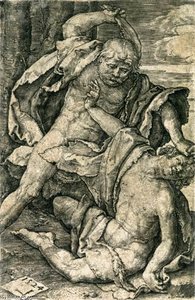
lucas van leyden was among the first dutch exponents of genre painting and a highly accomplished engraver. his early work, characterized by half-length figures (c. 1506-1512), showcases his precocious originality. as he matured, his landscapes developed, and he became skilled in engraving at a remarkably young age. the earliest known print by him, mohammed and the murdered monk (1508), demonstrates his mastery of the medium.notable works and style
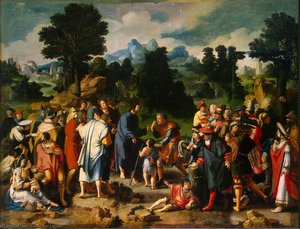
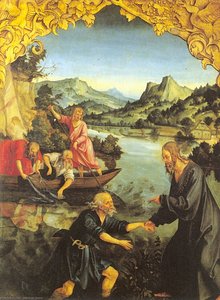
seventeen paintings surely attributed to lucas van leyden survive, including:- the healing of the blind man of jericho, a masterpiece showcasing multiple figures against wooded landscapes.
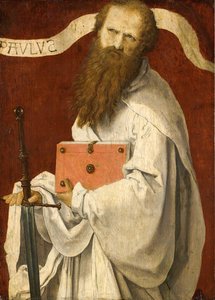
- saint paul, attr. leyden, exemplifying his engraving prowess.
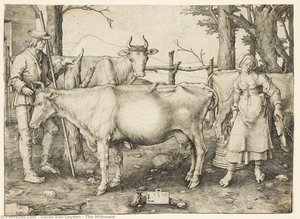
- the milkmaid (engraving, 1510), highlighting his early skill in the medium.
museum collections and online presence
lucas van leyden's works can be found in various museums, including the van gogh museum (netherlands), which houses an extensive collection of his engravings and paintings. online platforms like ArtsDot.com offer a comprehensive selection of his works, allowing art enthusiasts to explore his oeuvre in detail.legacy
lucas van leyden's contributions to dutch genre painting and engraving are undeniable. his innovative style and technical skill have made him a celebrated figure in the art world. as a pioneer of dutch art, his legacy continues to inspire artists and art lovers alike.- view lucas van leyden's artworks on ArtsDot.com
- explore the van gogh museum (netherlands) collection online
- discover more about dutch art and its pioneers on ArtsDot.com's blog
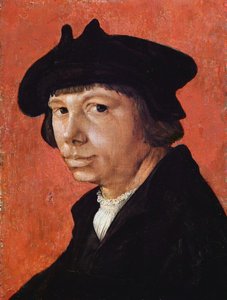
Lucas van Leyden
1494 - 1533 , Netherlands
Quick Facts
- Artistic Movement Or Style: Early Netherlandish Renaissance
- Artists Or Movements Influenced By This Artist: ['German Renaissance']
- Artists Who Influenced This Artist: ['Albrecht Dürer']
- Date Of Birth: Leiden, Netherlands (1494)
- Date Of Death: 1533
- Full Name: Lucas Hugensz van Leyden
- Nationality: Dutch
- Notable Artworks:
- The Healing of the Blind Man of Jericho
- Saint Paul
- The Milkmaid
- Place Of Birth: Leiden
Related Articles
Oil on Panel Masters: 10 Paintings That Revolutionized Art |
Journey through 10 legendary 'Oil on Panel' masterpieces by Van Eyck, Bosch & Bruegel. Explore the stories behind these iconic Renaissance & Baroque paintings and find museum-quality art reproductions to elevate your home decor. Discover all masterpieces on !

Oil on Panel: A Historical Survey of Technique, Support & Aesthetic Evolution
Explore the rich history of oil on panel painting! Discover Renaissance techniques, support structures & aesthetic evolution. Expert insights for art collectors and enthusiasts.

Oil on Canvas: A Historical & Technical Exploration of a Timeless Artistic Medium
Explore the rich history & enduring techniques of oil painting on canvas. Discover the science behind its longevity, conservation practices, and contemporary relevance. Expert insights for art enthusiasts.
Oil on Panel: A Historical Survey of Technique, Support, and Aesthetic Impact
Explore the rich history of oil on panel painting! Discover Renaissance techniques, support construction, & the enduring legacy of this masterful art form. Expert insights for collectors and enthusiasts.

The Enduring Power of Painting: A Historical & Contemporary Exploration of Form and Emotion
Explore the rich history & enduring techniques of oil painting with ArtsDot. Discover masterpieces, learn about art collecting, and find authentic handmade reproductions crafted by skilled artists.