 Preview
 Send
Send Share
Share
 Details

 Download
 Similars
 X-Ray
X-Ray Diaporama
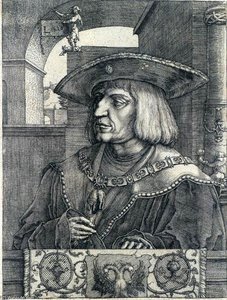
Emperor Maximilian
 Engraving
- Northern Renaissance
 1520
1520 256.0 x 194.0 cm
 Metropolitan Museum of Art
 Read More
Hand Made Oil Reproduction
Hand-painted oil on canvas in your size and frame, made to order by our artists. ( Buy Print Buy Image)




P118B $10

P118H $10

P118W $10

P438Z $10

P508JH $12

P508YH $12

P805H $10

P805Z $10

P919BZ $10

P919G $10

P919XJ $10

P959ZH $10

P968JZ $12

W106C $8

W218G $10

W218JH $8

W218Y $10

W307PJ $10

W316G $10

W316PJ $8

W316Y $10

W398PJ $8

W4111J $10

W500HY $15

W500JH $15

W692G $12

W849H $8

W940BG $15

W953PJ $8




Pick from our preset sizes that match the artwork's original proportions.

You may enter your own dimensions to fit a specific frame or space. If your selected size does not match the original image's proportions, we will either crop the artwork or extend the painting with additional hand-painted elements. A digital mockup will be sent for your approval before production begins.
Please note that the on-screen preview does not reflect the actual cropping or extension. Only the mockup will accurately show the final composition.
While custom sizes are available, we recommend selecting a dimension from the predefined list to preserve the original proportions.
After order, ArtsDot.com team will email client for instructions and provide a mockup preview
Worldwide Delivery () in 3/4 weeks instead of standard 5 weeks. (16 August). No compromise on quality.

Free Worldwide Express Shipping

High-Quality Linen Canvas

Full Shipping Insurance

Customs Tax Refund Guarantee

True Color Matching Guarantee

60-Day Return Policy (Defects Only)

100% Money-Back Guarantee

Bulk Discount Offer
 Glass option is only available in size under 110 CM

Emperor Maximilian
Reproduction Medium
Reproduction Size
-


Total Price
$ 263
Artwork Description
Emperor Maximilian I: A Portrait of Power and Intrigue
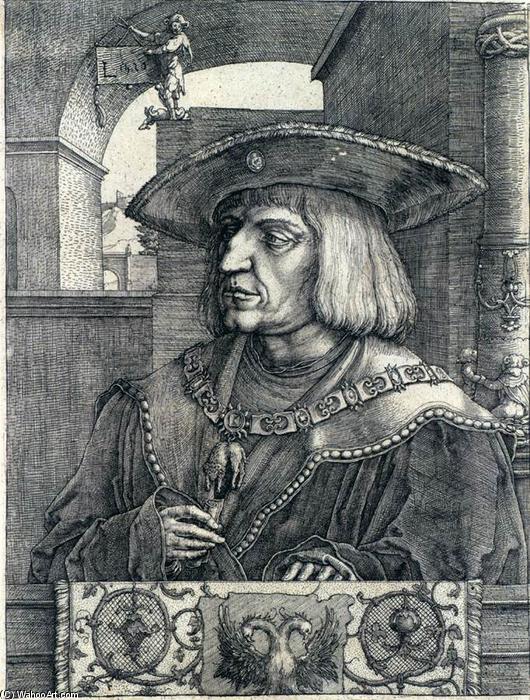
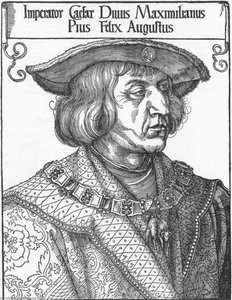
Lucas van Leyden’s “Emperor Maximilian” is more than just a portrait; it's a meticulously crafted window into the tumultuous world of 16th-century Europe, a visual testament to ambition, political maneuvering, and the burgeoning power of printmaking. Completed in 1520, this etching and engraving captures the likeness of Holy Roman Emperor Maximilian I – a figure both revered and controversial – against a backdrop of architectural grandeur that speaks volumes about his imperial aspirations. The artwork’s enduring appeal lies not only in its technical brilliance but also in the complex narrative it subtly unfolds.
Van Leyden, a pivotal figure in the transition from Gothic to Renaissance art in the Netherlands, demonstrates an extraordinary command of technique here. He masterfully employs the contrasting methods of etching and engraving, a relatively new approach at the time, to achieve remarkable detail and tonal variation. The delicate lines of the engraving define Maximilian’s face – his regal brow, piercing gaze, and meticulously rendered attire—while the subtle textures and shading created by the etching imbue the portrait with a sense of depth and realism. Note particularly the precision in capturing the folds of his velvet robes and the intricate details of his elaborate hat, adorned with feathers that symbolize imperial authority.
A Ruler Defined: Context and Symbolism
Maximilian I’s reign was marked by both triumph and tragedy. Ascending to the throne in 1506, he skillfully navigated a complex web of political alliances, expanding the Habsburg empire through strategic marriages and military campaigns. However, his later years were shadowed by financial instability, personal extravagance, and ultimately, a disastrous marriage to Mary Tudor, daughter of Henry VIII. The portrait itself reflects this duality; Maximilian is depicted in full imperial regalia – a large feathered hat, a jeweled sword, and the robes of an emperor—underscoring his power and status. Yet, there’s also a hint of melancholy in his expression, perhaps hinting at the burdens of leadership and the challenges he faced.
The architectural setting further enhances the portrait's symbolic weight. The columns and arches suggest an opulent palace or imperial court—a space designed to project authority and reinforce Maximilian’s position as ruler of a vast empire. The inclusion of decorative motifs, such as birds and flowers, adds a layer of Renaissance refinement, reflecting the artistic trends of the era. These elements collectively communicate a message of power, wealth, and cultural sophistication.
The Dawn of Printmaking: Innovation and Legacy
“Emperor Maximilian” represents a significant milestone in the history of printmaking. Van Leyden’s innovative use of both etching and engraving—techniques typically employed separately—demonstrates his mastery of the medium and pushed the boundaries of what was possible with woodcuts and metal plates. This pioneering approach paved the way for future generations of printmakers, establishing new standards for detail, tonal range, and artistic expression. The work’s influence can be seen in subsequent portraits and historical prints produced throughout Europe.
The portrait's enduring appeal also lies in its ability to evoke a sense of timelessness. Despite being created over 500 years ago, “Emperor Maximilian” continues to captivate viewers with its striking realism and subtle emotional depth. It serves as a powerful reminder of the complexities of power, ambition, and the lasting legacy of one of history’s most fascinating figures. Reproductions of this artwork offer a unique opportunity to bring this masterpiece into any setting, adding a touch of historical grandeur and artistic sophistication.
Related Artworks
Artist Biography
early life and training
lucas van leyden, a dutch painter and printmaker, was born in 1494 in leiden, netherlands. he was the son of huygh jacobsz, a painter, and began his artistic training under his father's guidance. later, he joined the workshop of cornelis engelbrechtsz in 1508, where he refined his skills.artistic development
lucas van leyden was among the first dutch exponents of genre painting and a highly accomplished engraver. his early work, characterized by half-length figures (c. 1506-1512), showcases his precocious originality. as he matured, his landscapes developed, and he became skilled in engraving at a remarkably young age. the earliest known print by him, mohammed and the murdered monk (1508), demonstrates his mastery of the medium.notable works and style
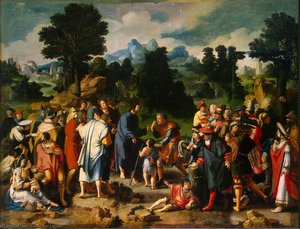
seventeen paintings surely attributed to lucas van leyden survive, including:- the healing of the blind man of jericho, a masterpiece showcasing multiple figures against wooded landscapes.
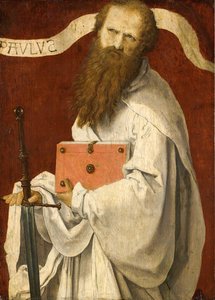
- saint paul, attr. leyden, exemplifying his engraving prowess.
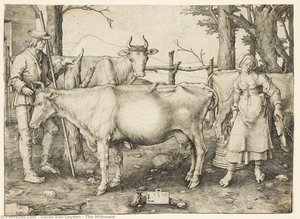
- the milkmaid (engraving, 1510), highlighting his early skill in the medium.
museum collections and online presence
lucas van leyden's works can be found in various museums, including the van gogh museum (netherlands), which houses an extensive collection of his engravings and paintings. online platforms like ArtsDot.com offer a comprehensive selection of his works, allowing art enthusiasts to explore his oeuvre in detail.legacy
lucas van leyden's contributions to dutch genre painting and engraving are undeniable. his innovative style and technical skill have made him a celebrated figure in the art world. as a pioneer of dutch art, his legacy continues to inspire artists and art lovers alike.- view lucas van leyden's artworks on ArtsDot.com
- explore the van gogh museum (netherlands) collection online
- discover more about dutch art and its pioneers on ArtsDot.com's blog
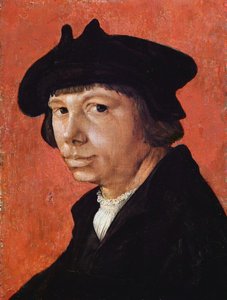
Lucas van Leyden
1494 - 1533 , Netherlands
Quick Facts
- Artistic Movement Or Style: Early Netherlandish Renaissance
- Artists Or Movements Influenced By This Artist: ['German Renaissance']
- Artists Who Influenced This Artist: ['Albrecht Dürer']
- Date Of Birth: Leiden, Netherlands (1494)
- Date Of Death: 1533
- Full Name: Lucas Hugensz van Leyden
- Nationality: Dutch
- Notable Artworks:
- The Healing of the Blind Man of Jericho
- Saint Paul
- The Milkmaid
- Place Of Birth: Leiden
Related Articles
Van Gogh's Masterpieces: Explore 25 Iconic Paintings & Art for Your Home
Journey through Vincent van Gogh's 25 most iconic paintings! Explore 'Starry Night', 'Sunflowers,' and more—discover the stories, techniques & emotions behind these Post-Impressionist masterpieces. Find museum-quality art reproductions for your home at ArtsDot.com.
Lucas van Leyden: Innovation & Intimacy in Early Netherlandish Printmaking
Explore the groundbreaking prints of Lucas van Leyden, a Dutch master bridging Gothic detail & Renaissance innovation. Discover his rare works, investment potential, and legacy for discerning collectors.
Etching Masters: 10 Legendary Prints That Revolutionized Art | ArtsDot
Journey through 10 legendary etching masterpieces by Rembrandt, Dürer & Goya. Explore the history of printmaking and discover timeless art for your home. Find museum-quality reproductions at ArtsDot.com.

Rembrandt's Masterpieces: Explore 25 Iconic Paintings & Prints | ArtsDot
Journey through Rembrandt van Rijn's 25 most iconic paintings & etchings. Explore Dutch Golden Age masterpieces, dramatic chiaroscuro, and timeless portraits. Find museum-quality art reproductions to elevate your home decor on ArtsDot.com.
Engraving's Golden Age: 10 Masterpieces That Redefined Art | ArtsDot
Journey through art history with our Top 10 Legendary Engravings! Explore masterpieces by Dürer, Rembrandt & Goya. Discover the stories behind these iconic prints and find museum-quality reproductions for your home at ArtsDot.com.