 Preview
 Send
Send Share
Share
 Details

 Download
 Similars
 X-Ray
X-Ray Diaporama
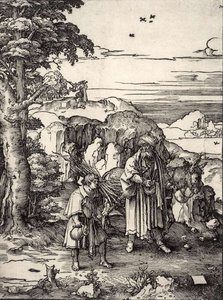
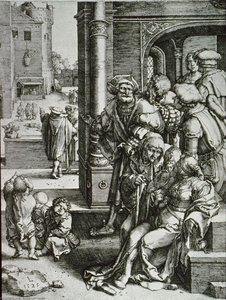
Virgil Suspended in a Basket
 Engraving
- Renaissance
 1525
1525 245.0 x 189.0 cm
 Metropolitan Museum of Art
 Read More
Hand Made Oil Reproduction
Hand-painted oil on canvas in your size and frame, made to order by our artists. ( Buy Print Buy Image)




P118B $10

P118H $10

P118W $10

P438Z $10

P508JH $12

P508YH $12

P805H $10

P805Z $10

P919BZ $10

P919G $10

P919XJ $10

P959ZH $10

P968JZ $12

W106C $8

W218G $10

W218JH $8

W218Y $10

W307PJ $10

W316G $10

W316PJ $8

W316Y $10

W398PJ $8

W4111J $10

W500HY $15

W500JH $15

W692G $12

W849H $8

W940BG $15

W953PJ $8




Pick from our preset sizes that match the artwork's original proportions.

You may enter your own dimensions to fit a specific frame or space. If your selected size does not match the original image's proportions, we will either crop the artwork or extend the painting with additional hand-painted elements. A digital mockup will be sent for your approval before production begins.
Please note that the on-screen preview does not reflect the actual cropping or extension. Only the mockup will accurately show the final composition.
While custom sizes are available, we recommend selecting a dimension from the predefined list to preserve the original proportions.
After order, ArtsDot.com team will email client for instructions and provide a mockup preview
Worldwide Delivery () in 3/4 weeks instead of standard 5 weeks. (17 August). No compromise on quality.

Free Worldwide Express Shipping

High-Quality Linen Canvas

Full Shipping Insurance

Customs Tax Refund Guarantee

True Color Matching Guarantee

60-Day Return Policy (Defects Only)

100% Money-Back Guarantee

Bulk Discount Offer
 Glass option is only available in size under 110 CM

Virgil Suspended in a Basket
Reproduction Medium
Reproduction Size
-


Total Price
$ 488
Artwork Description
A Moment Frozen in Time: The Enigmatic “Virgil Suspended”
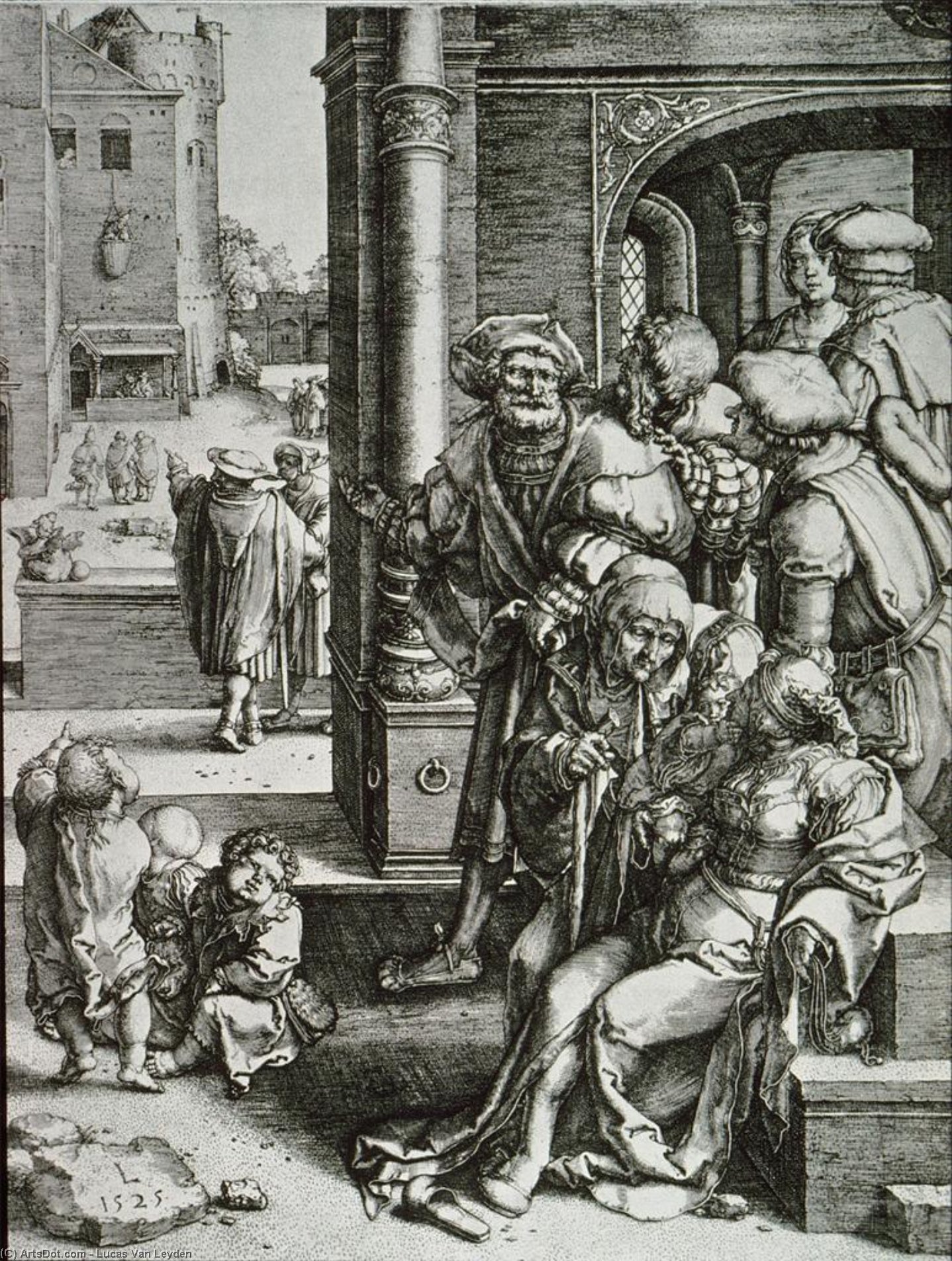
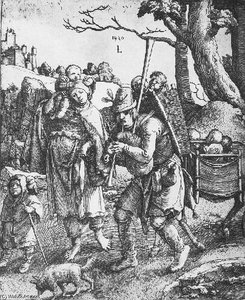
Lucas van Leyden’s “Virgil Suspended in a Basket,” created around 1525, isn't merely a depiction of a classical scene; it’s a carefully constructed tableau brimming with symbolic weight and technical mastery. This engraving, now meticulously reproduced for discerning collectors, offers a captivating glimpse into the artistic sensibilities of the early Netherlandish Renaissance. The image immediately draws the eye to a chaotic yet controlled composition – a throng of figures clustered around a central figure, Virgil himself, precariously suspended in a woven basket dangling from a high window. It’s a scene charged with drama, hinting at judgment, lamentation, and perhaps even a touch of dark humor.
The work's genesis lies within the rich tapestry of Roman mythology and literature. The story depicted – Virgil, the famed poet, being mocked for his supposed failings by passersby while suspended in a basket – is a poignant tale of humiliation and artistic vulnerability. Van Leyden masterfully translates this narrative into a visual language that transcends its original context, speaking to universal themes of ambition, failure, and the fickle nature of public opinion. The scene’s immediacy and emotional intensity are powerfully conveyed through the artist's skillful manipulation of line and shadow.
The Dance of Line: Technique and Craftsmanship
Van Leyden was a master of engraving, renowned for his ability to capture intricate detail and dramatic effects within the limitations of the medium. “Virgil Suspended” exemplifies this skill perfectly. The image is rendered in meticulous hatching and cross-hatching – a technique that allows him to build up tonal values with astonishing precision, creating a sense of depth and texture. Notice how the sharp lines delineate the figures’ forms, while subtle variations in shading suggest folds of clothing, the rough weave of the basket, and the play of light on faces. The artist's use of line isn’t simply descriptive; it actively shapes the viewer’s perception of space and emotion.
- Hatching & Cross-hatching: The foundation of Van Leyden’s tonal control, creating depth and texture through layered lines.
- Linear Perspective: A flattened perspective is employed to create a sense of recession, drawing the eye into the crowded scene.
- Detailed Rendering: The artist's commitment to capturing minute details – from the folds of Virgil’s robe to the expressions on the onlookers’ faces – adds to the work’s realism and emotional impact.
Symbolism Woven into the Scene
Beyond the straightforward narrative, “Virgil Suspended” is rich in symbolic meaning. The basket itself represents vulnerability and precariousness, mirroring Virgil's position as a fallen poet. The onlookers, gesturing emphatically, embody the fickle nature of public opinion – readily offering judgment and scorn. The high window from which Virgil hangs symbolizes a lofty artistic ideal now brought crashing down to earth. The inclusion of children in the background adds another layer of complexity, suggesting the potential for future generations to learn from this cautionary tale.
Notably, the scene echoes themes prevalent in Renaissance art – the tension between earthly and divine realms, the celebration of classical antiquity alongside Christian values, and the exploration of human fallibility.A Timeless Masterpiece: Reproduction and Beyond
Reproduced with exceptional fidelity, “Virgil Suspended” retains its original power and impact. Whether adorning a grand salon or a more intimate space, this engraving offers a captivating conversation piece – a reminder of the enduring themes explored by Renaissance artists and a testament to Lucas van Leyden’s unparalleled skill. Its dramatic composition, intricate detail, and profound symbolism continue to resonate with viewers centuries after its creation, solidifying its place as a cornerstone of Netherlandish art.
Related Artworks
Artist Biography
early life and training
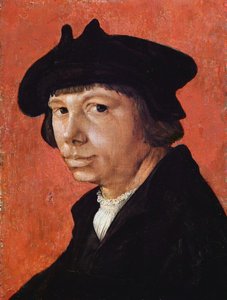
lucas van leyden, a dutch painter and printmaker, was born in 1494 in leiden, netherlands. he was the son of huygh jacobsz, a painter, and began his artistic training under his father's guidance. later, he joined the workshop of cornelis engelbrechtsz in 1508, where he refined his skills.artistic development
lucas van leyden was among the first dutch exponents of genre painting and a highly accomplished engraver. his early work, characterized by half-length figures (c. 1506-1512), showcases his precocious originality. as he matured, his landscapes developed, and he became skilled in engraving at a remarkably young age. the earliest known print by him, mohammed and the murdered monk (1508), demonstrates his mastery of the medium.notable works and style
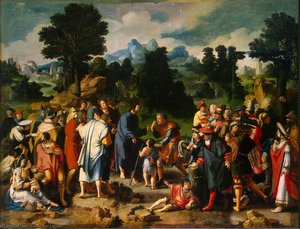
seventeen paintings surely attributed to lucas van leyden survive, including:- the healing of the blind man of jericho, a masterpiece showcasing multiple figures against wooded landscapes.
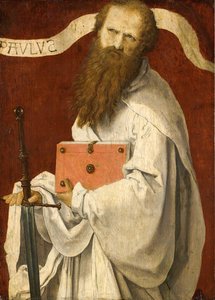
- saint paul, attr. leyden, exemplifying his engraving prowess.
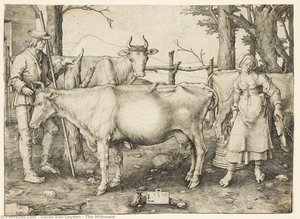
- the milkmaid (engraving, 1510), highlighting his early skill in the medium.
museum collections and online presence
lucas van leyden's works can be found in various museums, including the van gogh museum (netherlands), which houses an extensive collection of his engravings and paintings. online platforms like ArtsDot.com offer a comprehensive selection of his works, allowing art enthusiasts to explore his oeuvre in detail.legacy
lucas van leyden's contributions to dutch genre painting and engraving are undeniable. his innovative style and technical skill have made him a celebrated figure in the art world. as a pioneer of dutch art, his legacy continues to inspire artists and art lovers alike.- view lucas van leyden's artworks on ArtsDot.com
- explore the van gogh museum (netherlands) collection online
- discover more about dutch art and its pioneers on ArtsDot.com's blog
Lucas van Leyden
1494 - 1533 , Netherlands
Quick Facts
- Artistic Movement Or Style: Early Netherlandish Renaissance
- Artists Or Movements Influenced By This Artist: ['German Renaissance']
- Artists Who Influenced This Artist: ['Albrecht Dürer']
- Date Of Birth: Leiden, Netherlands (1494)
- Date Of Death: 1533
- Full Name: Lucas Hugensz van Leyden
- Nationality: Dutch
- Notable Artworks:
- The Healing of the Blind Man of Jericho
- Saint Paul
- The Milkmaid
- Place Of Birth: Leiden
Related Articles
Van Gogh's Masterpieces: Explore 25 Iconic Paintings & Art for Your Home
Journey through Vincent van Gogh's 25 most iconic paintings! Explore 'Starry Night', 'Sunflowers,' and more—discover the stories, techniques & emotions behind these Post-Impressionist masterpieces. Find museum-quality art reproductions for your home at ArtsDot.com.
Lucas van Leyden: Innovation & Intimacy in Early Netherlandish Printmaking
Explore the groundbreaking prints of Lucas van Leyden, a Dutch master bridging Gothic detail & Renaissance innovation. Discover his rare works, investment potential, and legacy for discerning collectors.

Rembrandt's Masterpieces: Explore 25 Iconic Paintings & Prints | ArtsDot
Journey through Rembrandt van Rijn's 25 most iconic paintings & etchings. Explore Dutch Golden Age masterpieces, dramatic chiaroscuro, and timeless portraits. Find museum-quality art reproductions to elevate your home decor on ArtsDot.com.
Engraving's Golden Age: 10 Masterpieces That Redefined Art | ArtsDot
Journey through art history with our Top 10 Legendary Engravings! Explore masterpieces by Dürer, Rembrandt & Goya. Discover the stories behind these iconic prints and find museum-quality reproductions for your home at ArtsDot.com.
Engraving: A Historical Survey of Technique, Artistic Expression & Enduring Legacy
Explore the rich history of engraving with ArtsDot. Discover techniques, iconic artists like Dürer & Callot, collecting tips, and expert guidance for preserving your art investment. Learn about intaglio printing & more!