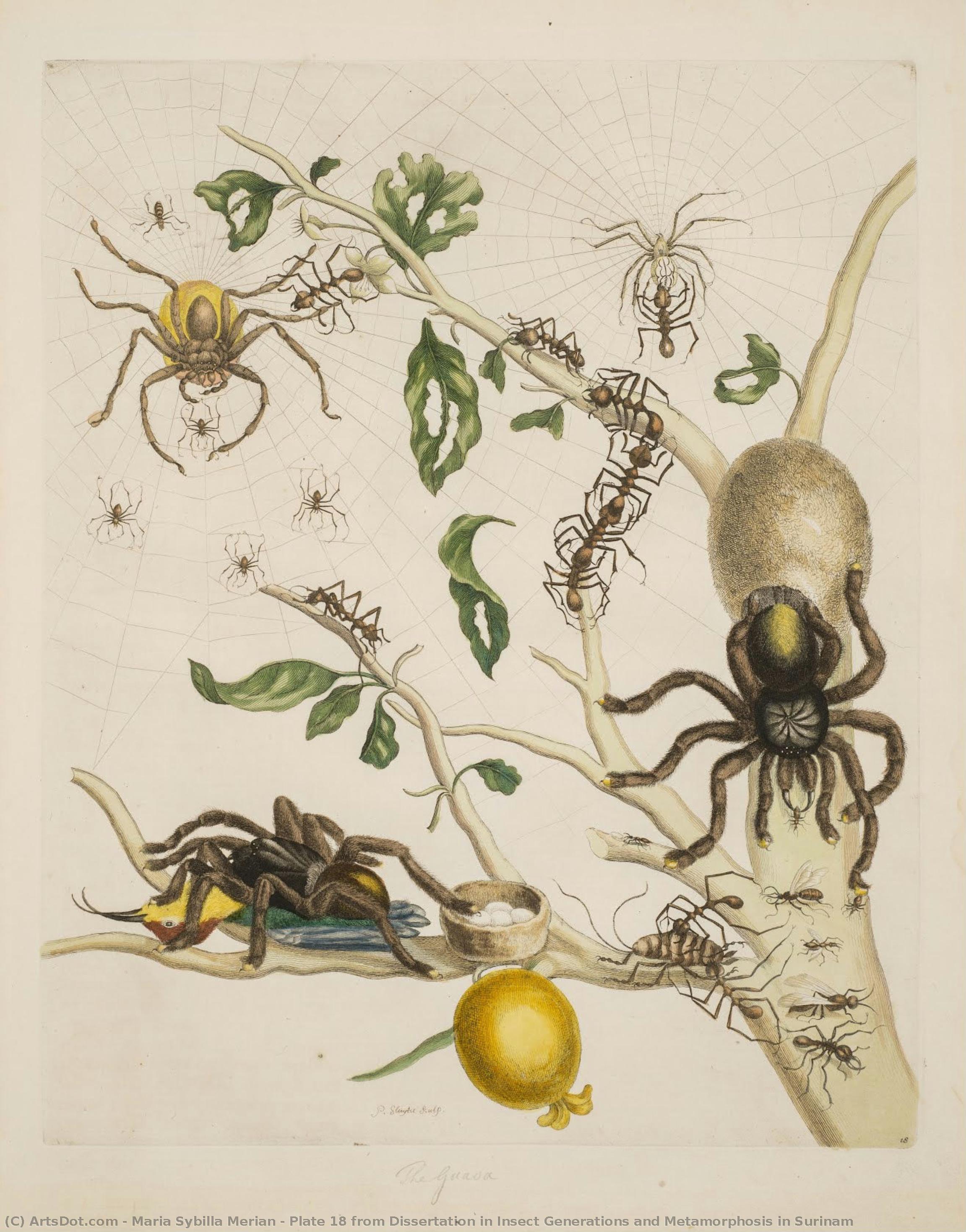
Discover Merian's breathtaking 17th-century watercolor plate featuring spiders on an apple branch, a masterpiece of natural history art you can own.
Maria Sibylla Merian (1647-1717) was a German naturalist & scientific illustrator celebrated for her exquisite insect depictions and groundbreaking research on metamorphosis, influencing both art & entomology.
Discover the National Museum of Women in the Arts in Washington, D.C., home to an iconic collection spanning centuries of female creativity, and explore a powerful narrative that reclaims history through art.
A Window Into Surinam’s Insect Realm: Maria Sibylla Merian's Plate 18
Maria Sybilla Merian stands as an unparalleled pioneer in entomology and botanical illustration—a woman who dared to challenge societal expectations and forge her own path toward scientific discovery. Her legacy extends far beyond the meticulous drawings that captivated audiences of her time, establishing her as a cornerstone of natural history and influencing generations of artists and scientists alike. This essay delves into the significance of “Plate 18 from Dissertation in Insect Generations and Metamorphosis in Surinam,” exploring its artistic merit, scientific contribution, and enduring resonance within the broader context of Merian’s groundbreaking work.
The Artwork: A Detailed Observation
“Plate 18” depicts a striking tableau vivant—a living scene rendered with breathtaking precision. The painting showcases an apple branch laden with spiders, meticulously observed by Merian during her expedition to Surinam in 1699-1703. Six spiders dominate the composition, varying in size and exhibiting distinct postures – some clinging delicately to silk threads, others poised for movement, capturing the dynamism of insect behavior. The artist’s keen eye captures not only the physical appearance of these arachnids but also their interaction with their environment, presenting a microcosm of Surinam's biodiversity. The inclusion of the apple adds an element of unexpected beauty and contrasts sharply with the spider’s hairy exoskeletons, highlighting Merian’s masterful use of visual juxtaposition.
Merian’s Technique: Anatomical Accuracy Meets Artistic Skill
Merian’s technique exemplifies the fusion of scientific rigor and artistic artistry that characterized her oeuvre. Employing watercolor pigments on paper—a relatively innovative medium for botanical illustration—she achieved remarkable detail through layering translucent washes, allowing underlying structures to subtly emerge. Her meticulous anatomical drawings were painstakingly executed with quill pens and ink, capturing the intricate musculature and skeletal framework of each insect specimen. The resulting images are not merely representations; they are embodiments of observation, reflecting Merian’s unwavering commitment to documenting nature with unparalleled accuracy. She skillfully combined scientific precision with artistic sensitivity, elevating her illustrations beyond mere depictions into powerful expressions of beauty and wonder.
Historical Context: Challenging Conventions
Merian's Dissertation was a bold undertaking for a woman in the 17th century—a period marked by rigid social hierarchies and limited opportunities for female scholars. Despite facing considerable obstacles, Merian persevered, driven by an ardent passion for understanding the natural world and disseminating her knowledge to a wider audience. Her publication challenged prevailing scientific dogma regarding spontaneous generation and championed the importance of empirical observation—principles that would later become foundational to modern biology. Furthermore, Merian’s work defied societal expectations concerning women's roles in science and art, establishing herself as an inspirational figure for aspiring female artists and scientists throughout history.
Symbolism: Beyond Representation – A Reflection of Enlightenment Thought
“Plate 18” transcends mere visual representation; it embodies the spirit of the Enlightenment—a movement that emphasized reason, observation, and a humanist appreciation for beauty and knowledge. The spider itself carries symbolic weight, representing resilience, adaptability, and transformation—qualities admired in both scientific inquiry and artistic expression. Its presence on the apple branch symbolizes the interconnectedness of nature and human experience, prompting contemplation about the delicate balance between opposing forces. Merian’s deliberate choice of subject matter reflects a broader intellectual preoccupation with understanding the natural world through rational investigation, mirroring the Enlightenment's commitment to unlocking the secrets of creation.
Emotional Impact: Capturing Wonder and Inspiring Curiosity
Ultimately, “Plate 18” succeeds in conveying an overwhelming sense of wonder—a testament to Merian’s ability to capture the sublime beauty of Surinam’s insect life. The painting invites viewers to immerse themselves in a microcosm of natural splendor, fostering curiosity about the intricacies of biological processes and prompting reflection on humanity's place within the grand tapestry of existence. Like all of Merian’s illustrations, Plate 18 serves as an enduring reminder that scientific discovery can coexist harmoniously with artistic appreciation—inspiring generations of artists and scientists to pursue knowledge with passion and creativity.