The Divine Narrative in Illuminated Gold
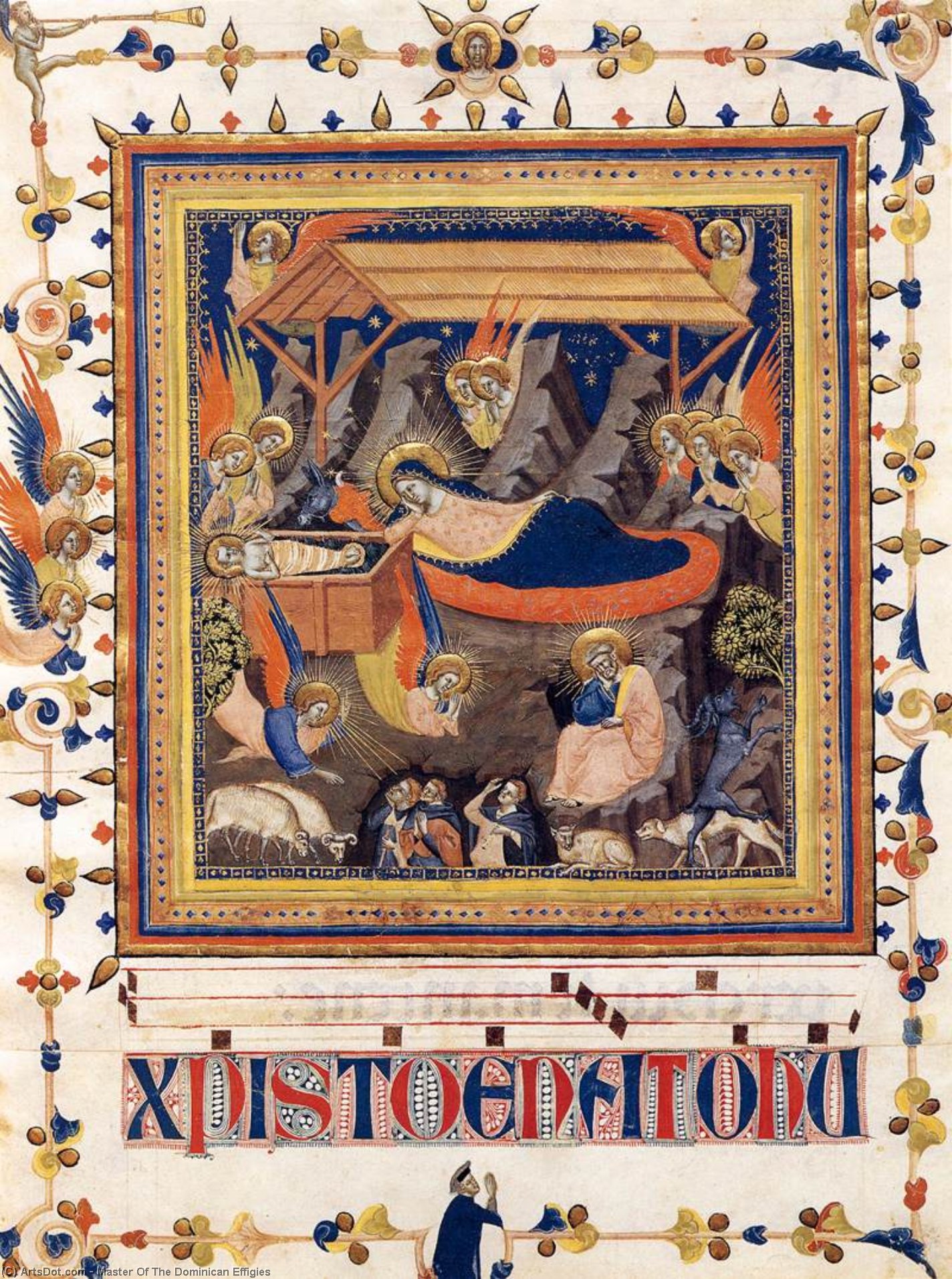
Behold the breathtaking richness of the Laudario of the Compagnia di Sant'Agnese, a monumental testament to medieval devotion rendered in pigment and gold leaf. This illuminated manuscript page is not merely an illustration; it is a carefully constructed portal into the sacred moment of the Nativity. The scene unfolds with meticulous detail, centering upon the humble yet profoundly significant tableau within the stable. Mary, Joseph, and the newborn Christ are enveloped by an atmosphere thick with divine mystery, watched over by celestial beings whose presence is announced by hovering angels presenting their gifts. Surrounding this core narrative, the gentle company of oxen, donkeys, and sheep grounds the miraculous event in a tangible, earthly setting.
Byzantine Echoes and Romanesque Form
Stylistically, the work resonates deeply with the grandeur of Byzantine illumination while retaining the narrative vigor characteristic of the Romanesque period. The artist masterfully employs a flattened perspective, eschewing the illusion of deep space for one that prioritizes symbolic clarity above all else. This deliberate choice forces the viewer to confront the spiritual weight of the moment rather than its physical dimensions. Notice how the composition is structured by geometric precision—squares and rectangles interlace with the organic curves of life—creating a dense, almost jewel-like tapestry of meaning. The entire piece pulses with an ordered, sacred energy.
Technique: A Symphony of Pigment and Light
The sheer technical brilliance on display is staggering. Executed using tempera pigments applied to vellum or parchment, the artist achieved a luminosity that seems to emanate from within the material itself. The extensive use of gold leaf is perhaps the most arresting feature; it does not merely decorate, but rather symbolizes the ineffable nature of divinity and holiness. These golden accents catch the light, creating an opulent visual texture that speaks of immense labor and profound reverence. Complementing this richness are the deep, saturated hues—the royal blues, the passionate reds, and the earthy browns—all working together to create a palette of sublime opulence.
Symbolism and Spiritual Resonance
Every element within the Laudario carries the weight of theological significance. The prominent banner bearing the inscription ‘Christo Redemptori’ serves as an unwavering focal point, directing all attention toward the core message of salvation. The surrounding decorative borders, featuring stylized floral motifs and intricate patterns, act like sacred veils, framing the divine mystery for our contemplation. To gaze upon this work is to engage in a dialogue with centuries of Christian devotion; it speaks eloquently of grace, sacrifice, and the enduring promise of redemption.
Bringing Sacred Grandeur Home
For those who seek to infuse their sacred spaces or private collections with an aura of timeless, profound artistry, a reproduction of this piece offers an unparalleled connection to art history. While its original scale—a magnificent 367 x 273 cm—demands reverence, the ability to own a high-quality rendering allows one to incorporate this breathtaking narrative power into a modern setting. It is more than decoration; it is a devotional centerpiece, inviting quiet contemplation and echoing the enduring majesty of faith.