Master of the Dominican Effigies: A Pioneer of Byzantine Influence in Florentine Painting
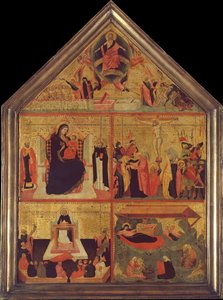
The Master of the Dominican Effigies, whose true identity remains shrouded in mystery despite scholarly efforts, stands as a singular figure within the artistic landscape of Florence during the early 14th century. Active around 1328-1350, he emerged from the vibrant milieu of Florentine art production—a period marked by burgeoning civic pride and an intense engagement with Byzantine aesthetics—leaving behind a legacy of exquisitely crafted religious panels and illuminated manuscripts that continue to fascinate historians and connoisseurs alike.
Little is known about his personal life beyond fragmentary documentation suggesting he hailed from Lombardy. However, his artistic output speaks volumes about his profound understanding of visual culture and his unwavering dedication to mastering the techniques of Byzantine iconography. His distinctive style—characterized by flattened figures, stylized draperies, and a luminous palette—demonstrates an unmistakable debt to the monumental frescoes adorning churches in Constantinople and Thessalonica.
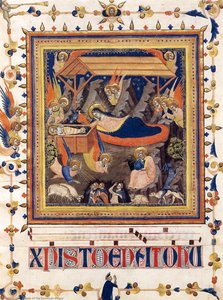
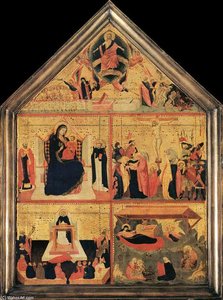
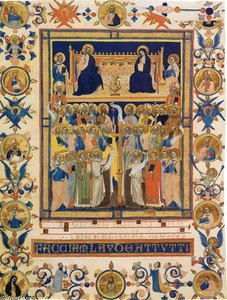
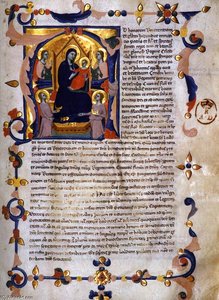
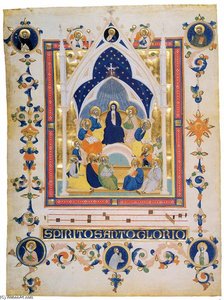
- Notable Works: The Master’s oeuvre comprises several remarkable pieces, including a fragment of a triptych depicting Saint Mary holding the infant Jesus (currently housed at Museo Civico Palazzo Comunale di Siena), a magnificent Laudario of Sant'Agnese—a lavish illuminated manuscript showcasing scenes from the Gospels and Virgin Mary’s life—and a Crucifixion panel displaying remarkable detail and expressive emotion.
- Laudario of Sant'Agnese: This masterpiece exemplifies the Master’s mastery of Byzantine artistic conventions. The intricate gold leaf decoration, combined with meticulous depiction of drapery folds and facial expressions, reflects the stylistic ideals prevalent in Constantinople at the time. Scholars believe it was created for the Benedictine Monastery of Sant'Agnese in Siena
- Influence: The Master’s style profoundly impacted Florentine painting during his lifetime and beyond. He served as an inspiration to younger artists who sought to emulate his refined technique and embrace Byzantine visual language, contributing significantly to the stylistic evolution of Florentine art.
Despite the elusive nature of his biographical details, the Master’s artistic achievements endure as testament to his exceptional talent and unwavering commitment to preserving and adapting Byzantine traditions. His panels and manuscripts stand as invaluable windows into the cultural exchange that characterized medieval Europe, illuminating the complex interplay between Eastern and Western artistic sensibilities.
Further research continues to unravel the mysteries surrounding this enigmatic artist, bolstering our understanding of Florentine art history and cementing his place among the most influential figures of his era. The legacy of Master of the Dominican Effigies—a beacon of Byzantine influence in a city striving for artistic grandeur—continues to inspire admiration and scholarly inquiry.