The Genesis of Sacred Imagery: Early Religious Art & Its Purpose
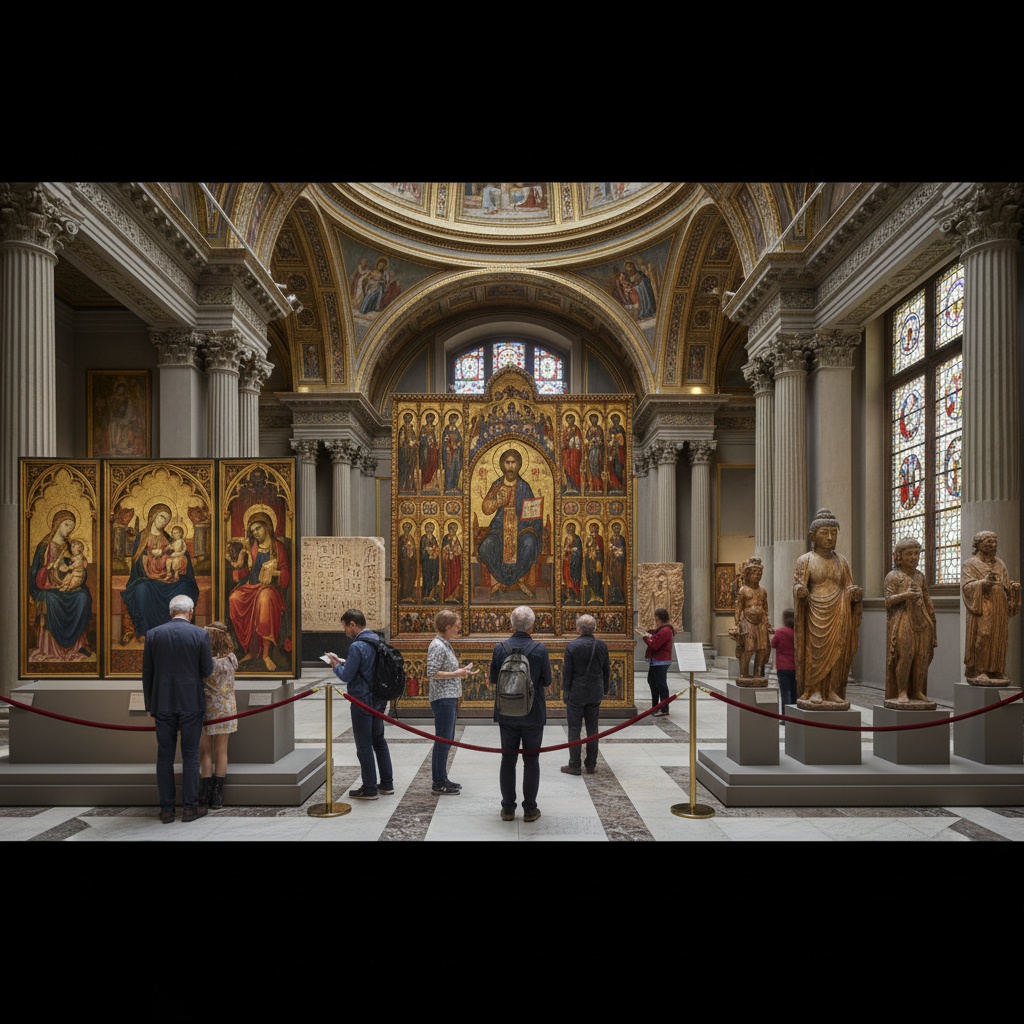
Religious art is a visual representation of religious ideologies and their relationship with humans. Sacred art directly relates to religious art in the sense that its purpose is for worship and religious practices. According to one set of definition...
From the dawn of human consciousness, the impulse to represent the divine has manifested itself in art. Long before written languages codified belief systems, images served as potent vehicles for communicating with the unseen world. The earliest examples – cave paintings depicting animal spirits, Neolithic figurines embodying fertility goddesses – hint at a primal need to externalize faith and connect with forces beyond our comprehension. As civilizations coalesced, so too did more formalized religious practices, demanding increasingly sophisticated artistic expression. In ancient Egypt, monumental sculptures of pharaohs intertwined divine authority with earthly power, while Mesopotamian votive figures offered tangible pleas to the gods. These weren’t merely decorative objects; they were integral components of ritual, imbued with spiritual energy and intended to bridge the gap between humanity and the sacred realm. The purpose was fundamentally devotional: to honor deities, secure blessings, and navigate the mysteries of life and death. This foundational impulse—the desire to visualize belief—would become the bedrock upon which all subsequent religious art would be built.
Decoding Iconography: Symbols, Allegories, and Visual Language in Religious Paintings
Iconography, as a branch of art history, studies the identification, description and interpretation of the content of images: the subjects depicted, the particular compositions and details used to do so, and other elements that are distinct from arti...
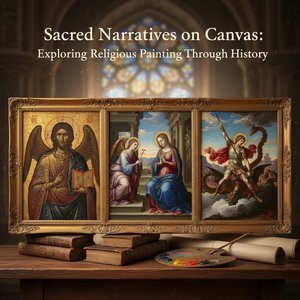
As religions evolved, so did their visual languages. The simple act of representation wasn’t enough; artists began to employ a complex system of iconography, layering meaning into every detail of their compositions. A halo, for instance, didn't simply denote the presence of holiness but signified divine grace and spiritual illumination. Specific colors acquired symbolic weight – gold representing divinity, blue embodying heaven, red signifying sacrifice or passion. Animals became allegorical stand-ins for virtues or vices; a lamb often symbolized innocence and Christ himself, while a serpent frequently represented temptation and evil. Understanding this visual lexicon is crucial to unlocking the deeper narratives embedded within religious paintings. Consider the prevalence of lilies in depictions of the Annunciation – they represent purity and the Virgin Mary’s immaculate conception. Or the carefully positioned dove symbolizing the Holy Spirit. These weren't arbitrary choices; they were deliberate attempts to communicate complex theological concepts through a universally understood visual shorthand. The study of iconography, therefore, is not merely about identifying subjects but deciphering the intricate web of symbolism that informed their creation.
Byzantine Brilliance: The Golden Age of Religious Iconography and Mosaic Art
Byzantine art comprises the body of artistic products of the Eastern Roman Empire, as well as the nations and states that inherited culturally from the empire. Though the empire itself emerged from the decline of western Rome and lasted until the Fal...
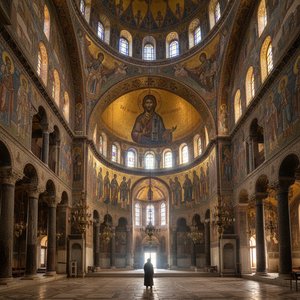
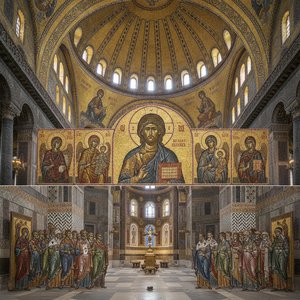
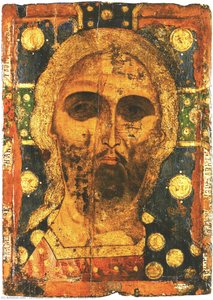
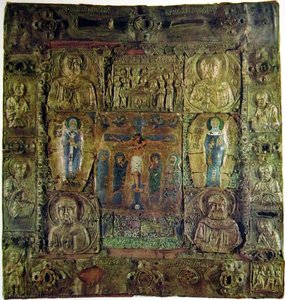
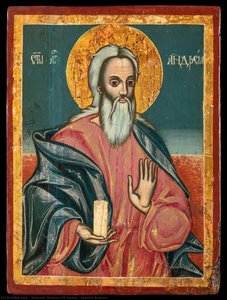
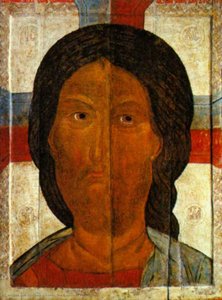
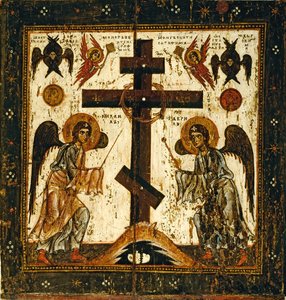
The Eastern Roman Empire, or Byzantium, represents a pivotal moment in the history of religious art. Following the legalization of Christianity by Emperor Constantine, artistic production shifted dramatically, focusing almost exclusively on themes of faith. This era witnessed the flourishing of icon painting, reaching an unparalleled level of refinement and spiritual intensity. Byzantine icons weren’t intended as realistic portraits but rather as “windows to heaven,” portals through which worshippers could connect with the divine. The use of gold leaf, shimmering tesserae in mosaics, and stylized figures created a sense of otherworldly beauty and transcendence. The Hagia Sophia in Constantinople stands as a testament to this artistic prowess – its vast interior adorned with breathtaking mosaics depicting Christ Pantocrator, the Virgin Mary, and scenes from the Bible. These images weren’t simply beautiful; they were believed to possess inherent power, capable of interceding on behalf of believers. The strict canons governing icon painting—precise rules regarding composition, color, and technique—ensured consistency and reinforced theological doctrine. This period also saw the development of complex narrative cycles in mosaic form, adorning church walls and ceilings with stories from the Old and New Testaments.
Renaissance Reverence: Humanism, Spirituality, and the Evolution of Devotional Art
The Renaissance marked a profound shift in artistic sensibilities. While religious themes remained dominant, artists began to embrace humanism—a philosophical movement that emphasized the dignity and potential of humankind. This newfound focus on realism led to more naturalistic depictions of biblical figures, imbued with emotion and psychological depth. Artists like Duccio di Buoninsegna, with his Maestà altarpiece, skillfully blended traditional Byzantine stylization with emerging Renaissance techniques, creating works that were both spiritually profound and aesthetically captivating. The attention to detail – the delicate folds of drapery, the expressive faces of the figures – served not to diminish the sacredness of the subject but rather to enhance it. The use of perspective created a sense of depth and realism, drawing viewers into the scene and fostering a more intimate connection with the divine narrative. Simultaneously, artists explored new compositional approaches, such as Pontius Pilate washing his hands, emphasizing human agency and moral responsibility within religious contexts. This period also saw the rise of private devotional art – smaller paintings intended for personal contemplation and worship.
Beyond Byzantium & Italy: Global Expressions of Religious Iconography
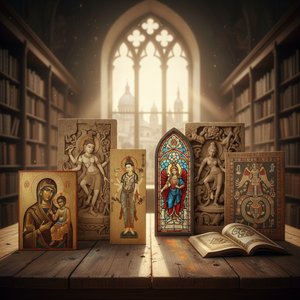
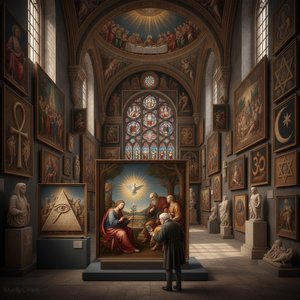
Religious iconography wasn’t confined to Europe; it flourished in diverse cultures around the globe, each developing its unique visual language. In Ethiopia, vibrant illuminated manuscripts and intricately carved icons reflected a distinct theological tradition rooted in ancient African beliefs. In Russia, icon painting reached extraordinary heights of spiritual intensity, characterized by bold colors, stylized figures, and a profound sense of reverence. The Volyn school of icon painting, for example, developed its own unique style, blending Byzantine traditions with local artistic influences. Similarly, the Armenian Church produced stunning illuminated manuscripts and stone carvings adorned with intricate religious imagery. Even in regions where Christianity was less dominant, elements of religious iconography found expression in other art forms – Buddhist thangkas in Tibet, Hindu sculptures in India, Islamic calligraphy throughout the Middle East. These diverse examples demonstrate the universal human need to visualize faith and connect with the divine, adapting artistic conventions to reflect local cultures and beliefs.
The Enduring Legacy: How Sacred Narratives Continue to Inspire Contemporary Artists
Today, religious iconography continues to exert a powerful influence on contemporary art. While overt devotional imagery may be less prevalent, artists continue to draw inspiration from the rich symbolism and visual traditions of the past. Neo-Byzantine styles, like those seen in the work of Petro Kholodny, demonstrate a renewed appreciation for the spiritual intensity and aesthetic beauty of Byzantine icons. Artists explore themes of faith, spirituality, and morality through abstract forms, mixed media installations, and digital art. The enduring power of sacred narratives—stories of creation, redemption, and transcendence—continues to resonate with audiences worldwide. At ArtsDot, we celebrate this legacy by offering high-quality reproductions of masterpieces from across the ages, allowing you to bring the beauty and spiritual depth of religious art into your own home. Whether you’re a seasoned collector or simply an admirer of fine art, our collection offers something for everyone. Explore our extensive library today and discover the timeless power of sacred imagery.