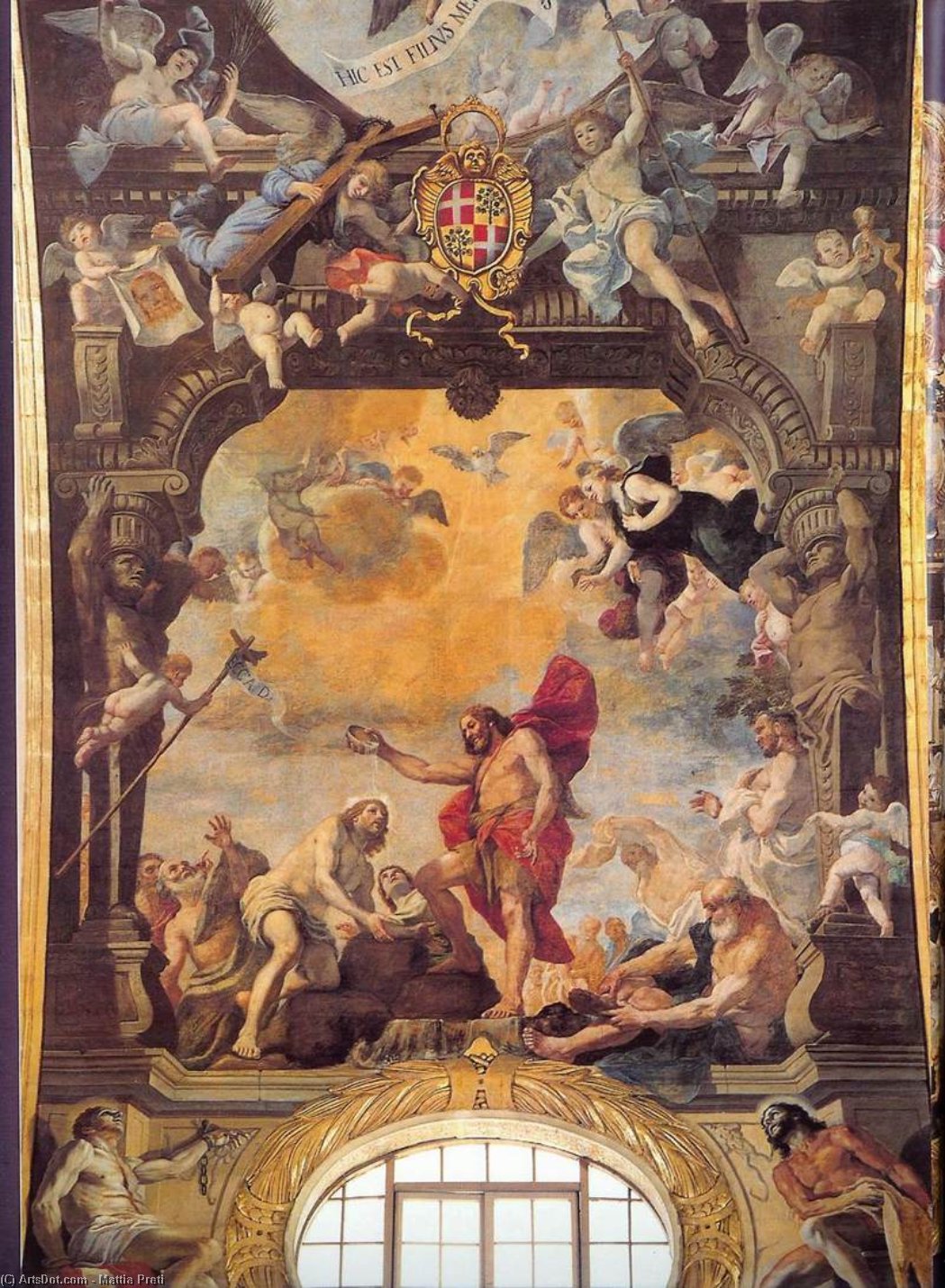
Mattia Preti’s Baroque masterpiece, ‘The Baptism of Christ,’ explodes with dramatic chiaroscuro and vibrant color palettes depicting Jesus's divine incarnation at the Jordan River—a stunning testament to faith and artistic brilliance. Explore this iconic fresco and bring its grandeur into your home.
The Baptism of Christ – A Baroque Masterpiece
Mattia Preti’s “The Baptism of Christ,” housed in the Conventual Church of St. John in Valletta, Malta, stands as an emblem of Baroque art's dramatic fervor and masterful execution. Painted in 1661, this monumental fresco transcends mere depiction; it embodies a profound theological narrative rendered with unparalleled skill and emotional resonance. The artwork’s enduring appeal lies not only in its visual splendor but also in its ability to convey the spiritual significance of Jesus’s baptism—a pivotal moment marking his divine incarnation and foreshadowing his triumphant ascension.
- Subject Matter: The fresco portrays the biblical scene of Jesus being baptized by John the Baptist at the Jordan River, capturing a pivotal episode from Christian scripture.
- Style & Technique: Preti’s style is quintessential Baroque, characterized by dynamic composition, theatrical lighting—known as chiaroscuro—and meticulous attention to detail. He employs tempera paint on plaster, a technique favored during his time that ensures vibrant colors and remarkable textural depth.
- Composition: The central figure of Jesus dominates the canvas, bathed in radiant light emanating from above, symbolizing divine grace. Surrounding him are angels and disciples, meticulously rendered with expressive gestures and postures, conveying awe and reverence. The architectural setting—a stylized depiction of the Jordan Riverbank—adds to the grandeur of the scene.
- Color Palette: Preti’s palette utilizes warm hues – reds, golds, and browns – predominantly in the lower portion of the fresco, reflecting earthly warmth and vitality. Cooler blues and greens dominate the background, creating a sense of serenity and conveying the spiritual realm.
The historical context surrounding “The Baptism of Christ” is inextricably linked to Malta’s role as a bastion of Catholicism during the seventeenth century. Commissioned by Grand Master António Manuel de Saldanha y Loyola, the fresco served as a powerful affirmation of faith and royal patronage—a testament to the Order's unwavering devotion to its spiritual mission. Furthermore, Preti’s work reflects broader artistic trends prevalent across Europe at the time, mirroring the Baroque preoccupation with conveying emotion and grandeur through visual representation. The artist skillfully employs dramatic lighting to heighten emotional impact, guiding the viewer’s gaze toward Jesus and emphasizing his divine majesty.
- Symbolism: The baptism symbolizes purification from sin and initiation into Christian faith—a cornerstone of Orthodox theology. The descending Spirit represents God's divine blessing upon Jesus, signifying his divine sonship and foreshadowing his future glory.
- Emotional Impact: Preti’s masterful rendering captures the palpable emotion of the scene—the reverence of the disciples, the solemnity of the ritual, and the radiant splendor of divine grace. The fresco inspires contemplation on themes of faith, redemption, and spiritual transformation.
“The Baptism of Christ” remains a cornerstone of Baroque art history, celebrated for its artistic brilliance and theological depth. Its enduring legacy testifies to Preti’s ability to transform biblical narrative into an unforgettable visual experience—a masterpiece that continues to captivate audiences centuries after its creation. The fresco's meticulous detail and emotive portrayal solidify its place as one of Malta’s most treasured cultural treasures, inviting viewers to immerse themselves in the grandeur and spirituality of Baroque artistry.