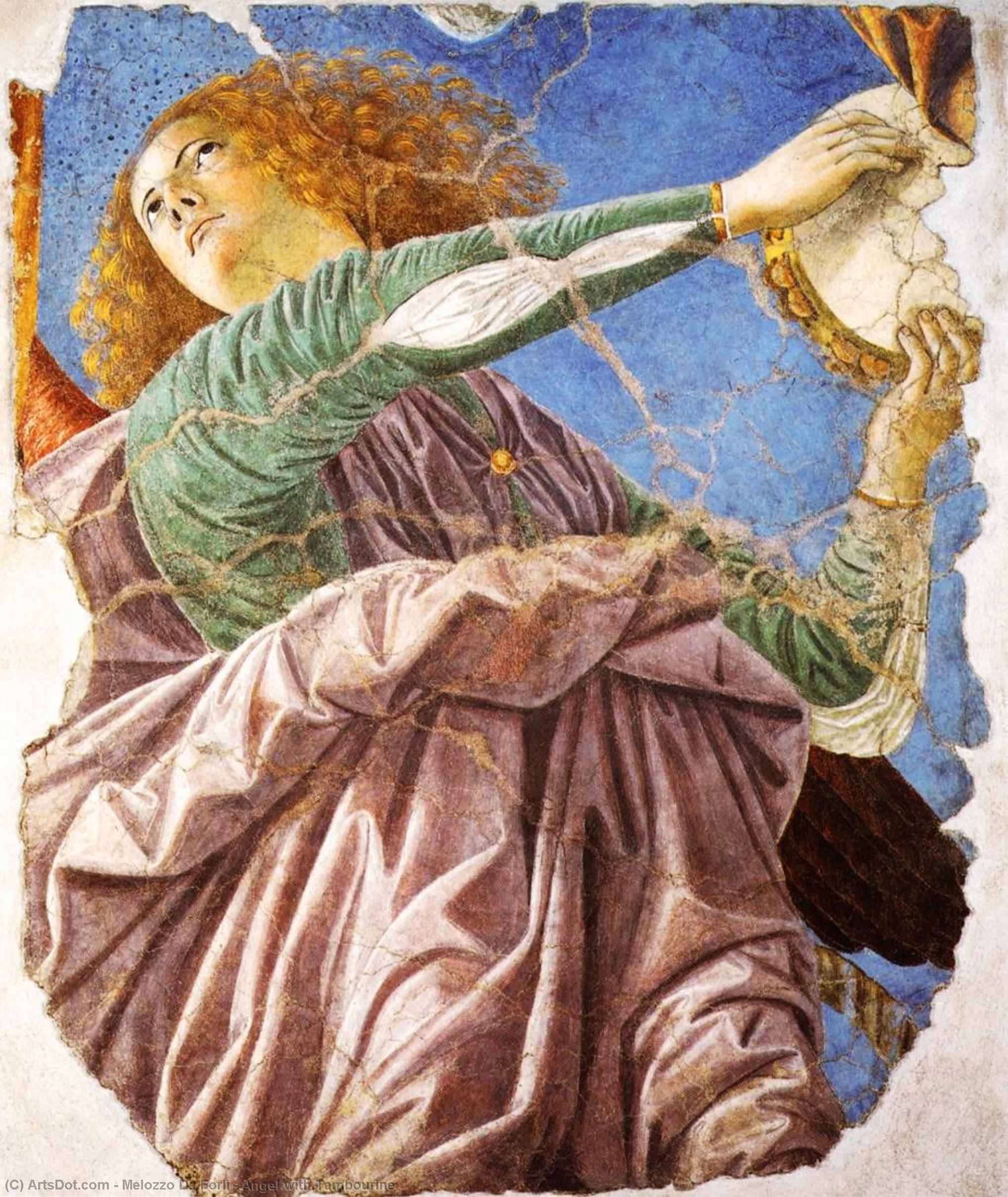
Experience the dawn of Renaissance perspective! Melozzo da Forlì's 'Angel with Tambourine,' housed in Vatican City, showcases masterful fresco technique and celestial beauty.
Discover Melozzo da Forlì (1438-1494), Renaissance master of perspective & foreshortening! Explore his frescoes, influence on Raphael & Mantegna, and innovative style.
Pinacoteca
(Vatican City, Italy)
Explore the Vatican Pinacoteca! Discover Renaissance & Baroque masterpieces by Raphael, Caravaggio & more within the historic halls of Vatican City.
The Enigmatic Visionary of Forlì: Melozzo da Forlì and the Dawn of Renaissance Perspective
Melozzo da Forlì, born around 1438 in the vibrant Italian city of Forlì, remains a somewhat elusive figure within the pantheon of Renaissance masters. Though his life spanned only fifty-six years, ending in November 1494, his impact on the development of perspective and fresco technique was profound, influencing generations of artists including Raphael and Andrea Mantegna. Details surrounding his early life are scarce; it is believed he hailed from a prosperous family named Ambrosi, and likely received his initial artistic training within the Forlivese school, absorbing the stylistic currents shaped by figures like Ansuino da Forlì—himself touched by the powerful influence of Andrea Mantegna. Some accounts even suggest humble beginnings as a journeyman and color-grinder, honing his craft through practical experience before ascending to prominence. Documented appearances in Forlì in 1460 and 1464 cemented his reputation as a skilled artist deeply rooted in the artistic traditions of his time.
A Fresco Master: “Angel with Tambourine” – A Window into Renaissance Innovation
“Angel with Tambourine,” painted circa 1480 by Melozzo da Forlì, stands as a testament to the burgeoning fascination with linear perspective during the High Renaissance. Commissioned by Cardinal Giuliano della Rovere for the apse of the Santi Apostoli basilica in Rome—a project later overseen by Pope Julius II—the fresco embodies the ambition and intellectual fervor characteristic of the era. It’s housed within Vatican City, Italy, ensuring its preservation as a cornerstone of artistic heritage. The artwork isn't merely aesthetically pleasing; it represents a pivotal moment in art history, demonstrating how artists were actively experimenting with techniques to create illusions of depth and space—a radical departure from earlier pictorial conventions.
Symbolism and Composition: Celestial Grace Embodied
The fresco’s composition is meticulously crafted to convey spiritual significance. At its core resides an angel, depicted holding a tambourine – a symbol of joy and divine music – poised in dynamic movement against a backdrop of azure sky speckled with shimmering stars. The angel's robe, rendered in verdant hues accented by gold trim, exudes regal splendor and underscores his elevated status as a messenger of God. Melozzo’s masterful use of color—particularly the luminous blues and golds—creates an ethereal atmosphere that elevates the scene beyond mere representation, inviting contemplation on themes of faith, grace, and divine harmony. The angel's flowing hair contributes to the impression of movement and vitality, mirroring the celestial realm it embodies.
Technique: Fresco – A Durable Legacy of Renaissance Craftsmanship
Melozzo da Forlì’s technique—fresco—is itself remarkable for its longevity and artistic sophistication. This method involves applying pigment onto wet plaster, allowing it to fuse chemically with the substrate over time, resulting in a surface that is incredibly resistant to weathering and degradation. Unlike tempera or oil paint, fresco requires painstaking preparation of the wall surface and careful layering of colors to achieve optimal luminosity and tonal accuracy. The artist’s meticulous attention to detail—evident in the rendering of textures and contours—further enhances the realism of the scene, demonstrating the mastery of Renaissance craftsmen who sought to capture the beauty and grandeur of the natural world with unprecedented precision.
Emotional Resonance: Inspiring Reverence and Artistic Wonder
“Angel with Tambourine” transcends mere visual description; it evokes a profound emotional response in viewers. The serene countenance of the angel, combined with the radiant colors and captivating perspective, inspires feelings of awe and reverence—a reflection of the spiritual aspirations prevalent during the Renaissance. It serves as an enduring reminder of humanity’s capacity for artistic creativity and its yearning to express transcendent ideals. Reproductions of this masterpiece continue to captivate audiences today, offering a glimpse into the artistic spirit of a bygone era and reaffirming the timeless beauty of classical art.