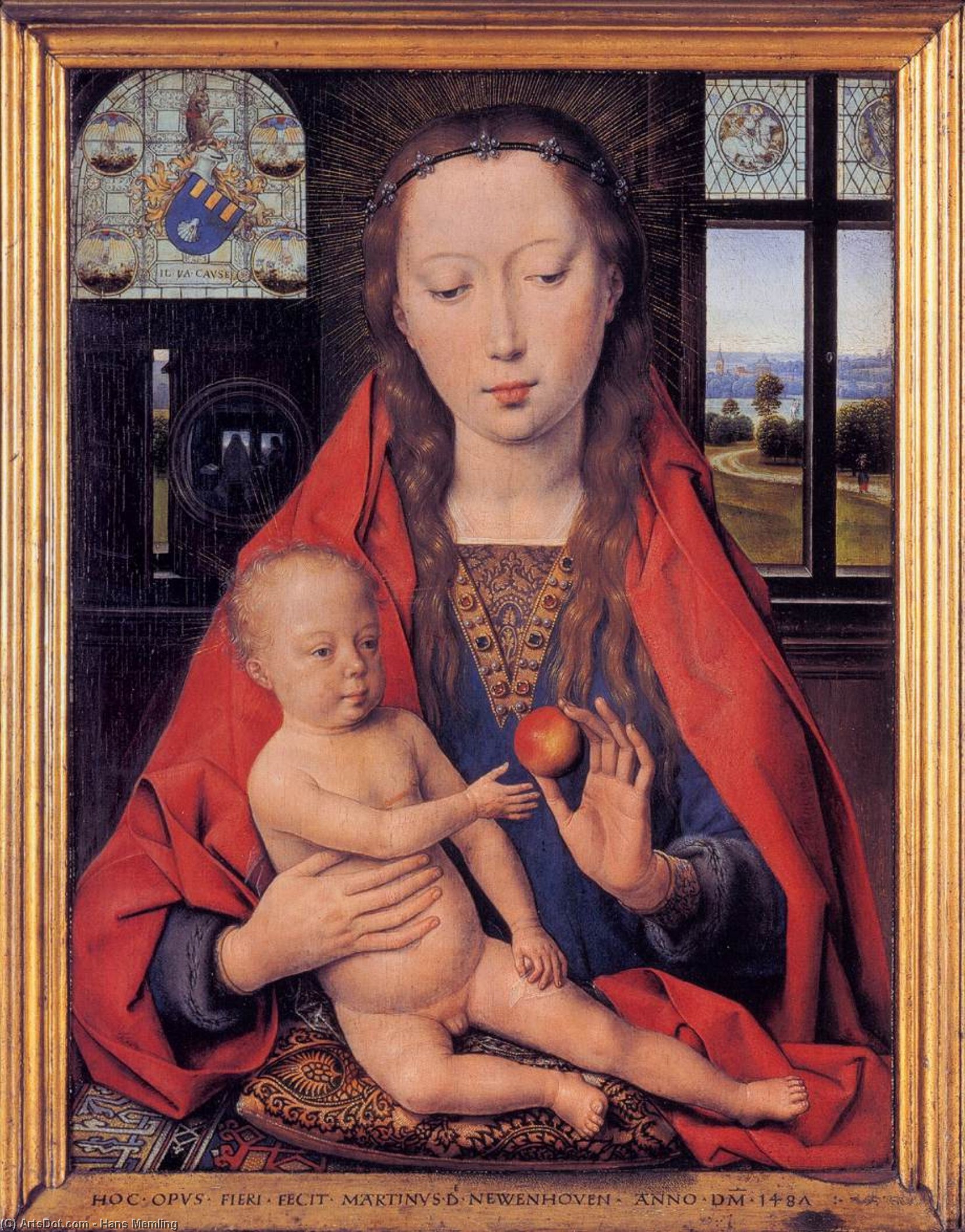
The Diptych of Maarten Nieuwenhove: A Bruges Masterpiece
This exquisite hand-painted reproduction captures a pivotal moment in the oeuvre of Hans Memling, a master of Early Netherlandish painting renowned for his meticulous detail and profound spiritual depth. Created in 1487, the “Diptych of Maarten Nieuwenhove” offers a glimpse into the devotional practices and artistic sensibilities of the late fifteenth century, specifically within the thriving art scene of Bruges – then a major European center for trade and artistic innovation.
- Subject Matter: The central panel depicts a serene Madonna and Child scene, instantly recognizable through the iconic portrayal of Mary cradling her infant son. The inclusion of a baby being fed from a bottle is a deliberate reference to the Eucharist, symbolizing Christ’s sacrifice and offering nourishment to the soul.
- Composition & Setting: The carefully constructed room setting – complete with a window, chair, and two clocks – elevates the scene beyond a simple devotional image. These elements were not merely decorative; they served as visual anchors, grounding the narrative within a believable, albeit idealized, domestic space. The placement of the apples further adds to the symbolic weight of the composition.
Hans Memling’s Technique and Style
Hans Memling's artistic legacy rests upon his unparalleled ability to render texture, light, and emotion with breathtaking realism. Trained under the tutelage of Rogier van der Weyden, a pioneer in oil painting techniques, Memling inherited a profound understanding of color mixing, glazing, and sculptural modeling – all crucial elements in achieving the luminous quality characteristic of his work. Notice the subtle gradations of tone within the drapery, the delicate rendering of the baby’s skin, and the meticulous detail of the room's furnishings. This panel exemplifies Memling’s mastery of *sfumato*, a technique that employs soft, hazy outlines to create an atmospheric effect, lending the scene a sense of depth and tranquility.
- Oil Paint Mastery: Memling was a leading proponent of oil painting, allowing for greater control over color and detail than previously possible with tempera.
- Attention to Detail: His meticulous approach is evident in every aspect of the composition, from the folds of Mary’s robes to the texture of the apples.
Symbolism and Historical Context
The “Diptych of Maarten Nieuwenhove” transcends a simple depiction of the Madonna and Child; it's laden with religious symbolism. The apples, traditionally associated with the Fall of Man in the Garden of Eden, represent both temptation and redemption – a reminder of humanity’s fallen state and the hope offered through Christ’s sacrifice. The presence of the clocks subtly underscores the passage of time and the urgency of spiritual devotion. Created during a period of intense religious fervor within Europe, this piece reflects the profound faith that permeated daily life. Memling's work was commissioned by wealthy patrons – often merchants or guilds – who sought to adorn their homes with objects of beauty and piety.
- Patronage & Commerce: Bruges’s prosperity as a trading hub fueled artistic patronage, allowing artists like Memling to flourish.
- Religious Devotion: The diptych reflects the deep religious beliefs prevalent in 15th-century Europe.
A Timeless Masterpiece – Perfect for Your Space
This hand-painted reproduction of the “Diptych of Maarten Nieuwenhove” offers a unique opportunity to own a piece of art history. Measuring 52 x 41 cm, it’s an ideal size for enhancing any interior space—from a private study to a gallery wall. The meticulous detail and luminous quality of this reproduction faithfully capture the essence of Memling's genius, bringing a touch of timeless beauty and spiritual contemplation into your home. Order yours today and experience the enduring power of one of the greatest works of Early Netherlandish art.