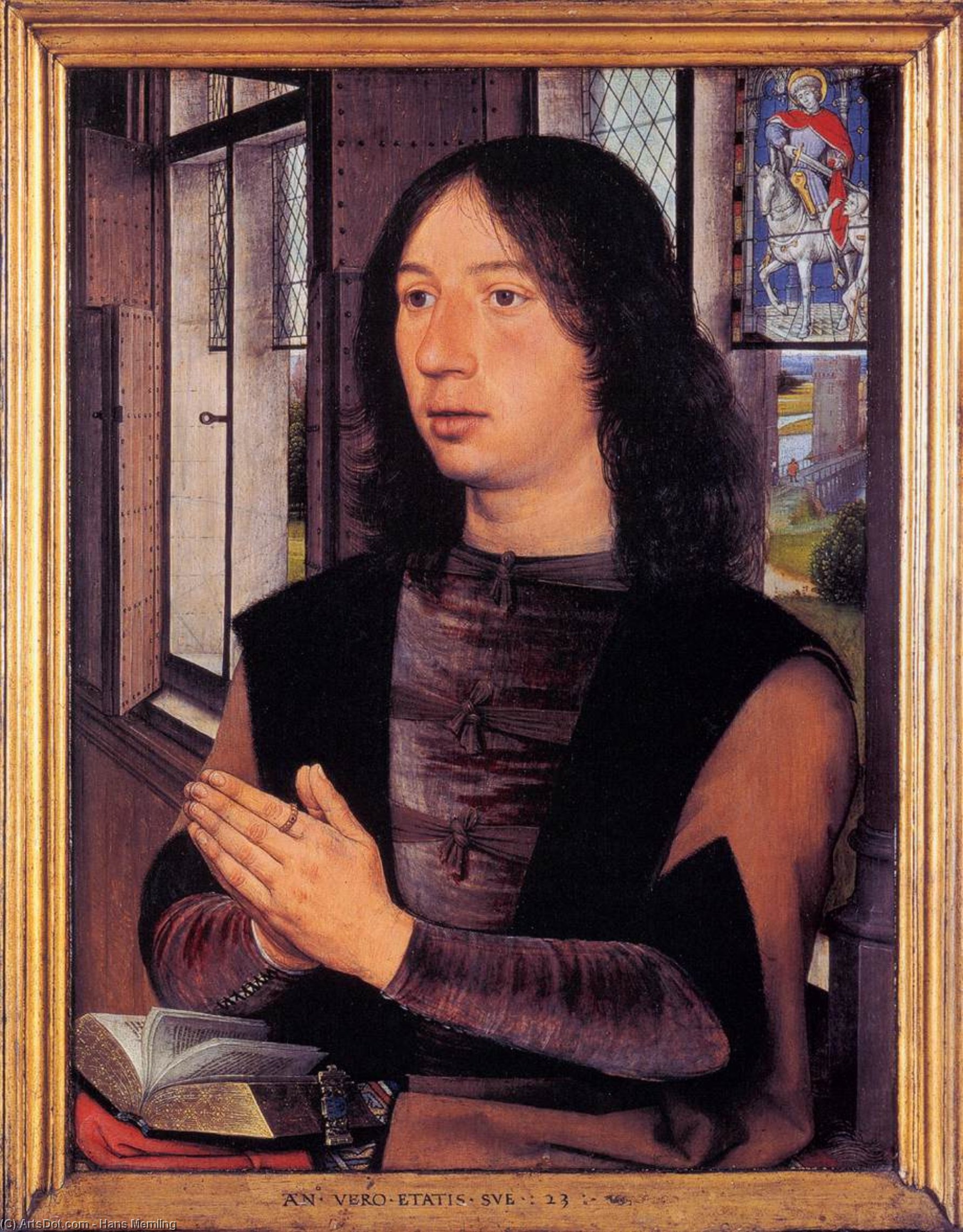
Diptych of Maarten Nieuwenhove (right panel)

Delve into Hans Memling’s masterful Bruges Diptych, capturing the solemn contemplation of Maarten Nieuwenhove with breathtaking detail and luminous windows—a testament to Early Netherlandish artistry inviting collectors to experience timeless beauty.


memling, hans

Discover Hans Memling’s stunning Early Netherlandish paintings in Bruges! Explore religious scenes & portraits at the Memling Museum, a Flemish Primitive masterpiece.

Memling Museum - Sint Jans Hospital (Brugge, Belgium)

Explore the artistic legacy of Hans Memling at the Memling Museum in Bruges! Discover stunning paintings, medieval history & a unique blend of art and architecture within Sint Jans Hospital.

A Portrait of Contemplation: Hans Memling’s Diptych of Maarten Nieuwenhove

  • Subject Matter: This arresting portrait depicts Maarten Nieuwenhove, a wealthy Bruges merchant and prominent figure in Flemish society. The artist meticulously captures his likeness with remarkable accuracy, focusing on conveying not merely physical appearance but also inner character—a man consumed by piety and profound reflection.
  • Style & Technique: Memling’s work exemplifies the High Renaissance style prevalent in Bruges during his lifetime, blending Flemish realism with Italian humanist ideals. Employing oil paint on panel, he achieves unparalleled detail through layering glazes and meticulous modeling—a technique honed under Rogier van der Weyden that ensured a luminous surface and sculptural depth.
  • Historical Context: Created in 1487, the Diptych stands as a testament to the flourishing artistic patronage of Bruges’ elite. Nieuwenhove commissioned Memling to commemorate his faith and honor God—a reflection of the broader spiritual fervor characterizing Northern Europe at the time. The piece aligns perfectly with the humanist movement's emphasis on human dignity and moral virtue.
  • Symbolism: The inclusion of two windows serves as a deliberate symbolic gesture, representing divine illumination and suggesting Nieuwenhove’s connection to God’s grace. The downward gaze of the sitter embodies humility and prayer—visual cues that underscore the painting's overarching theme of spiritual devotion.
  • Emotional Impact: Memling’s masterful composition evokes a palpable sense of solemnity and introspection. The subdued palette, combined with the careful rendering of textures and light, invites contemplation and encourages viewers to consider themes of faith, morality, and inner peace—a timeless appeal that continues to resonate with audiences today.