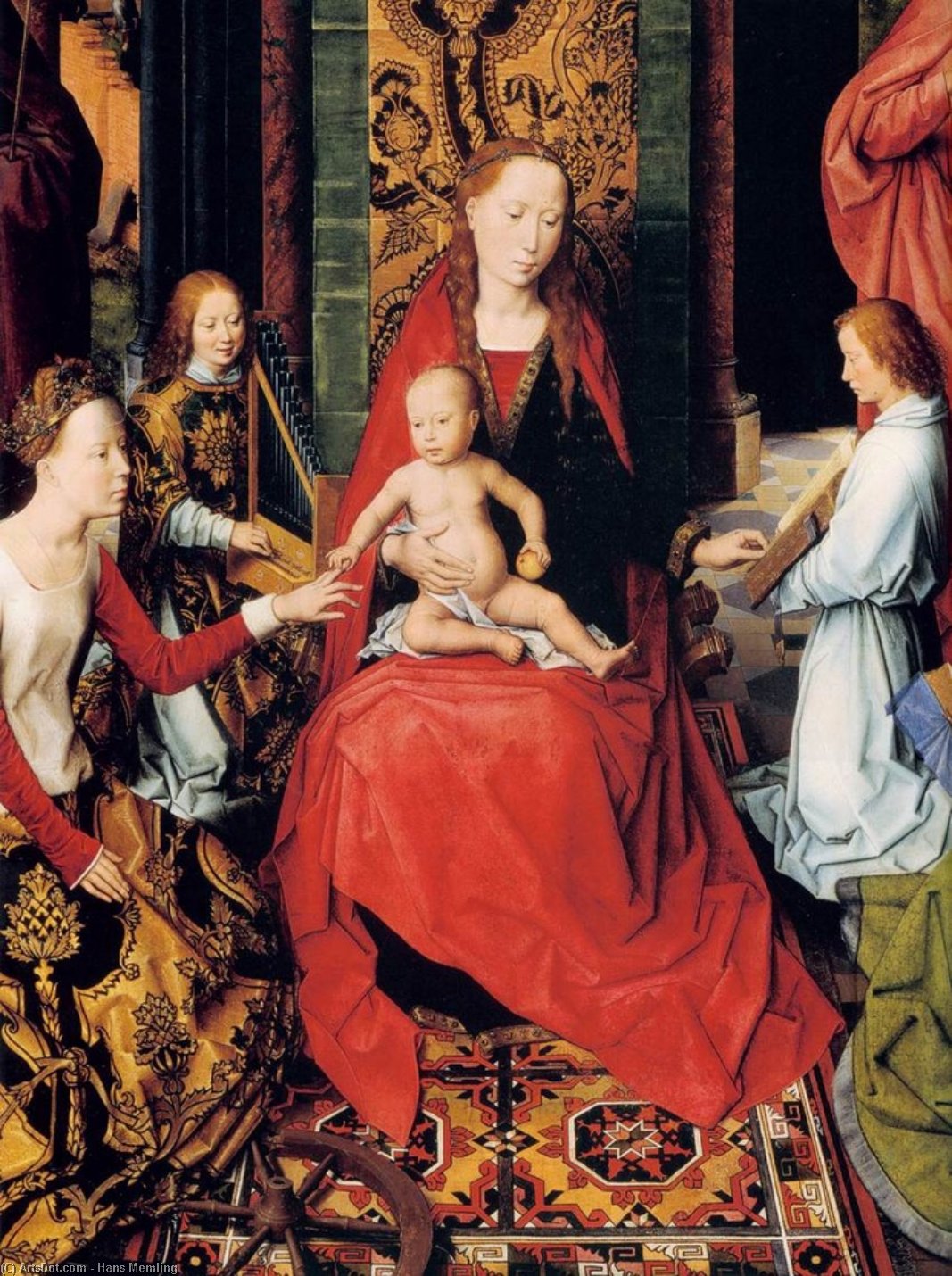
A Tender Moment in Bruges: A Detailed Examination of Hans Memling’s St John Altarpiece (Detail)
This exquisite detail from Hans Memling's "St John Altarpiece" offers an intimate glimpse into a world of profound faith and meticulous artistry. Painted in 1474, during the height of his career in Bruges, this scene captures a moment of serene tenderness – the Virgin Mary cradling the infant Jesus as he nurses. The painting’s power lies not just in its subject matter but also in Memling's unparalleled skill in rendering texture, light, and emotion, hallmarks of the Early Netherlandish style that would secure his legacy as one of the era’s most celebrated masters.
The Bruges Master: Hans Memling and His Workshop
Hans Memling (c. 1430 – 1494), born in Seligenstadt, Germany, represents a crucial bridge between the Gothic and Renaissance artistic traditions. Initially apprenticed to Rogier van der Weyden, Memling absorbed the Flemish master’s revolutionary techniques with oil paint and his profound understanding of human form. However, Memling quickly surpassed his teacher, developing a distinctive style characterized by an almost sculptural quality in his figures, combined with a remarkable sensitivity to color and detail. Crucially, he established a prolific workshop in Bruges, disseminating his refined aesthetic across Europe and ensuring the longevity of his artistic vision. The presence of multiple figures – Mary at the center, flanked by women, and supported by others – speaks to Memling’s understanding of courtly life and religious devotion within a complex social structure.
Technique and Material: A Symphony of Color and Texture
Memling's mastery is immediately apparent in the painting’s execution. The use of oil paint, perfected during this period, allowed for unprecedented levels of detail and luminosity. Observe how the artist builds up layers of color to create a rich, almost velvety texture on Mary’s robes and the baby Jesus’s skin. The red background, far from being merely decorative, serves to intensify the colors of the figures and creates a sense of depth within the composition. The meticulous attention to detail – the folds in the fabric, the delicate features of the infant, the subtle expressions on the faces of the onlookers – demonstrates Memling’s dedication to realism and his profound understanding of human anatomy and psychology. The instrument held by one of the figures likely represents a lute or violin, adding another layer of symbolic richness to the scene.
Symbolism and Spiritual Resonance
Beyond its technical brilliance, the "St John Altarpiece" (detail) is laden with symbolism. The act of nursing represents not only sustenance but also a profound spiritual connection between Mary and Jesus – a visual representation of divine love and nourishment. The presence of the women surrounding Mary underscores her role as a compassionate mother figure and highlights the importance of female piety within the religious context. The overall composition evokes a sense of warmth, peace, and reverence, inviting contemplation on themes of faith, family, and redemption. This piece exemplifies the core tenets of Early Netherlandish painting: a deep engagement with religious subject matter combined with an unparalleled commitment to artistic realism.