Discover Nicasius Bernaerts: Flemish painter of animals, hunting scenes & tapestries. Explore his iconic works from Italy & France – a master of animal art.
Explore the Louvre Museum in Paris! Home to iconic masterpieces like the Mona Lisa & Venus de Milo, journey through art history from ancient Egypt to Renaissance icons. Plan your visit today!
A Masterpiece of Flemish Naturalism: Exploring Nicasius Bernaerts’ Oiseaux et Faisans
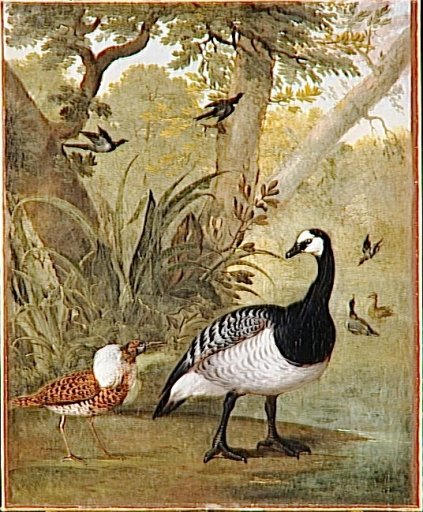
Nicasius Bernaerts' “Oiseaux et faisans,” a captivating watercolor or gouache study executed around 1650, stands as a testament to the artistic fervor of the Dutch Golden Age and exemplifies the meticulous observation of nature that characterized this era. More than just a depiction of birds and partridges amidst foliage, it embodies Bernaerts’s profound understanding of artistic technique and his ability to convey both visual beauty and emotional resonance—qualities highly sought after by discerning collectors and interior designers alike.
Subject Matter & Composition: Capturing the Essence of Wildlife
The painting centers on a carefully arranged group of waterfowl – geese primarily – alongside partridges nestled within a dense woodland setting. Bernaerts’s masterful composition draws the viewer's eye into the scene, prioritizing clarity and immediacy. The framing is tight, focusing intensely on the animals themselves, which are positioned prominently against a backdrop of scattered trees and undergrowth. This deliberate choice underscores Bernaerts’s commitment to portraying the natural world with unwavering realism—a hallmark of Flemish art during his time. Unlike many allegorical or mythological works prevalent in Europe at the moment, “Oiseaux et Faisans” eschews symbolic representation, instead prioritizing an honest depiction of animal behavior and habitat.
Style & Technique: Watercolor Precision and Layered Texture
Bernaerts’s artistic style is firmly rooted in the conventions of Flemish naturalism, mirroring the influence of Frans Snyders, his mentor. The painting demonstrates exceptional skill in rendering textures—particularly evident in the feathers of the birds and the bark of the trees—through a technique characterized by thin washes of watercolor or gouache applied in multiple layers. This layering process builds up form gradually, creating depth and luminosity while capturing subtle variations in tone and shading. Precise lines delineate the contours of the animals and foliage, contributing to the overall sense of realism and detail. The soft, diffused lighting suggests an overcast day, enhancing the tranquil atmosphere of the woodland scene.
Historical Context & Artistic Significance: Reflecting Dutch Renaissance Ideals
“Oiseaux et faisans” emerged during a period of unparalleled artistic innovation in Holland—the Dutch Golden Age (approximately 1600-1700). This era witnessed an explosion of creativity across various disciplines, fueled by economic prosperity and intellectual curiosity. Artists like Bernaerts embraced humanist ideals, prioritizing observation and representation of the natural world as vehicles for conveying beauty and moral contemplation. The painting’s inclusion in preparatory studies for larger tapestries commissioned by the Gobelins Manufactory speaks to its importance within the broader artistic landscape of Paris—demonstrating Bernaerts' contribution to decorative arts and furthering the dissemination of Flemish artistic excellence.
Emotional Impact & Aesthetic Appeal: A Moment Frozen in Time
Ultimately, “Oiseaux et faisans” transcends mere visual representation; it evokes a feeling of serenity and connection with nature. The subdued palette – browns, greens, ochres—combined with meticulous detailing creates an immersive experience for the viewer. It’s a piece that invites contemplation and appreciation for the artistry of Bernaerts and the enduring power of naturalistic painting to inspire awe and wonder. Its understated elegance continues to resonate with contemporary audiences who recognize its masterful execution and timeless beauty.