 Preview
 Send
Send Share
Share
 Details

 Download
 Similars
 X-Ray
X-Ray Diaporama
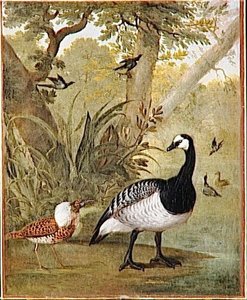
Oiseaux et faisans


 Read More
Hand Made Oil Reproduction
Hand-painted oil on canvas in your size and frame, made to order by our artists. ( Buy Print Buy Image)




P118B $10

P118H $10

P118W $10

P438Z $10

P508JH $12

P508YH $12

P805H $10

P805Z $10

P919BZ $10

P919G $10

P919XJ $10

P959ZH $10

P968JZ $12

W106C $8

W218G $10

W218JH $8

W218Y $10

W307PJ $10

W316G $10

W316PJ $8

W316Y $10

W398PJ $8

W4111J $10

W500HY $15

W500JH $15

W692G $12

W849H $8

W940BG $15

W953PJ $8




Pick from our preset sizes that match the artwork's original proportions.

You may enter your own dimensions to fit a specific frame or space. If your selected size does not match the original image's proportions, we will either crop the artwork or extend the painting with additional hand-painted elements. A digital mockup will be sent for your approval before production begins.
Please note that the on-screen preview does not reflect the actual cropping or extension. Only the mockup will accurately show the final composition.
While custom sizes are available, we recommend selecting a dimension from the predefined list to preserve the original proportions.
After order, ArtsDot.com team will email client for instructions and provide a mockup preview
Worldwide Delivery () in 3/4 weeks instead of standard 5 weeks. (17 August). No compromise on quality.

Free Worldwide Express Shipping

High-Quality Linen Canvas

Full Shipping Insurance

Customs Tax Refund Guarantee

True Color Matching Guarantee

60-Day Return Policy (Defects Only)

100% Money-Back Guarantee

Bulk Discount Offer
 Glass option is only available in size under 110 CM

Oiseaux et faisans
Reproduction Medium
Reproduction Size
-


Total Price
$ 263
Artwork Description
A Masterpiece of Flemish Naturalism: Exploring Nicasius Bernaerts’ Oiseaux et Faisans
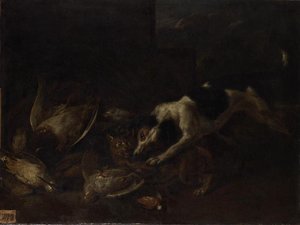
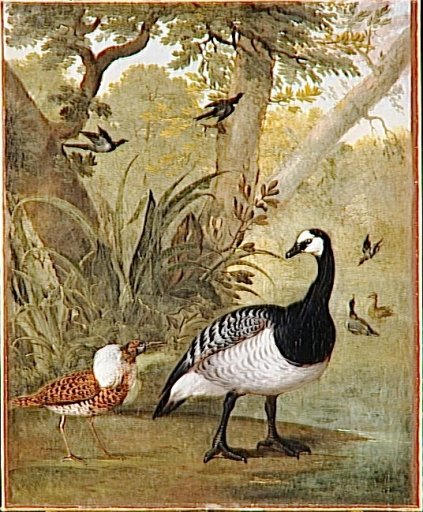
Nicasius Bernaerts' “Oiseaux et faisans,” a captivating watercolor or gouache study executed around 1650, stands as a testament to the artistic fervor of the Dutch Golden Age and exemplifies the meticulous observation of nature that characterized this era. More than just a depiction of birds and partridges amidst foliage, it embodies Bernaerts’s profound understanding of artistic technique and his ability to convey both visual beauty and emotional resonance—qualities highly sought after by discerning collectors and interior designers alike.Subject Matter & Composition: Capturing the Essence of Wildlife
The painting centers on a carefully arranged group of waterfowl – geese primarily – alongside partridges nestled within a dense woodland setting. Bernaerts’s masterful composition draws the viewer's eye into the scene, prioritizing clarity and immediacy. The framing is tight, focusing intensely on the animals themselves, which are positioned prominently against a backdrop of scattered trees and undergrowth. This deliberate choice underscores Bernaerts’s commitment to portraying the natural world with unwavering realism—a hallmark of Flemish art during his time. Unlike many allegorical or mythological works prevalent in Europe at the moment, “Oiseaux et Faisans” eschews symbolic representation, instead prioritizing an honest depiction of animal behavior and habitat.Style & Technique: Watercolor Precision and Layered Texture
Bernaerts’s artistic style is firmly rooted in the conventions of Flemish naturalism, mirroring the influence of Frans Snyders, his mentor. The painting demonstrates exceptional skill in rendering textures—particularly evident in the feathers of the birds and the bark of the trees—through a technique characterized by thin washes of watercolor or gouache applied in multiple layers. This layering process builds up form gradually, creating depth and luminosity while capturing subtle variations in tone and shading. Precise lines delineate the contours of the animals and foliage, contributing to the overall sense of realism and detail. The soft, diffused lighting suggests an overcast day, enhancing the tranquil atmosphere of the woodland scene.Historical Context & Artistic Significance: Reflecting Dutch Renaissance Ideals
“Oiseaux et faisans” emerged during a period of unparalleled artistic innovation in Holland—the Dutch Golden Age (approximately 1600-1700). This era witnessed an explosion of creativity across various disciplines, fueled by economic prosperity and intellectual curiosity. Artists like Bernaerts embraced humanist ideals, prioritizing observation and representation of the natural world as vehicles for conveying beauty and moral contemplation. The painting’s inclusion in preparatory studies for larger tapestries commissioned by the Gobelins Manufactory speaks to its importance within the broader artistic landscape of Paris—demonstrating Bernaerts' contribution to decorative arts and furthering the dissemination of Flemish artistic excellence.Emotional Impact & Aesthetic Appeal: A Moment Frozen in Time
Ultimately, “Oiseaux et faisans” transcends mere visual representation; it evokes a feeling of serenity and connection with nature. The subdued palette – browns, greens, ochres—combined with meticulous detailing creates an immersive experience for the viewer. It’s a piece that invites contemplation and appreciation for the artistry of Bernaerts and the enduring power of naturalistic painting to inspire awe and wonder. Its understated elegance continues to resonate with contemporary audiences who recognize its masterful execution and timeless beauty.Related Artworks
Artist Biography
Nicasius Bernaerts: A Flemish Master of Animal Art
Nicasius Bernaerts, Monsù Nicasio or simply Nicasius (15 March 1620, Antwerp – 16 September 1678, Paris) was a Flemish painter of animals, hunting pieces and flowers who had an international career in Italy and Paris. He worked in his native Antwerp, Italy and France. In the final part of his career he worked for the French court and provided tapestry designs to the Gobelins Manufactory in Paris.- Early Life & Training: Bernaerts was born in Antwerp, a city renowned for its artistic heritage. He began his artistic journey under the tutelage of Frans Snyders, arguably the most celebrated animal painter of his time in Flanders. Snyders’s masterful depictions of wildlife and hunting scenes profoundly influenced Bernaerts's style and technique.
- Italian Period & Recognition: Following his training, Bernaerts embarked on a formative trip to Italy where he adopted the moniker ‘Monsù Nicasio’. His work quickly gained acclaim, attracting the patronage of Ferdinando II de’ Medici, Grand Duke of Tuscany, demonstrating the burgeoning interest in Flemish art within the Italian Renaissance.
- French Career & Royal Patronage: Bernaerts subsequently relocated to France around 1643 and established himself as a prolific artist in Paris for several years. He was admitted into the Royal Academy of Painting and Sculpture in 1663, securing royal commissions that cemented his reputation as a leading figure in French Baroque art. Notably, Louis XIV entrusted him with the task of painting animals from his newly formed menagerie at Versailles – a monumental undertaking reflecting the grandeur of the monarchy and Bernaerts’s skill in capturing animal anatomy and behavior.
- Tapestry Design & Artistic Legacy: Bernaerts's contribution extended beyond individual paintings; he served as a designer for the Gobelins Manufactory, producing stunning tapestry panels that showcased his artistic vision. Furthermore, he worked for the royal real estate office (garde-meuble de la couronne), supplying animal studies and artworks to adorn the palaces of Versailles and Fontainebleau.
- Later Life & Artistic Influence: Bernaerts’s later years were marked by hardship due to alcoholism, tragically diminishing his artistic output. He died in poverty in 1678, leaving behind a legacy as one of Flanders's most accomplished animal painters. Alexandre-François desportes, Bernaerts’s pupil, carried forward his stylistic innovations and contributed to the continuation of Flemish animal art traditions.
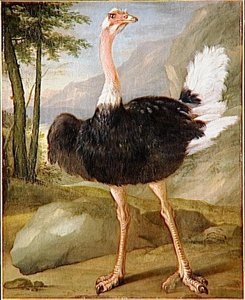
nicasius bernaerts
1620 - 1678
Quick Facts
- Artistic Movement Or Style: Baroque
- Artists Or Movements Influenced By This Artist: David de Koninck
- Artists Who Influenced This Artist: Frans Snyders
- Date Of Birth: 1620
- Date Of Death: 1678
- Full Name: Nicasius Bernaerts
- Nationality: Flemish
- Notable Artworks:
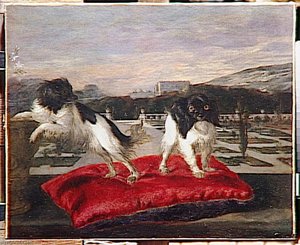
- DEUX PETITS CHIENS
- Oiseaux et faisans
- Autruche
- Place Of Birth: Antwerp
Related Articles

Dutch Masters: 10 Golden Age Paintings That Still Inspire |
Journey into the Dutch Golden Age! Explore 10 iconic paintings by Rembrandt, Vermeer & Hals. Discover the stories behind these Baroque masterpieces and find museum-quality art reproductions to elevate your home decor on .

Watercolor Wonders: 10 Masterpieces That Redefined Art History | ArtsDot
Journey through 10 legendary watercolor masterpieces by Sargent, Turner & Homer! Explore iconic landscapes, portraits & floral art that redefined history. Find museum-quality reproductions and curated decor ideas at ArtsDot.com.

Golden Age Reflections: Dutch Baroque Painting & Cultural Innovation
Explore the Dutch Golden Age of painting! Discover key artists like Vermeer & ter Borch, their innovative techniques, and the rich cultural context behind these Baroque masterpieces. Learn about collecting & appreciating this iconic art period.
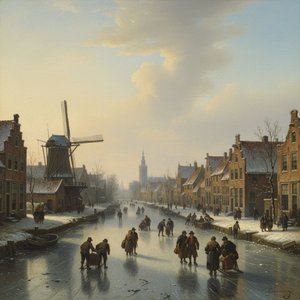
Charles Leickert: Capturing the Dutch Golden Age Light – A Comprehensive Study of Technique, Context, and Legacy
Explore the captivating winter landscapes of Charles Leickert, a master of Dutch Golden Age light & atmosphere. Discover his techniques, symbolism, and lasting legacy – a comprehensive study for art enthusiasts and collectors.

Illuminating Innovation: Exploring the Dutch Golden Age of Painting
Explore the Dutch Golden Age of painting with ArtsDot. Discover Rembrandt, Vermeer & other Masters. Learn about key characteristics, iconic artworks, and lasting influence. Expert insights for collectors & enthusiasts.