The painting "
Virgin and Child Enthroned" by
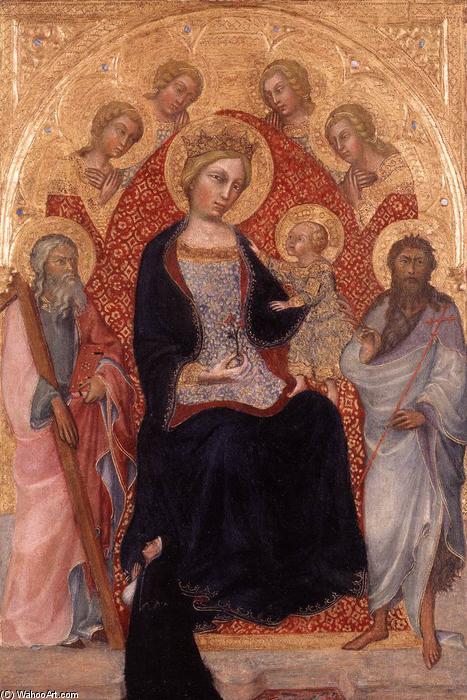
Paolo Di Giovanni Fei is a stunning example of Gothic art, characterized by its intricate detailing and use of gold leaf for decorative effect. Created in 1385, this tempera painting measures 44 x 29 cm and is housed at the Lindenau-Museum in Altenburg, Germany.
Artistic Style and Technique
The artist's skillful handling of the medium is evident in the meticulous rendering of the figures' faces, clothing, and surrounding architectural elements. The use of gold leaf on the background adds a sense of opulence and divine light to the scene. This style is reminiscent of the
Gothic Art Movement, which developed in Northern France out of Romanesque art in the 12th century AD.
Symbolism and Iconography
The central figure is the
Virgin Mary, who is seated on a throne with her child,
Jesus Christ, on her lap. Both figures are adorned with halos, signifying their divine status. The baby Jesus is depicted wearing a red garment, a color that traditionally represents the blood of Christ and his sacrifice for humanity. The surrounding angels and saints are also dressed in elaborate robes and headdresses, typical elements of religious iconography from this era.
Key Features: - The painting's use of gold leaf and tempera creates a sense of luxury and grandeur
- The artist's attention to detail is evident in the intricate rendering of the figures' faces and clothing
- The symbolism and iconography used in the painting are characteristic of Gothic art
For more information on this painting, visit
Paolo Di Giovanni Fei: Virgin and Child Enthroned or explore other works by the artist, such as
Virgin and Child Enthroned (detail).
The beauty of Gothic art is on full display in this stunning painting, making it a must-see for art lovers and historians alike.