 Preview
 Send
Send Share
Share
 Details

 Download
 Similars
 X-Ray
X-Ray Diaporama
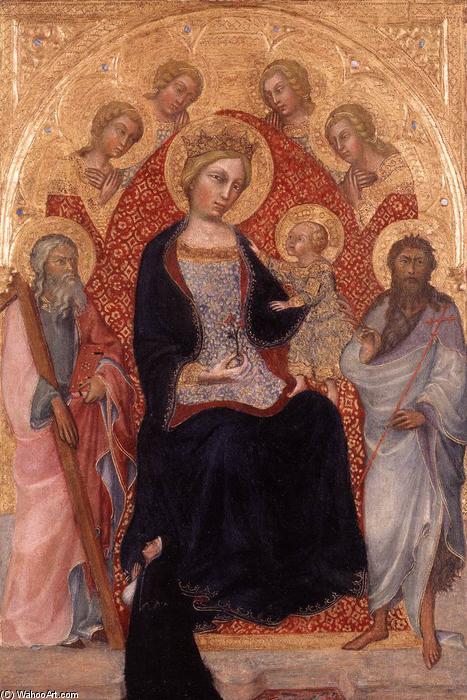
Virgin and Child Enthroned
 1385
1385 44.0 x 29.0 cm
 Lindenau-Museum
 Read More
Hand Made Oil Reproduction
Hand-painted oil on canvas in your size and frame, made to order by our artists. ( Buy Print Buy Image)




































Pick from our preset sizes that match the artwork's original proportions.

You may enter your own dimensions to fit a specific frame or space. If your selected size does not match the original image's proportions, we will either crop the artwork or extend the painting with additional hand-painted elements. A digital mockup will be sent for your approval before production begins.
Please note that the on-screen preview does not reflect the actual cropping or extension. Only the mockup will accurately show the final composition.
While custom sizes are available, we recommend selecting a dimension from the predefined list to preserve the original proportions.
After order, ArtsDot.com team will email client for instructions and provide a mockup preview
Worldwide Delivery () in 3/4 weeks instead of standard 5 weeks. (22 August). No compromise on quality.

Free Worldwide Express Shipping

High-Quality Linen Canvas

Full Shipping Insurance

Customs Tax Refund Guarantee

True Color Matching Guarantee

60-Day Return Policy (Defects Only)

100% Money-Back Guarantee

Bulk Discount Offer
 Glass option is only available in size under 110 CM

Virgin and Child Enthroned
Reproduction Medium
Reproduction Size
-


Total Price
$ 263
Artwork Description
Artistic Style and Technique
The artist's skillful handling of the medium is evident in the meticulous rendering of the figures' faces, clothing, and surrounding architectural elements. The use of gold leaf on the background adds a sense of opulence and divine light to the scene. This style is reminiscent of the Gothic Art Movement, which developed in Northern France out of Romanesque art in the 12th century AD.Symbolism and Iconography
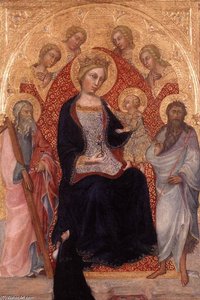
The central figure is the Virgin Mary, who is seated on a throne with her child, Jesus Christ, on her lap. Both figures are adorned with halos, signifying their divine status. The baby Jesus is depicted wearing a red garment, a color that traditionally represents the blood of Christ and his sacrifice for humanity. The surrounding angels and saints are also dressed in elaborate robes and headdresses, typical elements of religious iconography from this era. Key Features:- The painting's use of gold leaf and tempera creates a sense of luxury and grandeur
- The artist's attention to detail is evident in the intricate rendering of the figures' faces and clothing
- The symbolism and iconography used in the painting are characteristic of Gothic art
The beauty of Gothic art is on full display in this stunning painting, making it a must-see for art lovers and historians alike.
Related Artworks
Artist Biography
Pietro Lorenzetti: Pioneer of Naturalism in Siena
Pietro Lorenzetti, born around 1280 and tragically dying in 1348 during the devastating Black Death pandemic, remains a pivotal figure in the evolution of Italian painting. Often referred to as Pietro Laurati – a misreading by Vasari that obscured his familial connection – he was a Sienese painter whose work marked a significant departure from the prevailing Byzantine-influenced style and laid the groundwork for the burgeoning naturalism that would characterize the Renaissance. His life, though tragically short, witnessed a dramatic shift in artistic sensibilities within Siena, driven largely by his collaboration with his younger brother, Ambrogio Lorenzetti, and their engagement with the innovative techniques of Giotto and Giovanni Pisano. Lorenzetti’s early career is somewhat shrouded in mystery, yet evidence suggests he spent formative years working alongside Simone Martini at Assisi. This association exposed him to the refined elegance of Sienese painting while simultaneously introducing him to a more grounded approach to representation. Crucially, his time in Florence during the 1320s and 1330s proved transformative. He immersed himself in the artistic environment fostered by Giotto’s groundbreaking frescoes in the Bardi and Peruzzi Chapels of Santa Croce, as well as the dramatic narratives of Maso di Banco's Arena Chapel. These experiences instilled within him a desire to move beyond the stylized, ethereal depictions prevalent at the time, seeking instead to capture human emotion and spatial relationships with greater accuracy and realism.A Revolutionary Approach: Naturalism and Spatial Innovation
Lorenzetti’s most enduring legacy lies in his pioneering use of naturalism within Sienese art. Unlike the predominantly symbolic and flattened perspectives of earlier works, Lorenzetti sought to create a sense of depth and three-dimensionality on canvas. He achieved this through meticulous observation of human anatomy, realistic portrayals of drapery, and an innovative approach to architectural integration – a technique he shared with his brother. Their frescoes for the lower church of San Francesco in Assisi exemplify this revolutionary style. The *Crucifixion*, *Deposition from the Cross*, and *Entombment* are not merely narrative scenes; they are dynamic compositions filled with emotionally charged figures rendered with remarkable psychological insight. The spatial arrangements within these panels were particularly groundbreaking. Lorenzetti didn’t simply depict a flat surface; he created an illusion of space, utilizing techniques such as atmospheric perspective – suggesting distance through the fading of colors and details – and carefully constructed foregrounds and backgrounds. This departure from traditional Byzantine conventions was not merely stylistic; it reflected a deeper philosophical shift towards understanding the world through observation and experience. His work foreshadowed the Renaissance emphasis on humanism and the pursuit of knowledge, demonstrating an early awareness of the potential for art to represent reality with unprecedented fidelity.Key Works and Influences
Several key works illuminate Lorenzetti’s artistic development and his engagement with contemporary trends. The *Nativity of the Virgin* (c. 1335-1342), now housed in the Museo dell'Opera del Duomo in Siena, stands as a testament to his mastery of tempera paint and his innovative approach to architectural integration. The figures seem to emerge organically from the painted architecture, blurring the boundaries between reality and representation. Similarly, his *Beata Umiltà Altarpiece* (c. 1340), commissioned for the women’s convent of the Donne di Faenza in Florence, showcases his ability to convey complex emotions through subtle gestures and facial expressions. Lorenzetti's artistic influences were diverse and significant. He clearly admired the naturalism of Giovanni Pisano, evident in the dynamism and emotional intensity of his figures. The influence of Giotto is also palpable, particularly in his use of narrative space and his focus on human emotion. However, Lorenzetti’s work transcends mere imitation; he synthesized these influences into a uniquely Sienese style that anticipated the innovations of the Renaissance masters.Legacy and Historical Significance
Pietro Lorenzetti's contribution to art history is profound. He was not merely a painter; he was a pioneer who challenged established conventions and paved the way for future generations of artists. His experiments with naturalism, spatial innovation, and psychological realism profoundly influenced the development of Sienese painting and, ultimately, the entire trajectory of Western art. Although his life was cut short by the Black Death, his artistic legacy continues to resonate today, reminding us of the transformative power of observation, experimentation, and a deep engagement with the human condition. His work serves as a crucial bridge between the medieval world and the dawn of the Renaissance, demonstrating that even within the constraints of tradition, artists could push the boundaries of creativity and reshape the very fabric of visual culture.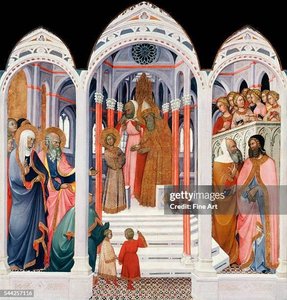
paolo di giovanni fei
1345 - 1411 , Italy
Quick Facts
- Artistic Movement Or Style: Naturalism, Proto-Renaissance
- Artists Or Movements Influenced By This Artist:
- Sienese School
- Renaissance
- Artists Who Influenced This Artist:
- Giovanni Pisano
- Giotto
- Date Of Birth: c. 1280
- Date Of Death: 1348
- Full Name: Pietro Lorenzetti
- Nationality: Italian
- Notable Artworks:
- Nativity of the Virgin
- Beata Umiltà Altarpiece
- Place Of Birth: Siena, Italy