A Shadowy Figure in Late Gothic Art
The identity of the “Master of the Life of the Virgin” remains one of art history’s most enduring mysteries. This elusive 15th-century Flemish painter, active primarily in Cologne and identified through his remarkably consistent style and a body of devotional panels depicting scenes from Mary's life, operated under an assumed name – a common practice among artists of the period. Often referred to as the “Meister des Marienlebens” (Master of the Virgin), or occasionally Johann van Duyren, he’s a figure shrouded in anonymity, yet his work profoundly influenced generations of Northern European painters. His legacy lies not just in the beauty of his paintings but also in the questions they raise about artistic attribution and the nature of creative genius.
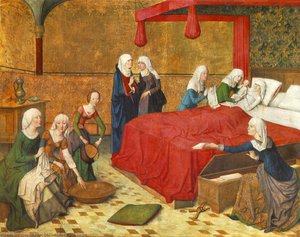
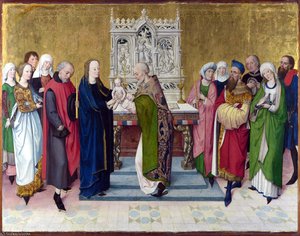
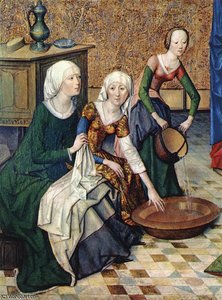
The earliest evidence of his workshop dates back to around 1463, with the completion of a series of eight panels for the Ursulakirche (Ursuline Church) in Cologne. These scenes – including the Annunciation, Visitation, Nativity, Presentation in the Temple, Flight into Egypt, and various episodes from Mary’s childhood and later life – quickly established his reputation. The style is characterized by its serene elegance, a masterful use of color, and a remarkable attention to detail. He drew heavily on the influence of Netherlandish masters like Dirk Bouts and Rogier van der Weyden, incorporating their sophisticated draftsmanship and expressive figures into his own distinctive vision. However, he possessed a unique ability to imbue these borrowed elements with a profound sense of piety and emotional depth.
The Corpus of Works: A Devotional Cycle
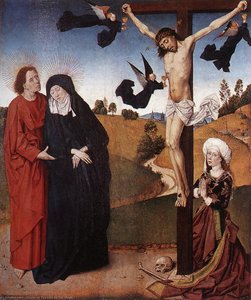
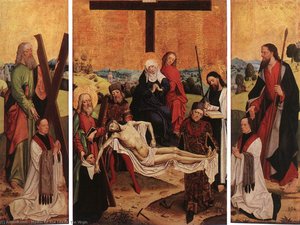
Beyond the panels from Cologne, the Master’s workshop produced a significant body of work, primarily centered around altarpieces and individual devotional paintings. Notable examples include a striking Crucifixion for the hospital chapel in Bernkastel-Kues, an Adoration of the Magi for the Germanisches Nationalmuseum in Nuremberg, and a captivating Deposition at the Wallraf-Richartz Museum in Cologne. The “Triptych of Canon Gerhard ter Streegen de Monte” is another significant work, showcasing his skill in composition and narrative storytelling. The consistent quality across these diverse works—ranging from large-scale altarpieces to intimate devotional panels—demonstrates a highly organized and disciplined workshop, suggesting the involvement of numerous assistants and followers.
Interestingly, many of the scenes from the Life of the Virgin were not considered central or particularly important within the broader narrative. The Master’s cycle often included less-celebrated episodes, such as the Presentation of Mary at the Temple, reflecting a deep understanding of Marian devotion and a desire to offer a comprehensive portrayal of her life. The scarcity of surviving examples—particularly the central panel from the Werden altarpiece—further complicates our understanding of his output and contributes to the enduring mystery surrounding this artist.
Technique and Style: A Synthesis of Influences
The Master’s style is a compelling synthesis of Northern European Gothic and Early Renaissance influences. He employed tempera on wood, a technique favored by artists in the region at the time, achieving remarkable luminosity and detail. His figures are rendered with a graceful elegance, characterized by flowing drapery, subtle modeling, and expressive gestures. He demonstrated a sophisticated understanding of perspective and spatial relationships, creating scenes that feel both intimate and monumental. The use of color is particularly noteworthy—a rich palette of reds, blues, and golds, carefully balanced to create a sense of harmony and serenity.
The influence of Netherlandish masters is readily apparent in his draftsmanship and compositional structure. However, the Master’s work transcends mere imitation; he infused these borrowed elements with his own unique sensibility, creating paintings that are both technically proficient and emotionally resonant. His ability to convey a sense of profound piety and spiritual contemplation distinguishes him as one of the most important figures in late Gothic painting.
Historical Significance: A Window into Northern Renaissance Devotion
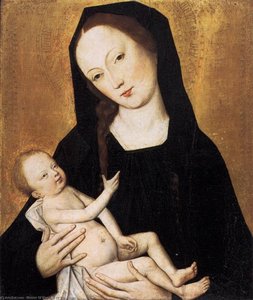
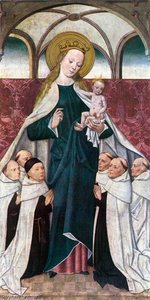
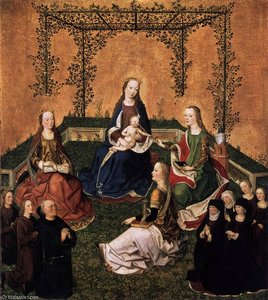
The Master of the Life of the Virgin’s work offers invaluable insights into the religious and artistic landscape of 15th-century Germany. His devotional panels reflect the growing importance of Mary within Christian piety, as well as the increasing demand for images of the Virgin and Child in private homes and churches. The cycle he created exemplifies the widespread practice of commissioning altarpieces and individual paintings depicting scenes from the Life of the Virgin—a testament to the enduring power of Marian devotion.
Despite the lack of a definitive identity, the Master’s work continues to captivate viewers with its beauty, serenity, and profound spiritual depth. He remains an enigmatic figure in art history, a shadowy master whose paintings serve as a poignant reminder of the mysteries that surround artistic creation and the enduring power of faith.