 Preview
 Send
Send Share
Share
 Details

 Download
 Similars
 X-Ray
X-Ray Diaporama
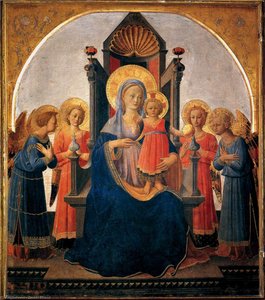
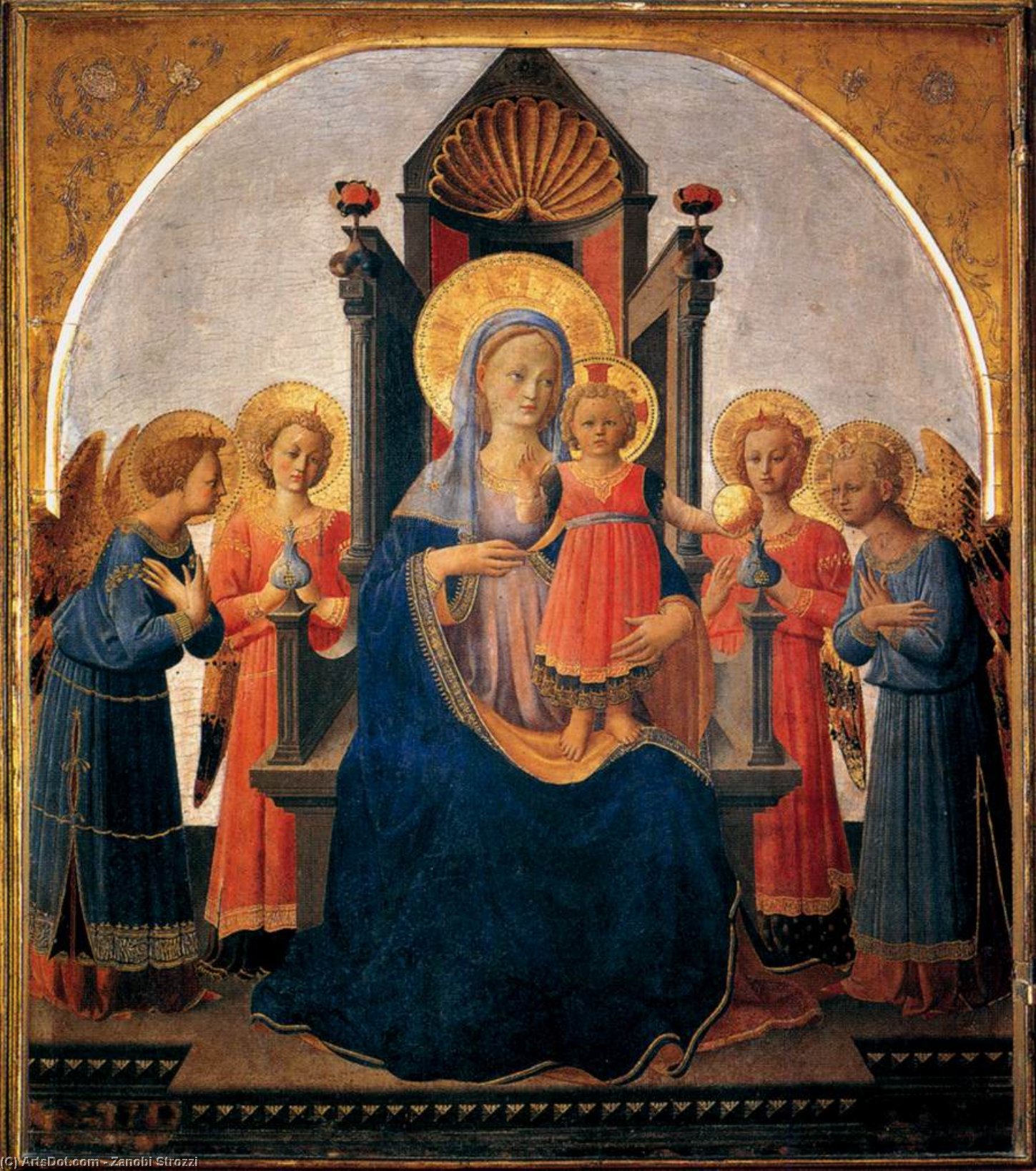
Madonna and Child with Angels
 Oil On Canvas
- WallArt
- Early Renaissance
 1434
1434- Renaissance
 138.0 x 127.0 cm
 Convent of San Marco
 Read More
Hand Made Oil Reproduction
Hand-painted oil on canvas in your size and frame, made to order by our artists. ( Buy Print Buy Image)




P118B $10

P118H $10

P118W $10

P438Z $10

P508JH $12

P508YH $12

P805H $10

P805Z $10

P919BZ $10

P919G $10

P919XJ $10

P959ZH $10

P968JZ $12

W106C $8

W218G $10

W218JH $8

W218Y $10

W307PJ $10

W316G $10

W316PJ $8

W316Y $10

W398PJ $8

W4111J $10

W500HY $15

W500JH $15

W692G $12

W849H $8

W940BG $15

W953PJ $8




Pick from our preset sizes that match the artwork's original proportions.

You may enter your own dimensions to fit a specific frame or space. If your selected size does not match the original image's proportions, we will either crop the artwork or extend the painting with additional hand-painted elements. A digital mockup will be sent for your approval before production begins.
Please note that the on-screen preview does not reflect the actual cropping or extension. Only the mockup will accurately show the final composition.
While custom sizes are available, we recommend selecting a dimension from the predefined list to preserve the original proportions.
After order, ArtsDot.com team will email client for instructions and provide a mockup preview
Worldwide Delivery () in 3/4 weeks instead of standard 5 weeks. (16 August). No compromise on quality.

Free Worldwide Express Shipping

High-Quality Linen Canvas

Full Shipping Insurance

Customs Tax Refund Guarantee

True Color Matching Guarantee

60-Day Return Policy (Defects Only)

100% Money-Back Guarantee

Bulk Discount Offer
 Glass option is only available in size under 110 CM

Madonna and Child with Angels
Reproduction Medium
Reproduction Size
-


Total Price
$ 263
Artwork Description
A Vision of Divine Grace: Zanobi Strozzi's Madonna and Child with Angels
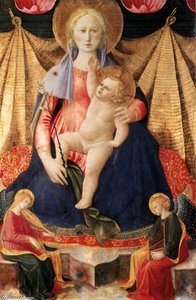
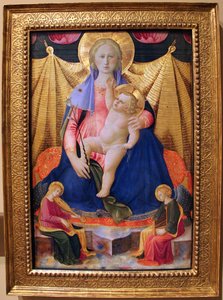
To gaze upon this masterpiece by Zanobi Strozzi is to step directly into the luminous heart of the Early Renaissance. The scene unfolds with an almost palpable sense of sacred tranquility, centering on the Virgin Mary cradling the divine presence of the Christ Child. It is more than a mere portrait; it is a profound meditation on motherhood, divinity, and eternal love. Strozzi masterfully captures that delicate balance between earthly tenderness and heavenly majesty. The composition draws the eye immediately to the intimate connection between mother and child, while the surrounding angels act as celestial witnesses, their presence elevating the moment from a private embrace to a universal testament of faith.
Technique and Luminous Detail
Strozzi’s handling of paint speaks volumes about his technical brilliance. The rich, vibrant palette employed throughout the work bathes the figures in an ethereal glow, suggesting both the warmth of human connection and the cool luminescence of divine light. One can observe the meticulous detail in the drapery folds, which fall with a naturalistic weight, contrasting beautifully against the brilliant, golden background. This use of gold is not merely decorative; it functions symbolically, separating the sacred space from the mundane world and suggesting an eternal realm beyond time. The close-up view allows us to appreciate the subtle gradations of color—the soft blush on Mary’s cheek, the gentle curve of Jesus' hand—all rendered with a painterly finesse characteristic of Florentine masters navigating the transition into High Renaissance ideals.
Symbolism and Spiritual Resonance
The symbolism woven into this canvas is deeply rich for the art connoisseur. The prominent cross positioned above the figures serves as an unmistakable anchor to Christian doctrine, reminding the viewer that within this moment of serene beauty lies the promise of sacrifice and resurrection. The angels surrounding the central figures are not just decorative elements; they embody divine protection and guidance, acting as intermediaries between humanity and the heavenly court. For the collector or decorator, owning a reproduction of this piece means acquiring more than just art; it is acquiring a focal point for contemplation—a visual prayer that imbues any room with an atmosphere of profound spirituality and enduring grace.
Historical Context and Enduring Appeal
Painted in 1434, this work places Strozzi at the zenith of his artistic career during Florence's burgeoning Renaissance spirit. While the era was marked by intense humanism and intellectual rebirth, religious devotion remained the bedrock of life. Strozzi’s ability to fuse the emerging naturalism—the believable weight of flesh and fabric—with deeply ingrained spiritual iconography makes this piece timeless. It speaks to a period where art served as both high craft and sacred narrative. For modern admirers, it offers an unparalleled connection to the genius of the Quattrocento masters, providing a breathtaking focal point that whispers tales of faith across the centuries.
Related Artworks
Artist Biography
The Florentine Visionary: The Life and Legacy of Zanobi Strozzi
In the golden era of the Florentine Renaissance, where light and shadow began to dance with newfound humanistic depth, the name Zanobi Strozzi emerged as a vital thread in the city's artistic tapestry. Born in 1412 into the illustrious Strozzi family, Zanobi’s early life was shaped by the profound political shifts of Florence. Though his lineage connected him to nobility, the untimely death of his father when Zanobi was only fifteen years old thrust him toward a different kind of destiny. This period of personal loss led him into the transformative embrace of an apprenticeship under Battista di Biagio Sanguigni, a mentorship that would eventually refine his hand and instill in him the technical precision required to master the delicate art of manuscript illumination and panel painting.
Strozzi’s artistic evolution was deeply intertwined with the spiritual and aesthetic currents of his time. His most significant connection, however, was his association with the revered Fra Angelico. As a pupil within this influential circle, Strozzi did not merely mimic the master; he absorbed a profound sense of devotion and a luminous approach to color that would become hallmarks of his own style. This relationship allowed for a beautiful stylistic convergence, where the ethereal, divine light characteristic of Fra Angelico met Strozzi’s meticulous attention to detail. His work often bridged the gap between the intimate, miniature worlds of illuminated manuscripts and the grand, emotive presence of religious altarpieces.
Mastery of Detail and Devotional Beauty
The breadth of Strozzi’s talent is most evident in his ability to navigate diverse mediums with equal grace. He was a master of tempera on panel, a medium that demanded immense patience and a steady hand to achieve the vibrant, jewel-like tones seen in his religious works. His repertoire included several significant altarpieces and poignant depictions of the Virgin and Child, pieces designed to evoke deep spiritual reflection in the viewer. In these works, Strozzi utilized the Florentine Early Renaissance style to weave narratives of faith, using soft transitions and intricate patterns to breathe life into sacred figures.
Beyond the larger panels, Strozzi achieved legendary status through his contributions to manuscript illumination. His ability to command small spaces allowed him to create miniature worlds of breathtaking complexity. Some of his most notable artistic achievements include:
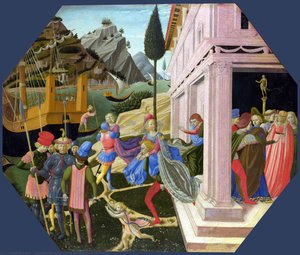
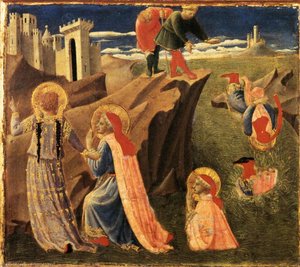
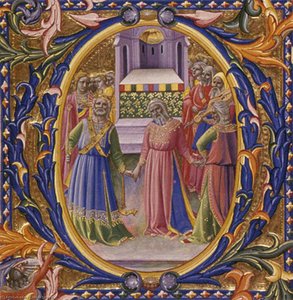
- Sts Cosmas and Damian Saved from Drowning: A 1435 masterpiece that captures a poignant moment of divine intervention, showcasing his skill in depicting communal faith and dramatic movement.
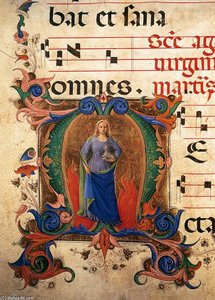
- St Agnes: Created in 1448, this work exemplifies his ability to render serene, profile portraits set against swirling, decorative patterns that highlight the elegance of the period.
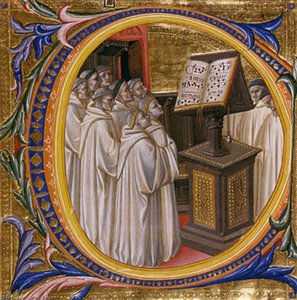
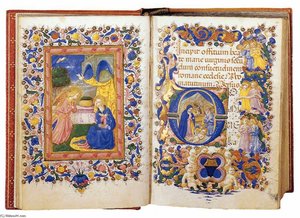
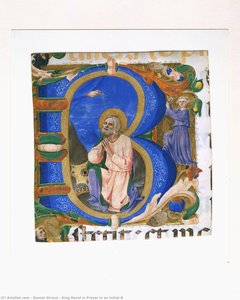
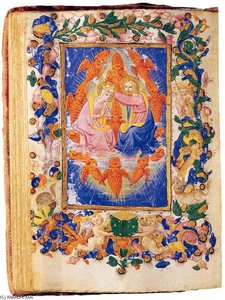
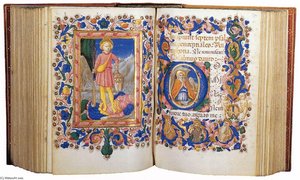
- Book of Hours for the Use of Rome: A testament to his prowess as an illuminator, where every folio serves as a window into the meticulous craftsmanship of the Florentine scriptorium.
A Lasting Impression on the Renaissance
The historical significance of Zanobi Strozzi lies in his role as a bridge between the medieval tradition of decorative illumination and the burgeoning Renaissance focus on human emotion and naturalism. While much of his work was destined for private devotion within the grand residences of Florence, his influence rippled through the workshops of the city. He helped disseminate a specific brand of Florentine beauty—one that was both intellectually rigorous and emotionally accessible. Through his hands, the sacred stories of the saints and the Virgin were rendered with a clarity and vibrancy that captured the very essence of the Quattrocento spirit.
Though he passed away in 1468, leaving behind a legacy etched in gold leaf and tempera, Strozzi remains a symbol of the artist's ability to find profound meaning within the minute. His life, marked by the transition from a noble orphan to a celebrated master, mirrors the very transformation of Florence itself: a journey from the structured traditions of the past toward the luminous, human-centered brilliance of the Renaissance.
Zanobi Strozzi
1412 - 1468 , Italy
Quick Facts
- Artistic Movement Or Style: Early Renaissance
- Artists Or Movements Influenced By This Artist: ['Byzantine']
- Artists Who Influenced This Artist: ['Fra Angelico']
- Date Of Birth: November 17, 1412
- Date Of Death: December 6, 1468
- Full Name: Zanobi di Benedetto di Caroccio degli Strozzi
- Nationality: Italian Renaissance
- Notable Artworks:
- St Agnes
- Book of Hours for the Use of Rome
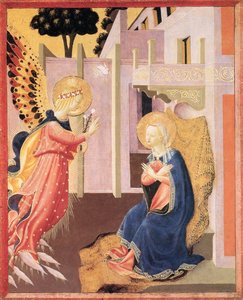
- The Annunciation
- Place Of Birth: Florence, Italy
Related Articles
Raphael's Masterpieces: 25 Iconic Paintings & Renaissance Art for Your Home
Explore 25 breathtaking Raphael paintings! Journey through the Italian Renaissance with masterpieces like 'School of Athens' & iconic Madonnas. Find museum-quality art reproductions and elevate your home decor on ArtsDot.com.
Sacred Narratives on Canvas: Exploring Religious Painting Through History
Explore the rich history of religious painting with ArtsDot.com! Discover iconic artworks, symbolism & techniques from antiquity to the Renaissance. Enhance your art appreciation today.
Sacred Narratives Embodied: A Comprehensive Exploration of Religious Iconography in Art History
Explore the rich history of religious iconography in art! Discover symbolism, movements & masterpieces from Byzantine to Renaissance periods. Expert insights for collectors and enthusiasts at ArtsDot.
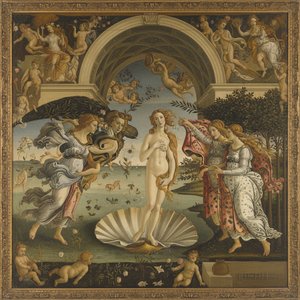
Botticelli's Masterpieces: Explore 25 Iconic Renaissance Paintings | ArtsDot
Journey through Botticelli's world with 25 iconic Renaissance paintings. Explore 'Birth of Venus,' 'Primavera,' and more—stories, techniques & timeless beauty. Find museum-quality art reproductions for your home at ArtsDot.com.
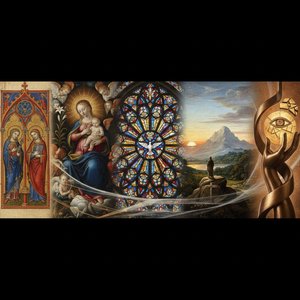
Illuminating Belief: Faith & Symbolism Across Art History's Canvas
Explore the rich history of faith through art! Discover religious symbolism, Renaissance masterpieces & iconic artists. Expert analysis for collectors & enthusiasts. Learn more at ArtsDot.