The Divine Encounter: An Exploration of Finoglia's Annunciation
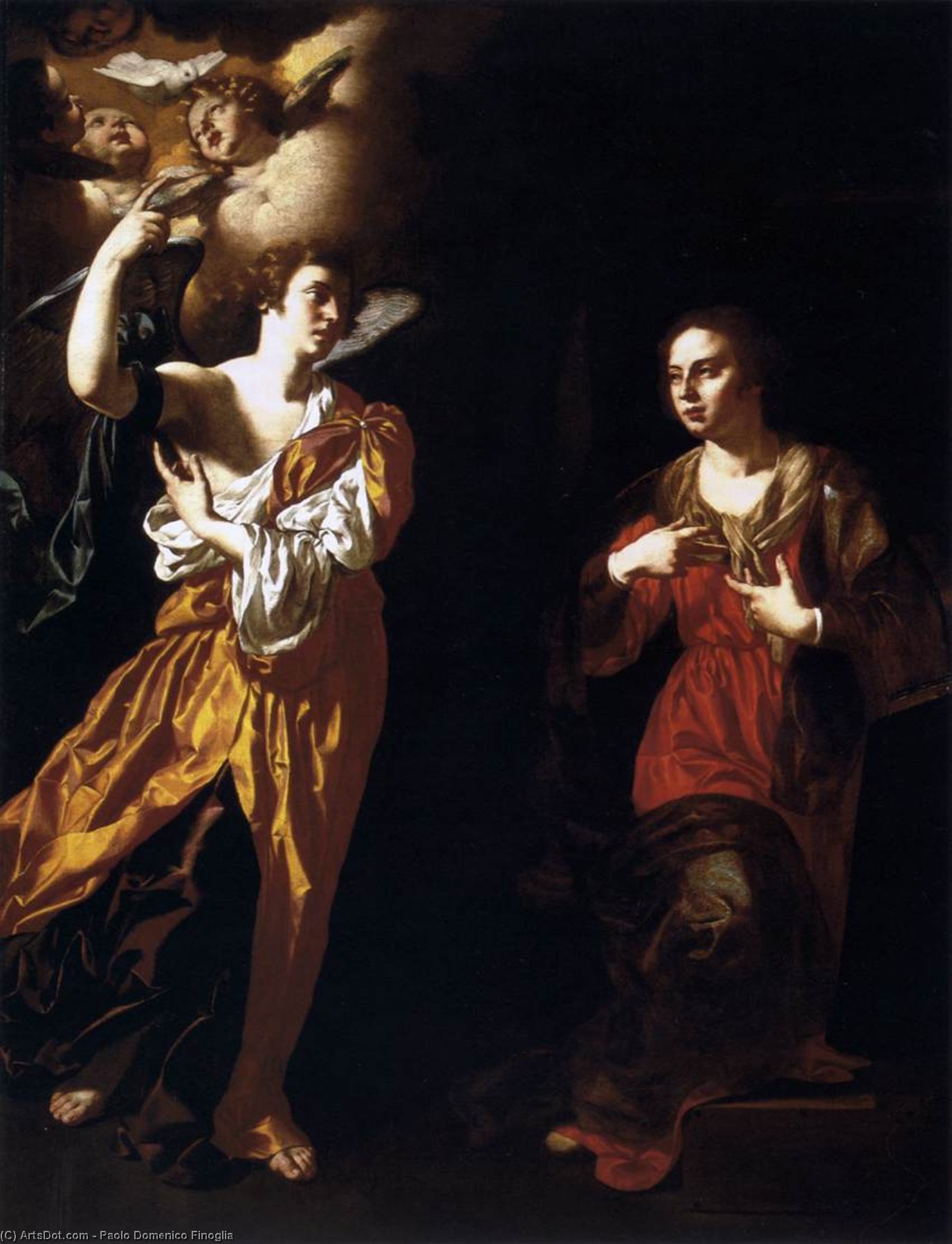
To stand before Paolo Domenico Finoglia’s Annunciation is to step directly into the luminous, dramatic heart of the Baroque era. This painting captures one of Christianity’s most pivotal moments—the announcement to Mary that she will conceive the Son of God. The composition itself is a masterful orchestration of divine intervention meeting human grace. Observe the figures: on the left, Mary stands enveloped in contemplation, her posture suggesting both piety and profound reception. Opposite her, Gabriel, the celestial messenger, radiates an ethereal energy as he delivers the momentous news. Finoglia does not merely depict a scene; he captures a palpable moment of divine breath passing through sacred space.
Baroque Drama and Compositional Depth
Finoglia’s style is deeply rooted in the fervor of early Baroque art, characterized by its dramatic intensity and rich emotional resonance. The composition is anything but static; it pulses with implied narrative energy. Beyond the central pair, the inclusion of secondary figures—those gathered near the edges or positioned around the architectural elements like the visible staircase on the right—adds layers of witness to this sacred event. These peripheral characters serve not only as compositional anchors but also as visual echoes of the devotion surrounding such a monumental theological occurrence. The entire arrangement speaks to the Counter-Reformation's desire to make religious narratives immediate, emotionally gripping, and overwhelmingly beautiful for the viewer.
Symbolism Woven in Light and Drapery
The symbolism within this Annunciation is as rich as Finoglia’s palette suggests. The elaborate costumes worn by all figures are more than mere decoration; they speak to status, role, and spiritual elevation. Mary's book often symbolizes her learned piety or her acceptance of divine will. Gabriel’s presence embodies the intersection of the heavenly and earthly realms. Furthermore, the handling of light—even in a black and white representation, one can sense the intended luminosity—is crucial. Light itself functions as a divine emanation, illuminating the truth being spoken between the angel and the Virgin.
A Touch of Neapolitan Baroque Mastery
Created around 1630, this work places Finoglia at the zenith of his career in Naples. His biography notes his immersion in the artistic currents that favored dramatic flair alongside humanist ideals. This painting perfectly encapsulates that balance: it is deeply spiritual and devotional, yet executed with a sophisticated understanding of human form and theatrical staging. For those who appreciate art that demands emotional engagement—art that feels both historically significant and intimately personal—this piece offers an unparalleled window into 17th-century Italian religious artistry. Owning a reproduction allows one to bring this vibrant narrative drama into a modern setting, transforming any space into a sanctuary of contemplation.